Improve mining operations and safety with our specialized templates and tools. Find geological exploration software, mine planning tools, and safety management systems to enhance productivity and ensure compliance.
-
OpEx-5SVC-5S and Visual Controls
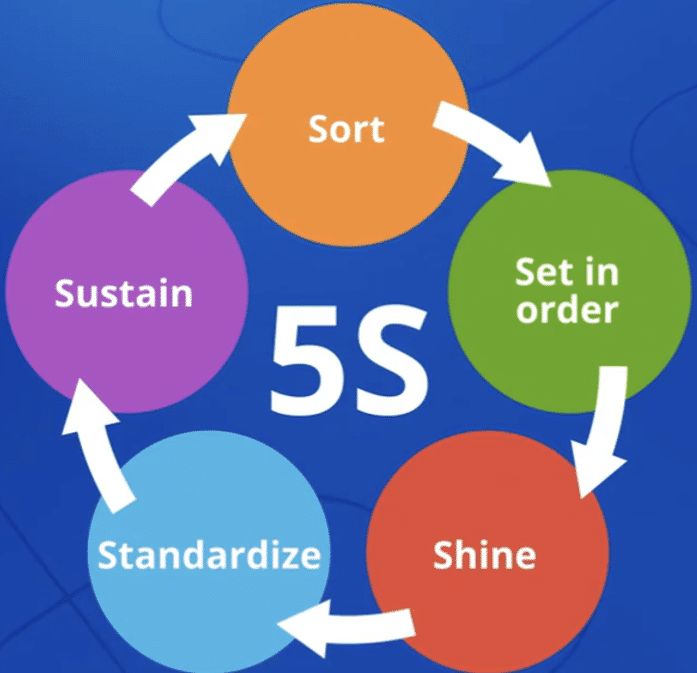
The source, titled “5S & Visual Controls for High Performance Workplace” by Vishnu Rayapeddi, outlines a comprehensive workshop focused on implementing the 5S methodology within an operational setting. This approach, originating from lean manufacturing principles, aims to create a safe, clean, and organised workplace to improve efficiency and quality. The document details each of the five “S” steps: Sort, Set-in-Order, Shine, Standardise, and Sustain, providing practical guidance, self-assessment tools, and examples for implementation. Ultimately, the objective is to achieve “World-Class Manufacturing” through disciplined workplace organisation and the effective use of visual controls and displays to communicate information and manage processes.
$ 54$ 64OpEx-5SVC-5S and Visual Controls
$ 54$ 64 -
OpEx-Quality, Problem Solving & Root Cause Analysis (RCA)
Problem Solving
The provided document, “OpEx – Quality & Problem Solving” by Vishnu Rayapeddi, offers a comprehensive guide to achieving operational excellence through effective quality management and problem-solving methodologies. It introduces the core concept of Zero Quality Control (ZQC), which aims for zero defects by preventing errors from becoming flaws, highlighting its importance for customer satisfaction and cost control. The text details various inspection approaches, contrasting traditional methods with ZQC’s source inspection, 100% inspection, short feedback loops, and mistake-proofing (Poka-Yoke). Furthermore, the document outlines a 5-step problem-solving method, incorporating tools like PDCA (Plan-Do-Check-Act), Fishbone Diagrams, Pareto Charts, Flow Charts, and Brainstorming techniques to identify root causes and implement continuous improvements.$ 29$ 34 -
OpEx – Lean MBA 2-day workshop PPT
Operational Excellence: A Lean-MBA Framework
The provided document, “OpEx-Lean-MBA 2day.pdf” by Vishnu Rayapeddi, outlines a Lean MBA framework designed to achieve Operational Excellence (BizEx). It introduces Business Excellence as outperforming competitors in key operational dimensions like quality, cost, and delivery, and continuously improving fundamental systems and customer satisfaction. The framework incorporates various best practices, including Total Quality Management (TQM), Six Sigma, Theory of Constraints (TOC), and the Toyota Production System (TPS), aiming to simplify processes, enhance quality, and increase competitiveness. The text details essential Lean tools such as Value Stream Mapping (VSM), 5S methodology, Total Productive Maintenance (TPM), Standardised Work, Kaizen, and Pull Systems, explaining their purpose and implementation for waste elimination and efficiency gains. Ultimately, the document serves as a comprehensive guide for organisations seeking to foster a culture of continuous improvement and achieve world-class operational performance.$ 109$ 119OpEx – Lean MBA 2-day workshop PPT
$ 109$ 119 -
OpEx – Lean Leadership Survey Check-List
BENEFITS OF THIS WORD DOCUMENT
- Understand the Level of Leadership before any transformational activity
$ 19$ 24 -
OpEx – Lean JIT, Just In Time
Developing a Just in Time System
This resource, “Develop a Just in Time System” by Vishnu Rayapeddi, offers a comprehensive guide to implementing Just-in-Time (JIT) operational strategies. It begins by defining JIT as a system that ensures products are delivered precisely when and where they are needed, highlighting its benefits such as reduced costs and increased customer satisfaction. The material then explores the distinction between push and pull systems for creating product flow, advocating for the latter’s efficiency in lowering inventory. Key performance indicators like Takt Time, inventory turns, and DIFOTIS (Delivered in Full, On Time, In Spec) are introduced as crucial for monitoring success. The document further outlines various Kanban systems—including production, withdrawal, signal, multi-bin, and e-Kanban—as vital tools for managing material flow, along with CONWIP and FIFO systems. Finally, it presents a structured approach to implementing JIT through workplace projects, detailing evidence requirements for designing, implementing, and monitoring the system.$ 29$ 34OpEx – Lean JIT, Just In Time
$ 29$ 34 -
OpEx-Six Sigma – Improve Process Capability
Process Capability
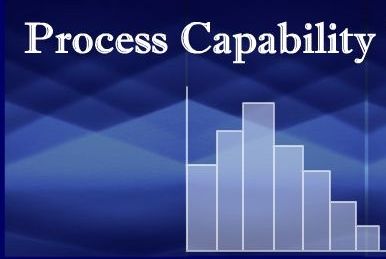
This source outlines a three-session programme focused on determining and improving process capability, often associated with Six Sigma methodologies. The initial session introduces the process model, the relationship between Key Process Input Variables (KPIV) and Key Process Output Variables (KPOV), and the importance of measurements, including the concept of normal distribution and 3-Sigma vs 6-Sigma performance. Participants engage in an exercise using a catapult (X-Pult) to identify process variables and collect data. The second session reviews control charts, distinguishing between common cause and special cause variation, and explains process capability through the Cpk index. The final session concentrates on root cause analysis, developing improvement action plans, and implementing these changes, again using the catapult exercise to demonstrate measurable improvements in process capability.$ 49$ 54 -
-
The Essence of Toyota Way (PDF) as explained by Dr. Jeffrey Liker
The Toyota Way to Lean Excellence
This presentation outlines the Toyota Way philosophy, detailing its core principles and historical development. It explains Lean manufacturing as a systematic approach to eliminate waste, improve flow, and foster continuous improvement, highlighting its application beyond traditional manufacturing to sectors like healthcare. The four Ps of the Toyota Way – Philosophy, Process, People and Partners, and Problem Solving – are introduced as foundational elements for sustained excellence. Through case studies, such as the Donnelly Mirrors plant, the material illustrates how these principles lead to significant improvements in quality, cost, and lead time. Finally, the presentation stresses the importance of people development and a long-term commitment from leadership to embed a culture of continuous improvement, preventing entropy and ensuring the enduring success of lean implementation.$ 99$ 109 -
OpEx – SSGB, Six Sigma Green Belt Training PPT
This text provides a comprehensive overview of Operational Excellence and Six Sigma methodologies, detailing their importance in enhancing business profitability, customer satisfaction, and market competitiveness. It introduces key quality management gurus like Deming, Juran, Crosby, Ishikawa, and Taguchi, outlining their foundational philosophies and contributions to quality improvement. The document then thoroughly explores the Six Sigma project lifecycle, from defining and measuring processes to analysing root causes, implementing solutions, and establishing robust control plans. Crucially, it integrates concepts of stakeholder management, financial analysis, and various data collection and analysis tools essential for successful Six Sigma implementatio
$ 249$ 269 -
OpEx – SCM Fundamentals – MRP-Materials Requirement Planning
The source “OpEx-SCM Funda4 MRP.pdf” provides an overview of Materials Requirement Planning (MRP), a crucial component of supply chain management. It begins by distinguishing dependent versus independent demand and details the planning process that leads to Material Requirements Planning. The document explains Bills-of-Material (BOM), including different types like modular and phantom bills, and outlines the structure and benefits of an MRP system. Furthermore, it explores extensions of MRP, such as Closed Loop MRP, Capacity Planning, Manufacturing Resource Planning (MRP II), Enterprise Resource Planning (ERP), and Distribution Resource Planning (DRP), illustrating the evolution of these systems and their applications in both manufacturing and service sectors.
$ 24$ 29 -
OpEx – VSM, Value Stream Mapping
Value Stream Mapping
The provided source, “OpEx – VSM.pdf” by Vishnu Rayapeddi, serves as a comprehensive guide to Value Stream Mapping (VSM), a critical component of Operational Excellence. It outlines an eight-step roadmap for implementing VSM, beginning with a commitment to lean principles and culminating in continuous improvement. The document explains how VSM helps visualise entire value streams, identify and eliminate non-value-adding activities (waste), and ultimately improve efficiency and customer satisfaction within manufacturing, administrative, and service sectors. Key concepts such as Takt Time, flow, pull systems, and levelling production are explored, providing practical methods for optimising processes and achieving significant cost reductions and$ 59$ 69OpEx – VSM, Value Stream Mapping
$ 59$ 69