
Uber Business Plan Template





$ 250$ 280 (-11%)
Elevate your ride-sharing business with our Uber Business Plan Template. Designed for aspiring entrepreneurs, this comprehensive tool offers a clear framework for market analysis, financial planning, and operational strategies. Perfect for startups and SMEs, it provides the structure needed to navigate competition and achieve sustainable growth.
Comprehensive Guide for Starting Your Ride-Hailing Business
Starting a business in the ride-sharing industry requires more than just an idea it demands a well-thought-out plan that addresses every aspect of the venture. With competition like Uber dominating the landscape, crafting a strategic and actionable business plan is essential. This template serves as a comprehensive guide to help entrepreneurs break into the ride-hailing market with confidence. Whether you’re targeting a niche market or aiming to compete at a broader scale, this guide will provide you with the tools to design a business structure, analyze the competitive landscape, and set long-term goals. By following this roadmap, you can position your business for sustainable growth in the dynamic transportation industry.
Key Components
Executive Summary
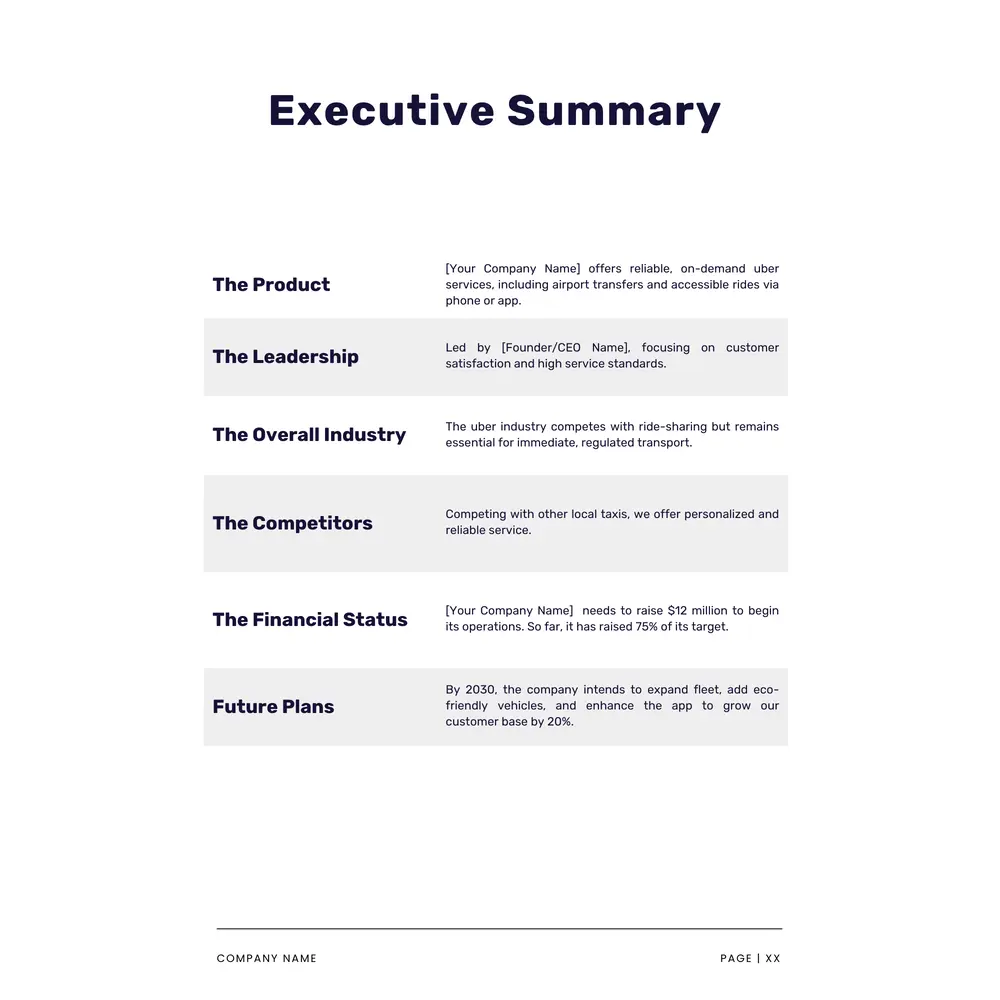
The executive summary is the most critical part of your Uber business plan template. This section provides a snapshot of your business, outlining key details about your vision, services, and goals. Potential investors and stakeholders often read this first, so it needs to be engaging and informative.
Your executive summary should include:
-
Business Overview: Briefly describe your Uber-like business, its target customers, and the markets you plan to serve.
-
Mission and Vision Statement: Highlight your business goals and the value you intend to offer.
-
Key Highlights: Summarize critical points from your financial plan, market analysis, and operational strategies.
-
Call to Action: Conclude with why your business stands out in the competitive ride-hailing industry.
Company Introduction
This section delves deeper into your business idea. Start by providing a comprehensive background of your company—how it started and its current status. Discuss your business model, target markets, and your position in the ride-hailing industry.
Include:
-
Business Name and Legal Structure: Share the name of your business and its legal framework (e.g., LLC, sole proprietorship).
-
Location and Operations: Mention your base of operations and any geographical areas you plan to cover.
-
Business Goals: Define short-term and long-term objectives, such as expanding your customer base or achieving specific market share.
Mission and Vision
To create an effective business plan, include mission and vision statements as they serve as guiding principles for your business.
-
Mission Statement: Clearly articulate the purpose of your business. For example, “To provide convenient, affordable, and safe ride-hailing options tailored to meet diverse customer preferences.”
-
Vision Statement: Share your long-term aspirations. For instance, “To be the leading ride-hailing platform renowned for exceptional customer satisfaction and innovative services.”
Products and Services
List all the services your Uber-like business will offer. This includes more than just ride-hailing. Examples:
-
Exclusive Ride Options: Premium rides for high-end customers.
-
Accessible Options: Services for individuals with disabilities.
-
Convenient Transportation Options: Affordable and quick services for daily commuters.
-
Add-Ons: Food delivery, package delivery, or corporate transportation packages.
Industry Analysis
Conduct a thorough industry analysis to understand the current ride-hailing landscape.
-
Market Trends: Highlight emerging trends, such as increased demand for eco-friendly vehicles or AI-powered customer personalization.
-
Competitor Landscape: Discuss major players in the ride-hailing industry, their strengths, and potential gaps you can fill.
-
Regulatory Landscape: Understand legal requirements, including insurance and background checks for drivers.
Market Analysis
Detail your target market, and customer segments.
-
Target Market: Identify demographics, such as young professionals, students, or senior citizens.
-
Market Size and Share: Highlight the immense market size and your addressable market.
-
Niche Market Opportunities: Focus on underserved areas or unique customer needs.
-
Customer Preferences: Discuss insights from surveys or studies on customer expectations.
Competitor Analysis
A deep dive into your competitors will help you position your business effectively.
-
Competitor Profiles: Study key competitors like Uber and Lyft, analyzing their strengths and weaknesses.
-
Competitive Market Positioning: Highlight what sets your business apart—whether it’s pricing strategy, customer service, or unique ride options.
-
SWOT Analysis: Conduct a SWOT (Strengths, Weaknesses, Opportunities, Threats) analysis for your competitors and your business.
Marketing Plan
Your marketing efforts will drive customer acquisition and retention.
-
Marketing Strategy: Define your approach, such as social media campaigns or partnerships with local businesses.
-
Marketing Materials: Include branded vehicles, apps, and flyers.
-
Channels for Drivers and Customers: Utilize multiple channels to recruit competent drivers and attract target customers.
-
Customer Feedback Loops: Create mechanisms to gather and act on customer feedback to improve services.
Operational Plan
Describe how your business operations will function daily.
-
Driver Recruitment: Outline a comprehensive driver recruitment process, including background checks and vehicle requirements.
-
Fleet Management: Specify how vehicles will be maintained and insured.
-
Technology Integration: Discuss the ride-booking platform’s functionality, including built-in pricing models and customer communication channels.
Financial Plan
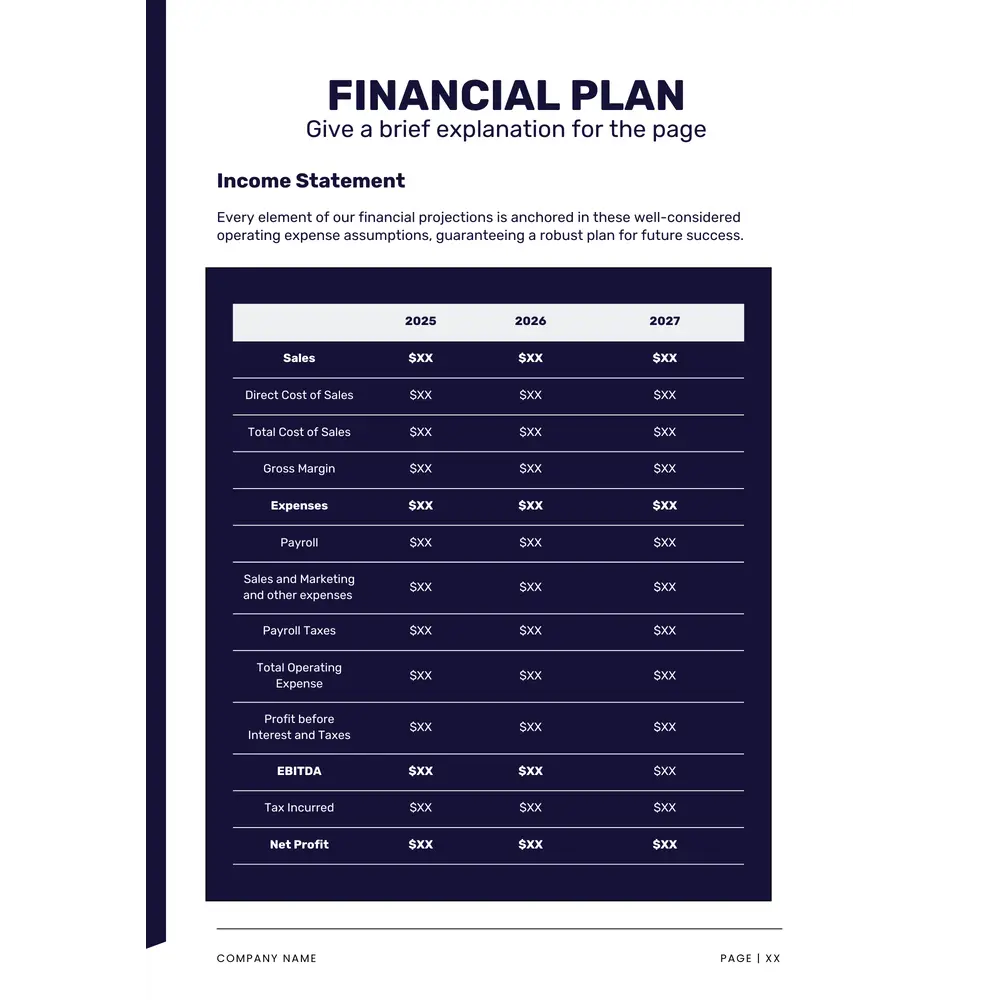
Detail the financial projections and financial performance for your business.
-
Startup Costs: List all initial investments, including app development, marketing, and driver onboarding.
-
Revenue Streams: Highlight potential earnings from rides, advertising, or subscription models.
-
Pricing Strategy: Explain your approach, such as surge pricing or competitive pricing.
-
Driver Wages and Insurance Costs: Account for recurring expenses related to your team of drivers.
The Team
Introduce the team behind your business.
-
Founders and Key Members: Share their qualifications and experience of business owners and other team members.
-
Roles and Responsibilities: Define each team member’s role, from operations to marketing.
-
Team Expansion Plans: Outline future plans to hire professional drivers or expand your operational team.
Conclusion
Creating a successful business in the ride-share industry requires a comprehensive business plan that thoroughly addresses the target audience, business structure, sales strategies, and safety measures. This guide helps entrepreneurs understand the competitive landscape and navigate both direct competitors and indirect competitors through competitive analysis. By tailoring the entire plan to the specifics of the Uber industry, businesses can align their strategies with market trends and customer preferences. Focusing on customer analysis ensures potential customers’ needs are met, while the business strategy and structure provide a solid foundation for sustainable growth.
FAQs
1. What are the features of this template?
The template offers actionable guidance on marketing strategies, industry analysis, customer segmentation, and operational planning.
2. Why is market analysis important?
Market analysis helps you understand customer preferences, market trends, and your competitive landscape, ensuring you can effectively position your business.
3. How do I recruit competent drivers?
Develop a comprehensive recruitment process that includes background checks, vehicle inspections, and competitive driver wages.
4. How can I address regulatory requirements?
Ensure compliance with local laws, including vehicle inspections, driver background checks, and insurance coverage.
INSTRUCTIONS TO ACCESS YOUR PURCHASE:
-
Order Completion: Once your order is finalized, a download link for your files will be available in your dashboard.
-
Retrieve Document: Proceed to download your PDF document.
-
Engage with Canva: Register for a complimentary Canva account or access your existing account.
-
Activate Template: Open the PDF and select the highlighted LINK. This will redirect you to your specific Canva template.
-
Personalization: Within Canva, you have the flexibility to adjust colors, fonts, images, and other elements to match your branding specifications.
-
Finalize and Share: After customization, download your design and showcase it on your social media platform.
TERMS OF USE:
Office Doc Depot and their range of products, including this template, are not endorsed by or officially connected to Canva. Your purchase allows you a SINGLE LICENSE FOR PERSONAL USE, which is exclusive to your personal or business needs. Redistribution, resale, or sharing of the files and templates is prohibited. If you appreciate the template and wish to recommend it, please direct others to our shop.
NOTE:
As our product is a digital entity, we are unable to offer returns or exchanges on such items. We encourage any queries or clarifications to be addressed prior to finalizing your purchase.
Refund Policy
At Oak Business Consultant, we strive to provide high-quality consulting services and products to meet your business needs. However, please note that all sales are final, and we do not offer refunds for any of our products or services.
We encourage you to carefully review all product details, including templates, before making a purchase. If you have any questions or require assistance before purchasing, please feel free to contact us, and we will be happy to help.
Thank you for your understanding.
General Inquiries
There are no inquiries yet.


Reviews
There are no reviews yet.