-

Advanced Invoice Tracker Excel Template,Invoice Tracking Spreadsheet, Sales Analysis Template, Printable Spreadsheet, Invoice Spreadsheet
Introducing the Advanced Invoice Tracker Excel Template, a game-changing tool to streamline your financial organization.
For more details about the template, check the link below;
This user-friendly Invoice Tracking Spreadsheet boasts an exceptional array of features that will transform the way you handle your invoices! 📚
🖥️ With our downloadable Invoice Template, you can instantly take control of your sales and invoice tracking. Easy to use and fully customizable, our template gives you the power to manage your data efficiently.
💼 Our Invoice Tracker is an absolute must-have for business owners, freelancers, or anyone who is serious about staying on top of their financial game.
📊 Featuring a smart Sales Analysis function, this tool lets you maintain complete oversight of your financial performance, providing you with in-depth insights to drive your business success.
👛 It’s not just an Excel Template, it’s a complete system that will change your invoicing routine for the better.
🧾 Empowered by Google Sheets and designed with an understanding of the essential needs of businesses, our Invoice Template Google Sheets material ensures your data protection and easy access from anywhere, anytime.
Let’s break down each enthralling feature of this groundbreaking Excel template:
📝 Invoice Template: Simplifies the invoicing process, saving you time and reducing errors.
⬇️ Invoice Template Download: Lets you access your invoice template anywhere, anytime, on any device.
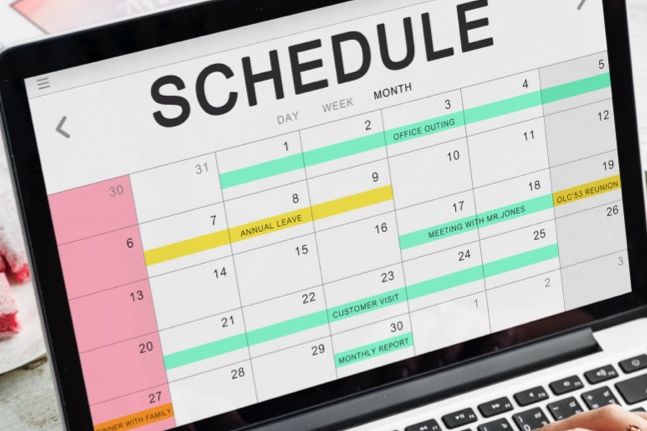
🔍 Invoice Tracker: Allows you to keep track of all your customer invoices in one secure place.
📈 Sales Analysis: Provides a comprehensive understanding of your sales performance.
💻 Google Sheets: Ensures maximum data protection and easy accessibility.
Purchasing this Advanced Invoice Tracker Excel Template means equipping yourself with a tool that makes financial tracking hassle-free, helping your business reach new heights.🚀
🔒 Data protection, 🌐 anywhere accessibility, and 🚀 robust sales management – all bundled in one powerful tool!
Thank you so much for your interest in our advanced invoice tracker. 💖
Don’t hesitate to reach out if you have any questions. We’re here to assist! Make sure to keep an eye on our shop for future innovations that aim to make your life easier! 🙏 🎉
Thanks again and happy tracking! 🚀
Please note that due to the nature of digital downloads, all sales are final. Thank you for understanding.
$ 20 -
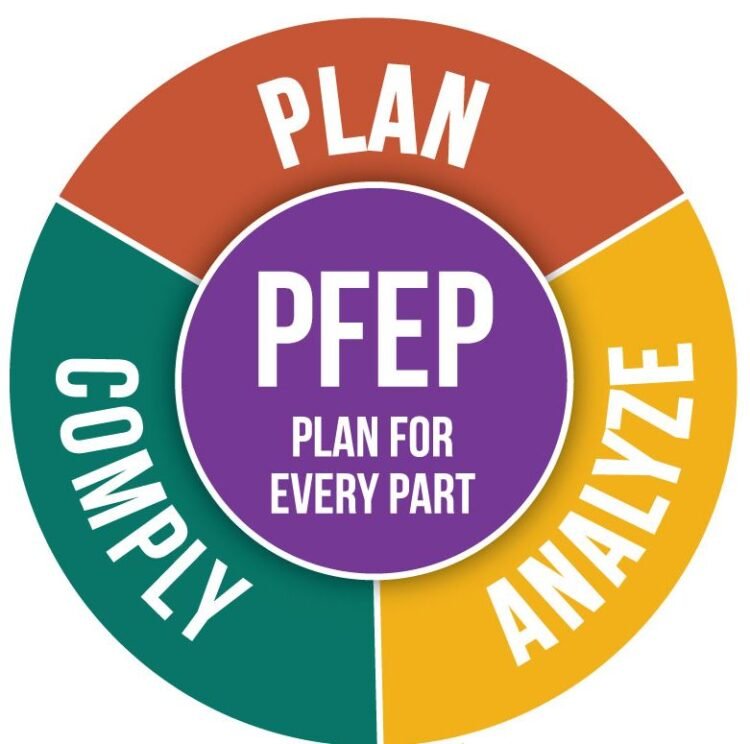
OpEx – PFEP, Plan For Every Part
Plan for Every Part
The provided document, “OpEx — PFEP – Plan For Every Part,” by Vishnu Rayapeddi, outlines a comprehensive strategy for optimising material handling and inventory management within an operational environment. It introduces the Plan For Every Part (PFEP) as a centralised database containing detailed information about every component, from purchasing to delivery. The text details a three-step implementation process: creating the initial PFEP database with current state information, developing a “plan” for each part based on this data, and establishing methods for sustaining and maintaining the database’s integrity, including the use of a change request form and a dedicated PFEP manager. The document also highlights the benefits of PFEP, such as enabling a lean material-handling system and providing quick responses to operational queries, while acknowledging that the PFEP itself is an “incidental” but crucial activity that supports value creation.$ 20$ 25OpEx – PFEP, Plan For Every Part
$ 20$ 25 -

Comprehensive All in One Stock Inventory Tracker Excel Template | Manage Stock, Team, Orders, Profitability & Sales Analysis Easily
Easily manage and monitor your inventory, sales, and orders with this Comprehensive Stock Inventory & Sales Tracker Excel Template.
Perfect for shop owners and small businesses, this dynamic and user-friendly template simplifies stock management, tracks sold and purchased products, and enables detailed sales, profit, and procurement analysis. With automated, interactive charts and a straightforward design, it provides insights into your inventory levels and financial performance, helping you make data-driven business decisions. An essential tool for efficiently managing stock and tracking profitability in one place.📊
🔸Immaculate Inventory management: Our Inventory Sheet is an unparalleled tool that lets you handle your stock like a pro. Instantly process, track, and modify your stock details on the go. No more inconsistencies or stockouts!
🔸Dynamic Sales Team Dashboard: Track your sales progress with breakthrough clarity. Monitor your sales team’s performance in real time with our intuitive dashboard. Drive your sales conversion soaring high! 💼
🔸Smart Profit and Loss Statements: Easily generate automatic profit and loss statements. Get a clear picture of your business financial health with this robust feature. Navigate your business decisions with greater confidence. 💰
🔸Exquisite Excel made: Crafted with mastery in Excel, this digital download template ensures quick, error-free calculations and incomparable user experience. Master your inventory and sales in just a few clicks. 🖥️
🔸Ready, set, track! Unleash the power of organized and systematic Inventory and Stock Management with our All in One Stock Inventory Tracker. Download now and witness a revolution in the way you handle your inventory and sales! 📈
Have questions or need help? Don’t hesitate to reach out! Also, keep an eye on my shop for regular product updates and brand-new additions.
Thank you for choosing our All in One Stock Inventory Tracker. We can’t wait to be part of your business success story! 🎉
$ 22 -
-
OpEx – Balanced Scorecard Self-Assessment
Understand your current situation with respect to measurement to set goals for improvement.
$ 24$ 29 -

-

Project Management Excel Template
Introducing our advanced Project Management Excel Template, crafted to elevate your project planning and budgeting efficiency.
$ 29 -
Lean-MBA, Lean Management Business Architecture Guide (PDF)
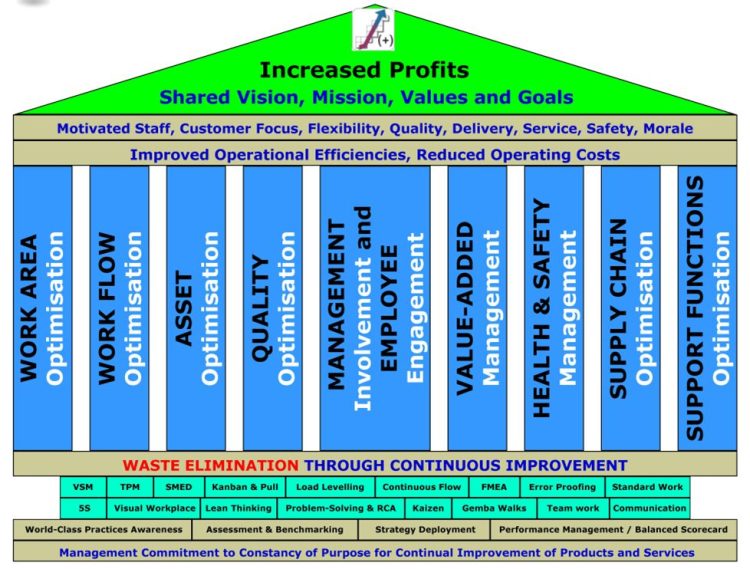
The provided text offers a comprehensive exploration of Lean thinking, originating from the Toyota Production System (TPS) and popularised by figures like James Womack. It details key Lean principles such as Just-in-Time (JIT), which encompasses Takt Time, Flow, and Pull systems, alongside tools like Kanban for material control and SMED (Single Minute Exchange of Dies) for setup reduction. The document also covers Total Quality Management (TQM), including FMEA (Failure Mode and Effects Analysis), Root Cause Analysis (RCA), and Mistake Proofing (Poka-Yoke), and introduces supporting methodologies like Training Within Industry (TWI), Kaizen (continuous improvement), and Gemba Walks. Furthermore, it discusses the application of Lean in broader contexts like supply chain management and office administration, and explores its intersection with Six Sigma and the Theory of Constraints (TOC), all while emphasising the critical role of leadership, employee engagement, and a supportive organisational culture for successful Lean implementation.$ 29$ 39 -
OpEx – Lean JIT, Just In Time
Developing a Just in Time System
This resource, “Develop a Just in Time System” by Vishnu Rayapeddi, offers a comprehensive guide to implementing Just-in-Time (JIT) operational strategies. It begins by defining JIT as a system that ensures products are delivered precisely when and where they are needed, highlighting its benefits such as reduced costs and increased customer satisfaction. The material then explores the distinction between push and pull systems for creating product flow, advocating for the latter’s efficiency in lowering inventory. Key performance indicators like Takt Time, inventory turns, and DIFOTIS (Delivered in Full, On Time, In Spec) are introduced as crucial for monitoring success. The document further outlines various Kanban systems—including production, withdrawal, signal, multi-bin, and e-Kanban—as vital tools for managing material flow, along with CONWIP and FIFO systems. Finally, it presents a structured approach to implementing JIT through workplace projects, detailing evidence requirements for designing, implementing, and monitoring the system.$ 29$ 34OpEx – Lean JIT, Just In Time
$ 29$ 34 -
OpEx-Quality, Problem Solving & Root Cause Analysis (RCA)
Problem Solving
The provided document, “OpEx – Quality & Problem Solving” by Vishnu Rayapeddi, offers a comprehensive guide to achieving operational excellence through effective quality management and problem-solving methodologies. It introduces the core concept of Zero Quality Control (ZQC), which aims for zero defects by preventing errors from becoming flaws, highlighting its importance for customer satisfaction and cost control. The text details various inspection approaches, contrasting traditional methods with ZQC’s source inspection, 100% inspection, short feedback loops, and mistake-proofing (Poka-Yoke). Furthermore, the document outlines a 5-step problem-solving method, incorporating tools like PDCA (Plan-Do-Check-Act), Fishbone Diagrams, Pareto Charts, Flow Charts, and Brainstorming techniques to identify root causes and implement continuous improvements.$ 29$ 34 -
OpEx – Business Integration Excellence Assessment
Understand the current state of your business integration to set improvement goals
$ 29$ 34 -
OpEx – Lean Manufacturing Assessment
Know where you are today before embarking on an improvement plan and set goals
$ 29$ 34OpEx – Lean Manufacturing Assessment
$ 29$ 34