-

HR KPI Dashboard Excel Template, Human Resource Excel Kpi Report Template, Dynamic Reporting Dashboard Xlsx, Performance Tracking Report
Introducing our exclusive 🏆 HR KPI Dashboard | Human Resource Excel Kpi Report Template | Dynamic Reporting Dashboard | Performance Tracking Report.
Created for efficiency and smooth operation, this template is your perfect companion for tracking and analyzing HR metrics effortlessly.
For more details about the template, check the link below;
✔️ 😎 Unique features include:
1. 📈 Dynamic Reporting Dashboard: Gain comprehensive visibility into your human resource performance with our real-time, interactive dashboard. Customize views according to needs, and convert data into meaningful decisions.
2. 🖇️ Human Resource Excel Kpi Report Template: Take control of workforce planning and adjust strategies with precision. In a few clicks, evaluate key areas such as recruitment, retention, training, and more.
3. 📊 Performance tracking report: Never miss a beat with systematic performance tracking. Identify areas for improvement and recognize excellence all through one simplified report.
💻 Material: 100% Excel-based for seamless compatibility and function. Easy to use, modify, and integrate, our HR KPI Dashboard is all you need to elevate your business’ HR practices.
🎁 Don’t lose out on harnessing the power of data for your organization with this incredibly intuitive and user-friendly tool. Treat your business today to streamlining processes, identifying trends thus making informed decisions to drive productivity and engagement.
💖 Thank you for considering our HR KPI Dashboard for your human resource management and performance tracking needs. Don’t forget to check out our shop for even more resourceful solutions to support your mission for operational excellence. 💝
🙏 We appreciate your support and strive to serve you better, always! You deserve nothing but the best!
$ 35 -
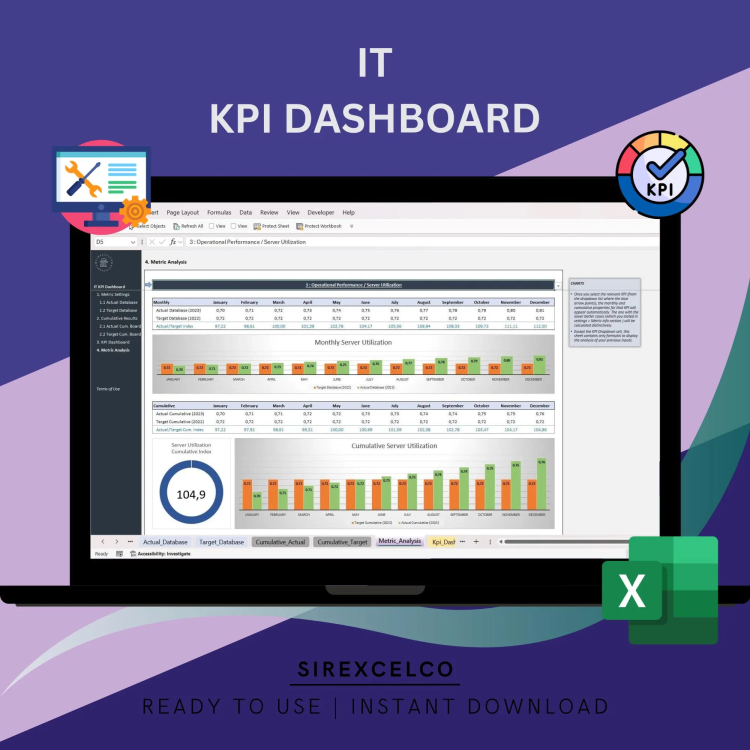
IT KPI Dashboard Excel Template | Monthly Cumulative Performance Tracker | IT Metrics Performance Report | Customizable Editable Spreadsheet
Stay on Top of Your IT Performance with This Easy-to-Use IT KPI Dashboard Template
Are you looking for a simple yet powerful way to track and manage your IT department’s performance? This IT KPI Dashboard Excel Template is designed to help you keep an eye on your key metrics every month. Whether you’re a project manager, IT lead, or small business owner, this template lets you track KPIs month by month, with the added bonus of automatically calculating cumulative results for easy reporting.
For more details about the template, check the link below;
Why You’ll Love This Template:
Track IT KPIs with ease—no complicated software needed.
Monthly and cumulative views for a complete picture of your performance.
Customizable layout to fit your business’s unique needs.
Simple analysis tools to help you pinpoint trends and areas for improvement.
Perfect for IT managers, analysts, and anyone who needs clear, actionable insights.
Save time and stress less with this powerful tool. Get organized, make smarter decisions, and keep your IT projects running smoothly.
Content:
• Excel file compatible with Excel 2010 and higher (and with sample data)
• Professional Design
• Works both on Mac and Windows
• No installation needed. Ready to use
• Dashboard with charts
• IT KPI Dashboard
• Easy to use
• 100% editable
• Excel file
• Instant download
• Friendly customer support for all your questions
$ 35 -
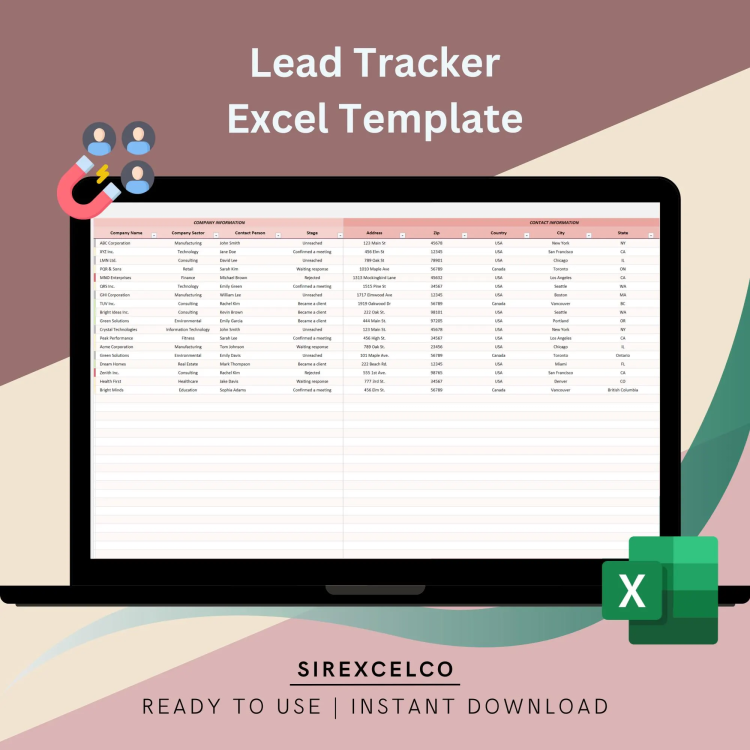
Lead Tracker Excel Template, Printable Customer Follow Up Google Sheet, Cold Call Tracker, Sales Activity Excel
Lead Tracker Excel Template
Introducing our premium Lead List Excel Template – the ultimate tool for businesses looking to improve their sales strategies and increase revenue. Our template is designed to help you efficiently manage your lead list, organize your sales data and track your progress towards your sales goals.
With our Lead List Excel Template, you can easily enter and edit all of your lead information in one place. From company name and sector to contact person and contact details, our user-friendly template allows you to manage all your leads in a clear and organized manner.
Our Excel template also comes equipped with a range of features to help you analyze your sales data and make informed decisions. You can track the status of each lead, from unreached to confirmed meeting, and use the data to measure your sales performance and identify areas for improvement.
The template is fully customizable to suit the unique needs of your business. You can add or remove columns, customize the formatting, and easily import or export data to other platforms.
Content:
• Excel file compatible with Excel 2007 and higher (and with sample data)
• Professional Design
• Works both on Mac and Windows
• No installation needed. Ready to use
• Dashboard with charts
• Lead Tracker Excel Template
• Easy to use
• 100% editable
• Excel file
• Instant download
• Friendly customer support for all your questions
License: Private Use (not for distribution or resale)
$ 5 -
Lean-MBA, Lean Management Business Architecture Guide (PDF)
The provided text offers a comprehensive exploration of Lean thinking, originating from the Toyota Production System (TPS) and popularised by figures like James Womack. It details key Lean principles such as Just-in-Time (JIT), which encompasses Takt Time, Flow, and Pull systems, alongside tools like Kanban for material control and SMED (Single Minute Exchange of Dies) for setup reduction. The document also covers Total Quality Management (TQM), including FMEA (Failure Mode and Effects Analysis), Root Cause Analysis (RCA), and Mistake Proofing (Poka-Yoke), and introduces supporting methodologies like Training Within Industry (TWI), Kaizen (continuous improvement), and Gemba Walks. Furthermore, it discusses the application of Lean in broader contexts like supply chain management and office administration, and explores its intersection with Six Sigma and the Theory of Constraints (TOC), all while emphasising the critical role of leadership, employee engagement, and a supportive organisational culture for successful Lean implementation.$ 29$ 39 -

Manufacturing KPI Report Excel Template | Track Monthly & Cumulative Metrics | Dynamic Charts and Performance Analysis
Efficiently track and manage your manufacturing performance with the Manufacturing KPI Report Excel Template!
For more details about the template, check the link below;
This template helps you measure essential manufacturing metrics month by month and cumulatively, allowing you to compare target metrics vs actual performance. With dynamic charts that update as you select specific metrics, you can easily visualize progress and identify areas for improvement.
Perfect for production managers, plant operators, and manufacturing professionals, this template is simple to use and requires no advanced Excel skills. It’s fully customizable to suit your specific manufacturing needs. Just input your data, and the template does the rest, making it an essential tool for boosting efficiency and productivity in your operations.
Key Features:
Track manufacturing KPIs on a monthly and cumulative basis
Compare actual performance vs target metrics
Dynamic charts that adjust with selected metrics
User-friendly, no advanced Excel knowledge needed
Fully customizable for different manufacturing needs
Perfect for production managers and manufacturing teams
This template is the ultimate tool for optimizing your manufacturing process and making data-driven decisions with ease.
Best for:
• Manufacturers
• Production businesses
• SMB & SME Companies
• Automotive
• Industrial Businesses
• SMB & SME Companies
Content:
• Excel file compatible with Excel 2010 and higher (and with sample data)
• Professional Design
• Works both on Mac and Windows
• No installation needed. Ready to use
• Dashboard with charts
• Manufacturing KPI Dashboard Template
• Easy to use
• 100% editable
• Excel file
• Instant download
• Friendly customer support for all your questions
License: Private Use (not for distribution or resale)
$ 35 -

Marketing KPI Report Excel Template | Track Monthly & Cumulative Metrics | Dynamic Charts and Performance Analysis
Take control of your marketing performance with this Marketing KPI Report Excel Template!
For more details about the template, check the link below;
Whether you’re monitoring campaign success, lead generation, or engagement metrics, this template offers a powerful way to track your marketing metrics month by month and cumulatively. You can easily compare target vs actual results and visualize your progress through dynamic charts that automatically update based on the metric you select.
Perfect for marketers, business owners, and marketing professionals, this template requires no advanced Excel skills and is fully customizable to meet your needs. Simply input your data and watch the template do the heavy lifting, helping you make informed, data-driven decisions to improve your marketing efforts.
Key Features:
Track marketing metrics on a monthly and cumulative basis
Compare target vs actual performance
Dynamic charts that update with chosen metrics
User-friendly and easy to customize
Ideal for marketers, business owners, and marketing teams
No advanced Excel skills required
This template is an essential tool for anyone looking to streamline their marketing reporting and make data-backed decisions.
Content:
• Excel file compatible with Excel 2010 and higher (and with sample data)
• Professional Design
• Works both on Mac and Windows
• No installation needed. Ready to use
• Dashboard with charts
• Marketing Kpi Dashboard Excel Template
• Easy to use
• 100% editable
• Excel file
• Instant download
• Friendly customer support for all your questions
License: Private Use (not for distribution or resale)
$ 35 -

Marriage Planning List Excel Template | Easy-to-Use Wedding Checklist and Notes | Organize Your Wedding Plans with Customizable Excel
◈WEDDING CONTACT LIST◈ Marriage Planning List Excel Template
Stay organized and stress-free during your wedding planning with this easy-to-use Marriage Planning List Excel Template! Designed for couples who want to track every detail, this template allows you to create a comprehensive wedding checklist, take notes, and stay on top of all your important tasks. Whether you’re managing your guest list, tracking vendors, or budgeting, this template is fully customizable to fit your specific needs. With its simple design and efficient layout, you can easily update your wedding plans in one place and keep everything organized in a clear and effective way.
Content:
• Excel file compatible with Excel 2007 and higher (and with sample data)
• Professional Design
• Works both on Mac and Windows
• No installation needed. Ready to use
• Wedding Contact List Excel Template
• Easy to use
• 100% editable
• Excel file
• Instant download
• Friendly customer support for all your questions
License: Private Use (not for distribution or resale)
Thanks for visiting!
$ 5 -
Microsoft Excel Editable Weekly Status Report (internal external reporting) including Plan on a Page and RAIDs log etc.
Excel Weekly Status Report template with POaP, RAID log, burndown chart. For Agile or PRINCE2 projects. Editable for internal/external reporting.
$ 30$ 40 -
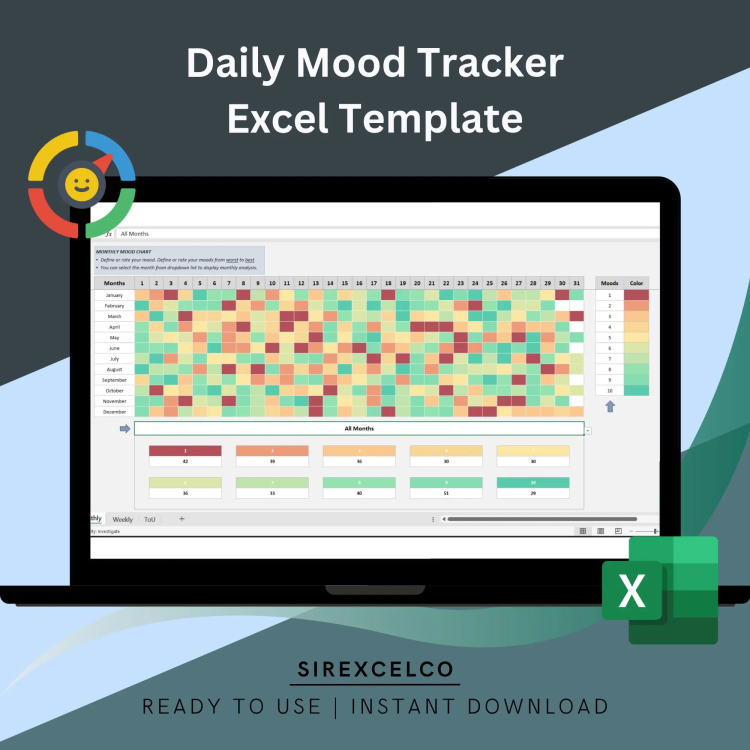
Monthly Mood Tracker Excel Template | Colorful Emotion Tracking & Analysis | Easy-to-Use Dynamic Template for Personal Mood Insights
Easily track and analyze emotions with this colorful Monthly Mood Tracker Excel Template.
For more details about the template, check the link below;
Perfect for anyone who wants to visually map out mood patterns over time, this template is fully dynamic and customizable. Each month’s emotional trends are represented in color, offering clear insight into personal emotional health. Whether for self-reflection, mental wellness, or just fun personal tracking, this template is user-friendly and designed for simplicity. All you need to do is input your daily mood, and the template will generate insightful monthly analysis for you to review at a glance!
Content:
• Excel file compatible with Excel 2010 and higher (and with sample data)
• Professional Design
• Works both on Mac and Windows
• No installation needed. Ready to use
• Mood Chart Planner
• Easy to use
• 100% editable
• Excel file
• Instant download
• Friendly customer support for all your questions
License: Private Use (not for distribution or resale)
$ 5 -
MS Excel Template Agile SCRUM Sprint Burn Down Chart Table & Burn Up Chart where no access to Agile tools like Jira
Editable MS Excel template for Agile Scrum burn down & burn up charts. Perfect for sprint tracking & reporting when Jira or Agile tools aren’t available.
$ 30$ 40 -
MS Excel, tracking project month, weekly financials incl. contracted work, forecasts, actuals, variance, expenses, pivot
A comprehensive editable, table MS Excel spreadsheet for tracking project monthly financials including summary view tab, contracted work, forecasts, actuals, variance, expenses, annual leave, suppliers and pivot tab. Purchase also includes other budget tracker examples.
$ 30$ 40