-
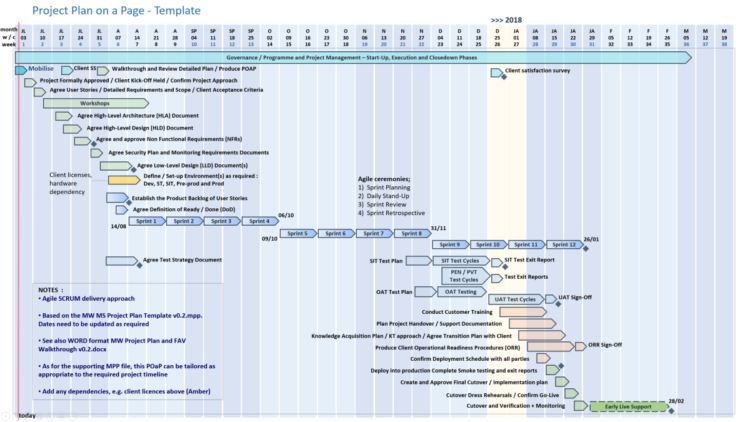
Project POAP – MS PowerPoint template – Both editable & easy to use
Microsoft PowerPoint template both editable & easy to use, offers a quick way to construct a PPT Project Plan On a Page ( POaP ) for stakeholders
$ 30$ 40 -
OpEx – Poka-Yoke (Mistake Proofing)
Poka-Yoke: The Art of Mistake Proofing
The source, titled “OpEx – Poka Yoke Mistake proofing.pdf,” outlines a comprehensive approach to achieving operational excellence through mistake-proofing, also known as Poka-Yoke. It emphasises that defects account for a significant portion of production costs and stresses the importance of preventing errors at the source rather than merely inspecting them out. The document introduces principles for achieving zero defects, focusing on process control over individual blame, and explores various categories of error and their prevention strategies. It details six mistake-proofing techniques—elimination, replacement, prevention, facilitation, detection, and mitigation—providing examples for each. Finally, it presents a seven-step framework for implementing error-proofing and a five-part project methodology for designing defects out of processes, encouraging continuous improvement and team invol$ 34$ 39OpEx – Poka-Yoke (Mistake Proofing)
$ 34$ 39 -
200+ PM Templates | FREE Upgrades and Additions | Agile, Waterfall & Prince2 Project Management Templates
200+ PM Templates | FREE Upgrades and Additions | Agile, Waterfall & Prince2 Project Management Templates | Microsoft Project Excel PowerPoint + RAID Log, POaP, Gantt View with Resource Cost Tracker etc.
FREE template upgrades for life available after purchase. This package contains ALL the PM templates offered by the seller,
The PM templates download link is contained in an ‘officedocdepot’ text file made available immediately after your purchase.
$ 89$ 120 -
OpEx – Apply Six Sigma to Process Control and Improvement
Six Sigma for Process Control and Improvement
This document outlines a comprehensive Six Sigma training programme, focusing on process control and improvement using the DMAIC (Define, Measure, Analyse, Improve, Control) methodology. The material introduces Six Sigma as a framework for reducing variation and improving customer satisfaction through data-driven problem-solving, aiming for a performance level of 3.4 defects per million opportunities. It details each phase of DMAIC, providing specific tools and techniques, such as project charters, data collection plans, cause and effect diagrams, and control charts. The training incorporates practical simulations, like the “X Pult” exercise, to demonstrate the application of these methods in identifying problems, measuring performance, analysing root causes, implementing solutions, and sustaining improvements within an organisational context.$ 59$ 64 -
OpEx – Process Optimization using Six Sigma Techniques
Optimizing Costs
This presentation, “OpEx – Optimise Cost,” by Vishnu Rayapeddi, outlines strategies for operational excellence focused on cost optimisation. It begins by explaining the importance of understanding customer needs and how they define quality, alongside methods for analysing cost and waste components. The document highlights various types of waste in manufacturing, such as defects, overproduction, and excessive motion, and offers practical exercises for identifying and reducing these costs. Furthermore, it introduces the concept of pull systems in production, contrasting them with traditional push systems to demonstrate their benefits in reducing operational costs and inventory. The presentation concludes by emphasising the importance of measuring results and implementing continuous improvement projects to achieve significant cost reductions and enhance customer satisfaction.$ 69$ 74 -
-
OpEx – Kaizen, Continuous Improvement
Facilitating Kaizen
The provided document, “OpEx-Facilitate CI-Kaizen.pdf” by Vishnu Rayapeddi, introduces Kaizen, a Japanese concept meaning gradual and orderly continuous improvement. It outlines a structured approach to fostering an organisational culture of sustained improvement by eliminating waste through various activities. The text highlights different types of Kaizen activities, including “Quick and Easy Kaizen” for daily small improvements and “Kaizen Events” (also known as “Kaizen Blitz”) for targeted, accelerated improvements. The Plan-Do-Check-Act (PDCA) cycle is presented as the core process for continuous improvement, emphasising the importance of standardising new processes to prevent regression. The document also details the planning, implementation, and follow-up phases for Kaizen events, suggesting a comprehensive framework for achieving operational excellence.$ 39$ 44 -
OpEx – The Lean Office
Lean Thinking for Office and Admin Areas
This document, “OpEx_Lean_Office.pdf,” is a presentation by Vishnu Rayapeddi from Productivity Solutions (PSL) on Lean Thinking for Office & Admin Areas, copyrighted in 2011. It serves as a gateway to operational excellence, detailing various best-class practices such as Lean, Six Sigma, Total Quality Management (TQM), and the Theory of Constraints (TOC). The presentation’s core focuses on defining operational excellence and the elimination of waste through structured approaches like the Toyota Production System (TPS). It outlines a three-part methodology to “Lean your Business”: stabilise processes, standardise processes, and simplify processes, with practical tools and activities for each stage. The document ultimately aims to foster a continuous improvement culture within organisations to enhance productivity and reduce costs.$ 69$ 74OpEx – The Lean Office
$ 69$ 74 -
OpRx – Developing a Lean Culture
Develop a Lean Culture
The source, “OpEx – Develop a Lean Culture” by Vishnu Rayapeddi, argues that organisational culture is the most crucial element for business success, not just people. It highlights the high failure rate of Lean implementations, attributing these failures not to the Lean tools themselves, but to an unwillingness to change the underlying culture. The document defines culture, behaviour, and philosophy, and explains that a culture of continuous improvement, led by passionate and accountable leaders, is essential. It further asserts that employee engagement, fostered through meaningful work, development opportunities, and organisational alignment, is the primary driver for successful cultural transformation and achieving desired business outcomes, with Lean tools serving as mere enablers rather than the solution itself.$ 39$ 44OpRx – Developing a Lean Culture
$ 39$ 44 -
The Essence of Toyota Way (PDF) as explained by Dr. Jeffrey Liker
The Toyota Way to Lean Excellence
This presentation outlines the Toyota Way philosophy, detailing its core principles and historical development. It explains Lean manufacturing as a systematic approach to eliminate waste, improve flow, and foster continuous improvement, highlighting its application beyond traditional manufacturing to sectors like healthcare. The four Ps of the Toyota Way – Philosophy, Process, People and Partners, and Problem Solving – are introduced as foundational elements for sustained excellence. Through case studies, such as the Donnelly Mirrors plant, the material illustrates how these principles lead to significant improvements in quality, cost, and lead time. Finally, the presentation stresses the importance of people development and a long-term commitment from leadership to embed a culture of continuous improvement, preventing entropy and ensuring the enduring success of lean implementation.$ 99$ 109 -
OpEX-Workplace Leadership
The provided document, “OpEx – Workplace Leadership” by Vishnu Rayapeddi, focuses on various aspects of effective leadership within an organisational context. It explores different leadership styles, such as autocratic, democratic, laissez-faire, and paternalistic, alongside theories of leadership including trait, behavioural, contingency, transformational, invitational, and transactional approaches. The text also addresses change leadership by outlining how employees react to change and the importance of managing one’s own work through task management strategies like scheduling and prioritisation. Finally, it highlights the significance of engaging a multigenerational workforce by understanding different generations’ values and work styles, and discusses the vital role of communication in fostering effective group and team dynamics
$ 49$ 54OpEX-Workplace Leadership
$ 49$ 54 -

Advanced Invoice Tracker Excel Template,Invoice Tracking Spreadsheet, Sales Analysis Template, Printable Spreadsheet, Invoice Spreadsheet
Introducing the Advanced Invoice Tracker Excel Template, a game-changing tool to streamline your financial organization.
For more details about the template, check the link below;
This user-friendly Invoice Tracking Spreadsheet boasts an exceptional array of features that will transform the way you handle your invoices! 📚
🖥️ With our downloadable Invoice Template, you can instantly take control of your sales and invoice tracking. Easy to use and fully customizable, our template gives you the power to manage your data efficiently.
💼 Our Invoice Tracker is an absolute must-have for business owners, freelancers, or anyone who is serious about staying on top of their financial game.
📊 Featuring a smart Sales Analysis function, this tool lets you maintain complete oversight of your financial performance, providing you with in-depth insights to drive your business success.
👛 It’s not just an Excel Template, it’s a complete system that will change your invoicing routine for the better.
🧾 Empowered by Google Sheets and designed with an understanding of the essential needs of businesses, our Invoice Template Google Sheets material ensures your data protection and easy access from anywhere, anytime.
Let’s break down each enthralling feature of this groundbreaking Excel template:
📝 Invoice Template: Simplifies the invoicing process, saving you time and reducing errors.
⬇️ Invoice Template Download: Lets you access your invoice template anywhere, anytime, on any device.
🔍 Invoice Tracker: Allows you to keep track of all your customer invoices in one secure place.
📈 Sales Analysis: Provides a comprehensive understanding of your sales performance.
💻 Google Sheets: Ensures maximum data protection and easy accessibility.
Purchasing this Advanced Invoice Tracker Excel Template means equipping yourself with a tool that makes financial tracking hassle-free, helping your business reach new heights.🚀
🔒 Data protection, 🌐 anywhere accessibility, and 🚀 robust sales management – all bundled in one powerful tool!
Thank you so much for your interest in our advanced invoice tracker. 💖
Don’t hesitate to reach out if you have any questions. We’re here to assist! Make sure to keep an eye on our shop for future innovations that aim to make your life easier! 🙏 🎉
Thanks again and happy tracking! 🚀
Please note that due to the nature of digital downloads, all sales are final. Thank you for understanding.
$ 20