-
-
OpEx – VSM, Value Stream Mapping
Value Stream Mapping
The provided source, “OpEx – VSM.pdf” by Vishnu Rayapeddi, serves as a comprehensive guide to Value Stream Mapping (VSM), a critical component of Operational Excellence. It outlines an eight-step roadmap for implementing VSM, beginning with a commitment to lean principles and culminating in continuous improvement. The document explains how VSM helps visualise entire value streams, identify and eliminate non-value-adding activities (waste), and ultimately improve efficiency and customer satisfaction within manufacturing, administrative, and service sectors. Key concepts such as Takt Time, flow, pull systems, and levelling production are explored, providing practical methods for optimising processes and achieving significant cost reductions and$ 59$ 69OpEx – VSM, Value Stream Mapping
$ 59$ 69 -
OpEx- – Sales & Operations Planning
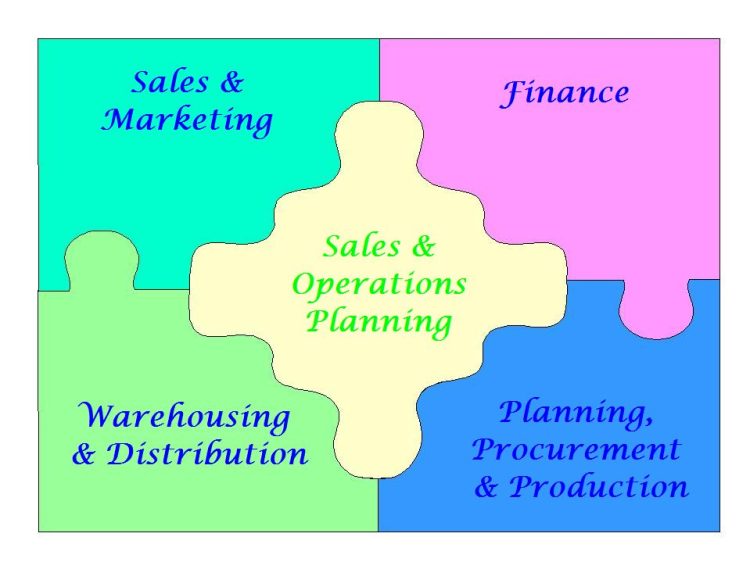
The source, “OpEx – SCM Funda1 S&OP.pdf” by Vishnu Rayapeddi, provides a comprehensive overview of Sales & Operations Planning (S&OP). It outlines the objectives, processes, and foundational elements necessary for successful S&OP implementation, highlighting its role in integrating various business functions to achieve competitive advantage. The document also addresses common industry challenges that S&OP aims to resolve, such as stock-outs and excessive inventory, and details the benefits derived from its adoption, including improved operational efficiency and enhanced communication. Furthermore, the text explores the practical application of S&OP through a case study of Kiwi Meats and introduces Integrated Business Planning (IBP) as an evolution of S&OP, emphasising its capacity for more profit-driven and executive-engaged planning across the entire enterprise.
$ 39$ 44OpEx- – Sales & Operations Planning
$ 39$ 44 -
OpEx-5SVC-5S and Visual Controls
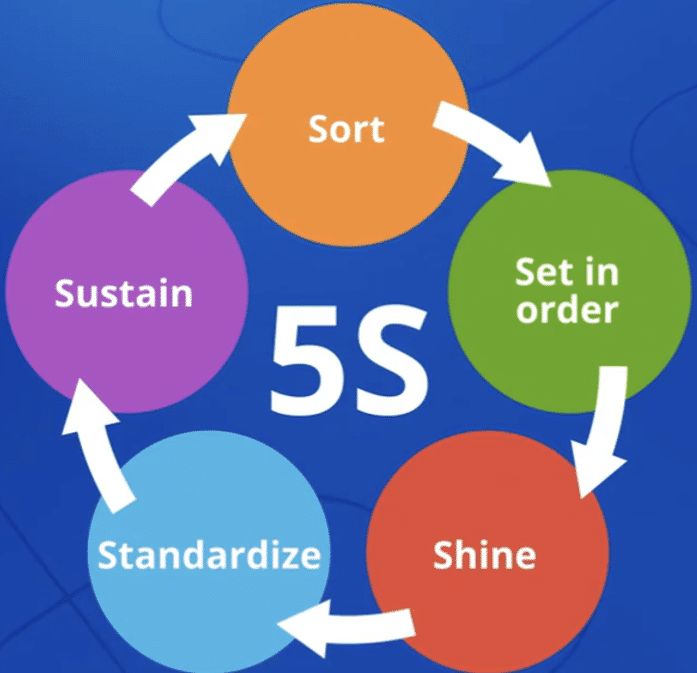
The source, titled “5S & Visual Controls for High Performance Workplace” by Vishnu Rayapeddi, outlines a comprehensive workshop focused on implementing the 5S methodology within an operational setting. This approach, originating from lean manufacturing principles, aims to create a safe, clean, and organised workplace to improve efficiency and quality. The document details each of the five “S” steps: Sort, Set-in-Order, Shine, Standardise, and Sustain, providing practical guidance, self-assessment tools, and examples for implementation. Ultimately, the objective is to achieve “World-Class Manufacturing” through disciplined workplace organisation and the effective use of visual controls and displays to communicate information and manage processes.
$ 54$ 64OpEx-5SVC-5S and Visual Controls
$ 54$ 64 -
OpEx-Competitive Manufacturing
Competitive Manufacturing: Your Gateway to Operational Excellence
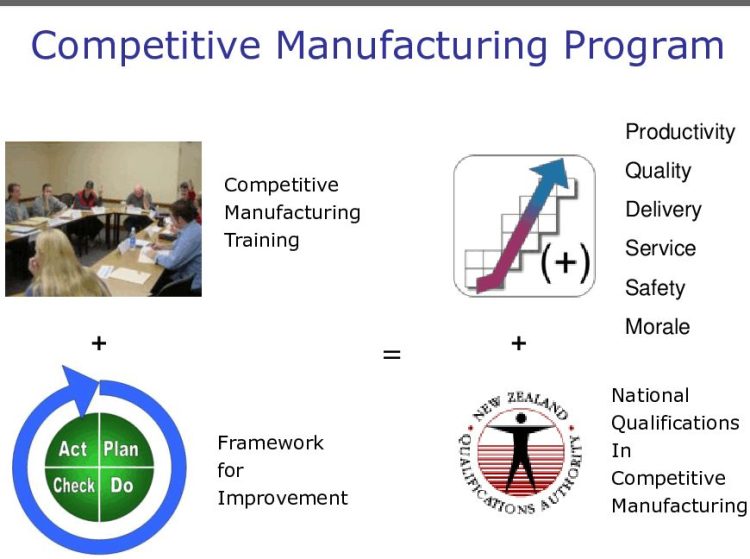
This training material, titled “Competitive Manufacturing” by Vishnu Rayapeddi, introduces the concept of Operational Excellence. It outlines a comprehensive programme designed to equip participants with the knowledge, tools, and methods to significantly improve workplaces, leading to nationally recognised certification. The core focus is on identifying and eliminating operational waste—such as defects, overproduction, and unnecessary motion—to achieve “World Class” business performance through increased cost-effectiveness, higher quality, and faster, more consistent production. The material details a structured change management model, emphasising the importance of defining changes, establishing Key Performance Indicators (KPIs), engaging stakeholders, and meticulously planning and monitoring implementation through various tools like Gantt Charts and Visual Management Systems. Ultimately, it aims to transform businesses by fostering a culture of continuous improvement and value creation for the customer.$ 59$ 69OpEx-Competitive Manufacturing
$ 59$ 69 -
OpEx-Introduction to Six Sigma
This Six Sigma presentation is an White Belt level and meant for senior management to get a comprehensive understanding of the concept of Six Sigma and how it can help organisations improve their functioning of operations, improve quality and reduce cost.
$ 44$ 49OpEx-Introduction to Six Sigma
$ 44$ 49 -
OpEx-Quality, Problem Solving & Root Cause Analysis (RCA)
Problem Solving
The provided document, “OpEx – Quality & Problem Solving” by Vishnu Rayapeddi, offers a comprehensive guide to achieving operational excellence through effective quality management and problem-solving methodologies. It introduces the core concept of Zero Quality Control (ZQC), which aims for zero defects by preventing errors from becoming flaws, highlighting its importance for customer satisfaction and cost control. The text details various inspection approaches, contrasting traditional methods with ZQC’s source inspection, 100% inspection, short feedback loops, and mistake-proofing (Poka-Yoke). Furthermore, the document outlines a 5-step problem-solving method, incorporating tools like PDCA (Plan-Do-Check-Act), Fishbone Diagrams, Pareto Charts, Flow Charts, and Brainstorming techniques to identify root causes and implement continuous improvements.$ 29$ 34 -
OpEx-SCM Fundamentals – Aggregate Planning
Aggregate Planning for Supply Chains
The source, titled “OpEx – SCM Funda3 Planning.pdf” by Vishnu Rayapeddi, provides a comprehensive overview of aggregate planning within supply chain management. It outlines the requirements, tasks, responsibilities, and relationships involved in this crucial planning process, which typically spans 3 to 18 months. The document details various aggregate planning goals such as meeting demand and minimising costs, and explores different pure strategies including adjusting capacity options (e.g., inventory levels, workforce size, subcontracting) and demand options (e.g., influencing demand, backordering). It further presents production strategies like chase, level, subcontracting, and hybrid approaches, along with their respective advantages and disadvantages, before discussing aggregate planning methods such as graphical techniques and mathematical models. Finally, the source touches upon controlling labour costs in service firms and the concept of yield management$ 20$ 24 -
-
OpEx-Six Sigma – Improve Process Capability
Process Capability
This source outlines a three-session programme focused on determining and improving process capability, often associated with Six Sigma methodologies. The initial session introduces the process model, the relationship between Key Process Input Variables (KPIV) and Key Process Output Variables (KPOV), and the importance of measurements, including the concept of normal distribution and 3-Sigma vs 6-Sigma performance. Participants engage in an exercise using a catapult (X-Pult) to identify process variables and collect data. The second session reviews control charts, distinguishing between common cause and special cause variation, and explains process capability through the Cpk index. The final session concentrates on root cause analysis, developing improvement action plans, and implementing these changes, again using the catapult exercise to demonstrate measurable improvements in process capability.$ 49$ 54