-
OpEx-Six Sigma – Improve Process Capability
Process Capability
This source outlines a three-session programme focused on determining and improving process capability, often associated with Six Sigma methodologies. The initial session introduces the process model, the relationship between Key Process Input Variables (KPIV) and Key Process Output Variables (KPOV), and the importance of measurements, including the concept of normal distribution and 3-Sigma vs 6-Sigma performance. Participants engage in an exercise using a catapult (X-Pult) to identify process variables and collect data. The second session reviews control charts, distinguishing between common cause and special cause variation, and explains process capability through the Cpk index. The final session concentrates on root cause analysis, developing improvement action plans, and implementing these changes, again using the catapult exercise to demonstrate measurable improvements in process capability.$ 49$ 54 -
OpEx – LSS, Lean Six Sigma Memory Jogger
This document offers a ready refresher with over 50 LSS topics / fundamentals1(30
slides) on Lean Six Sigma and other related best practice concepts. It includes
tools, templates, and checklists. You can also use these as 1 Point Lessons
$ 49$ 54 -
OpEx-5SVC-5S and Visual Controls
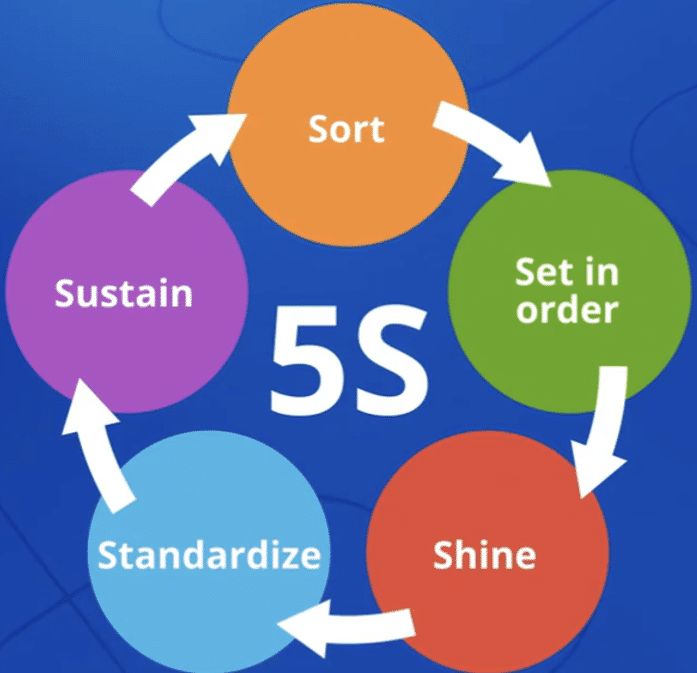
The source, titled “5S & Visual Controls for High Performance Workplace” by Vishnu Rayapeddi, outlines a comprehensive workshop focused on implementing the 5S methodology within an operational setting. This approach, originating from lean manufacturing principles, aims to create a safe, clean, and organised workplace to improve efficiency and quality. The document details each of the five “S” steps: Sort, Set-in-Order, Shine, Standardise, and Sustain, providing practical guidance, self-assessment tools, and examples for implementation. Ultimately, the objective is to achieve “World-Class Manufacturing” through disciplined workplace organisation and the effective use of visual controls and displays to communicate information and manage processes.
$ 54$ 64OpEx-5SVC-5S and Visual Controls
$ 54$ 64 -
GMP, Good Manufacturing Practices Training PPT
The provided document, “OpEx – GMP Modules All in One.pdf” by Vishnu Rayapeddi, serves as a comprehensive training manual on Good Manufacturing Practices (GMP). It systematically covers the fundamentals of GMP, defining its purpose as ensuring products are consistently manufactured to a quality appropriate for their intended use, ultimately leading to customer satisfaction. The manual meticulously details how GMP applies to people (training, health, hygiene, attitude), buildings (space, light, planned flow, environmental controls, maintenance), and systems (identification, double-checking, documentation). Furthermore, it elaborates on critical aspects like labelling, weighing, personal hygiene, and cleaning processes, emphasising the prevention of mix-ups, contamination, and product performance issues. Finally, the text explains how compliance is measured through internal and external audits, process control, customer complaints, and adherence to specifications and yield calculations, underlining the legal, corporate, and moral imperatives for following GMP.
$ 59$ 69 -
OpEx – VSM, Value Stream Mapping
Value Stream Mapping
The provided source, “OpEx – VSM.pdf” by Vishnu Rayapeddi, serves as a comprehensive guide to Value Stream Mapping (VSM), a critical component of Operational Excellence. It outlines an eight-step roadmap for implementing VSM, beginning with a commitment to lean principles and culminating in continuous improvement. The document explains how VSM helps visualise entire value streams, identify and eliminate non-value-adding activities (waste), and ultimately improve efficiency and customer satisfaction within manufacturing, administrative, and service sectors. Key concepts such as Takt Time, flow, pull systems, and levelling production are explored, providing practical methods for optimising processes and achieving significant cost reductions and$ 59$ 69OpEx – VSM, Value Stream Mapping
$ 59$ 69 -
OpEx – Apply Six Sigma to Process Control and Improvement
Six Sigma for Process Control and Improvement
This document outlines a comprehensive Six Sigma training programme, focusing on process control and improvement using the DMAIC (Define, Measure, Analyse, Improve, Control) methodology. The material introduces Six Sigma as a framework for reducing variation and improving customer satisfaction through data-driven problem-solving, aiming for a performance level of 3.4 defects per million opportunities. It details each phase of DMAIC, providing specific tools and techniques, such as project charters, data collection plans, cause and effect diagrams, and control charts. The training incorporates practical simulations, like the “X Pult” exercise, to demonstrate the application of these methods in identifying problems, measuring performance, analysing root causes, implementing solutions, and sustaining improvements within an organisational context.$ 59$ 64 -
OpEx – The Lean Office
Lean Thinking for Office and Admin Areas
This document, “OpEx_Lean_Office.pdf,” is a presentation by Vishnu Rayapeddi from Productivity Solutions (PSL) on Lean Thinking for Office & Admin Areas, copyrighted in 2011. It serves as a gateway to operational excellence, detailing various best-class practices such as Lean, Six Sigma, Total Quality Management (TQM), and the Theory of Constraints (TOC). The presentation’s core focuses on defining operational excellence and the elimination of waste through structured approaches like the Toyota Production System (TPS). It outlines a three-part methodology to “Lean your Business”: stabilise processes, standardise processes, and simplify processes, with practical tools and activities for each stage. The document ultimately aims to foster a continuous improvement culture within organisations to enhance productivity and reduce costs.$ 69$ 74OpEx – The Lean Office
$ 69$ 74 -
OpEx – Lean Execution-The Success Mantra
Lean Execution
This comprehensive source, “OpEx – Lean Execution,” authored by Vishnu Rayapeddi, serves as a gateway to operational excellence through the application of Lean principles. It meticulously outlines a roadmap for understanding and implementing Lean methodologies, beginning with a foundational explanation of what Lean is and its core concept of eliminating waste to maximise customer value. The text places significant emphasis on “The Toyota Way” and its 14 principles, presenting them as a blueprint for achieving continuous improvement and fostering a culture of respect for people. Furthermore, the source addresses common reasons why Lean implementations fail, such as lack of vision or management commitment, and offers strategies for managing change effectively within an organisation. It then broadens its scope to include other business excellence philosophies like Six Sigma, Theory of Constraints, and Total Quality Management, highlighting their individual strengths and the potential benefits of a combined approach. Finally, the document details the practical steps involved in executing Lean, including assessment tools, the importance of long-term commitment, documentation, and the crucial role of people development and leadership in sustaining a Lean culture.$ 69$ 74 -
OpEx – Process Optimization using Six Sigma Techniques
Optimizing Costs
This presentation, “OpEx – Optimise Cost,” by Vishnu Rayapeddi, outlines strategies for operational excellence focused on cost optimisation. It begins by explaining the importance of understanding customer needs and how they define quality, alongside methods for analysing cost and waste components. The document highlights various types of waste in manufacturing, such as defects, overproduction, and excessive motion, and offers practical exercises for identifying and reducing these costs. Furthermore, it introduces the concept of pull systems in production, contrasting them with traditional push systems to demonstrate their benefits in reducing operational costs and inventory. The presentation concludes by emphasising the importance of measuring results and implementing continuous improvement projects to achieve significant cost reductions and enhance customer satisfaction.$ 69$ 74 -
Educational Courses Financial Model
This Excel model forecasts the financial performance of an educational course business over 10 years. It includes detailed course scheduling, revenue projections, expense modeling, 3-statement financial reports, and investor analysis.
$ 75 -
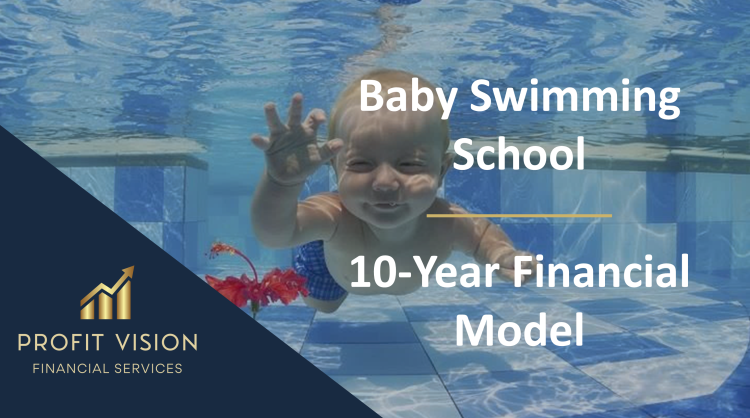
Baby Swimming School – 10 Year Financial Model
This 10-Year Baby Swimming School Financial Model provides a financial planning tool designed to the profitability for a specialized swim school catering to infants and toddlers. With revenue projections from class fees and additional services while accounting for key costs such as rent, instructor salaries, pool maintenance, utilities, and marketing, the model helps swim school operators and investors make informed decisions, secure funding, and ensure long-term business growth in the early childhood education sector.
$ 89