-
OpEx – SSGB, Six Sigma Green Belt Training PPT
This text provides a comprehensive overview of Operational Excellence and Six Sigma methodologies, detailing their importance in enhancing business profitability, customer satisfaction, and market competitiveness. It introduces key quality management gurus like Deming, Juran, Crosby, Ishikawa, and Taguchi, outlining their foundational philosophies and contributions to quality improvement. The document then thoroughly explores the Six Sigma project lifecycle, from defining and measuring processes to analysing root causes, implementing solutions, and establishing robust control plans. Crucially, it integrates concepts of stakeholder management, financial analysis, and various data collection and analysis tools essential for successful Six Sigma implementatio
$ 249$ 269 -
-
OpEx- – Sales & Operations Planning
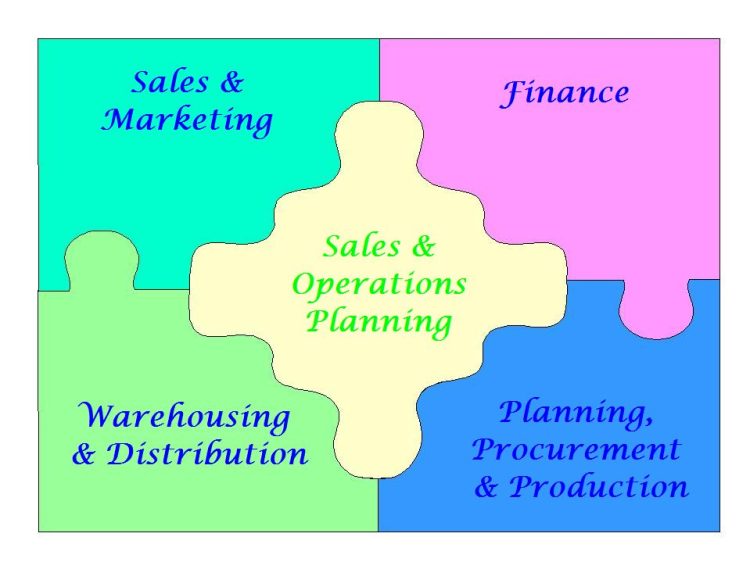
The source, “OpEx – SCM Funda1 S&OP.pdf” by Vishnu Rayapeddi, provides a comprehensive overview of Sales & Operations Planning (S&OP). It outlines the objectives, processes, and foundational elements necessary for successful S&OP implementation, highlighting its role in integrating various business functions to achieve competitive advantage. The document also addresses common industry challenges that S&OP aims to resolve, such as stock-outs and excessive inventory, and details the benefits derived from its adoption, including improved operational efficiency and enhanced communication. Furthermore, the text explores the practical application of S&OP through a case study of Kiwi Meats and introduces Integrated Business Planning (IBP) as an evolution of S&OP, emphasising its capacity for more profit-driven and executive-engaged planning across the entire enterprise.
$ 39$ 44OpEx- – Sales & Operations Planning
$ 39$ 44 -
OpEx – Inventory Management
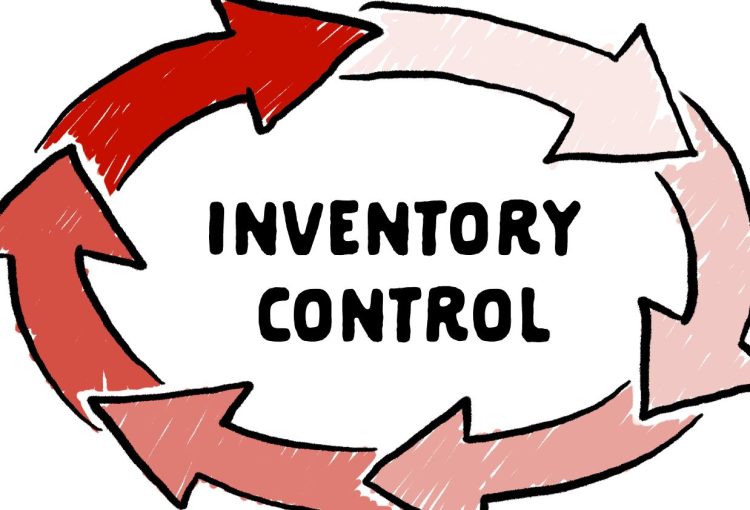
This source provides an extensive overview of inventory management within supply chain fundamentals. It introduces Vishnu Rayapeddi as the author, highlighting their significant experience and qualifications in the field. The text thoroughly defines inventory and inventory management, outlining key objectives such as customer service and cost minimisation. Various types of inventory are explored, alongside the costs associated with inventory, including holding, ordering, and shortage costs. The document also differentiates between independent and dependent demand and explains various order quantity strategies, focusing on the Economic Order Quantity (EOQ) model and the Quantity Discount Model, complete with practical examples. Furthermore, it details ABC analysis for inventory categorisation, its procedural steps, and implications for inventory management policies, including cycle counting and different inventory valuation methods like FIFO, LIFO, and Weighted Average. Finally, the text briefly touches upon Kanban systems as a method for production control.
$ 39$ 44OpEx – Inventory Management
$ 39$ 44 -
OpEX-Workplace Leadership
The provided document, “OpEx – Workplace Leadership” by Vishnu Rayapeddi, focuses on various aspects of effective leadership within an organisational context. It explores different leadership styles, such as autocratic, democratic, laissez-faire, and paternalistic, alongside theories of leadership including trait, behavioural, contingency, transformational, invitational, and transactional approaches. The text also addresses change leadership by outlining how employees react to change and the importance of managing one’s own work through task management strategies like scheduling and prioritisation. Finally, it highlights the significance of engaging a multigenerational workforce by understanding different generations’ values and work styles, and discusses the vital role of communication in fostering effective group and team dynamics
$ 49$ 54OpEX-Workplace Leadership
$ 49$ 54 -
GMP, Good Manufacturing Practices Training PPT
The provided document, “OpEx – GMP Modules All in One.pdf” by Vishnu Rayapeddi, serves as a comprehensive training manual on Good Manufacturing Practices (GMP). It systematically covers the fundamentals of GMP, defining its purpose as ensuring products are consistently manufactured to a quality appropriate for their intended use, ultimately leading to customer satisfaction. The manual meticulously details how GMP applies to people (training, health, hygiene, attitude), buildings (space, light, planned flow, environmental controls, maintenance), and systems (identification, double-checking, documentation). Furthermore, it elaborates on critical aspects like labelling, weighing, personal hygiene, and cleaning processes, emphasising the prevention of mix-ups, contamination, and product performance issues. Finally, the text explains how compliance is measured through internal and external audits, process control, customer complaints, and adherence to specifications and yield calculations, underlining the legal, corporate, and moral imperatives for following GMP.
$ 59$ 69 -
Lean-MBA, Lean Management Business Architecture Guide (PDF)
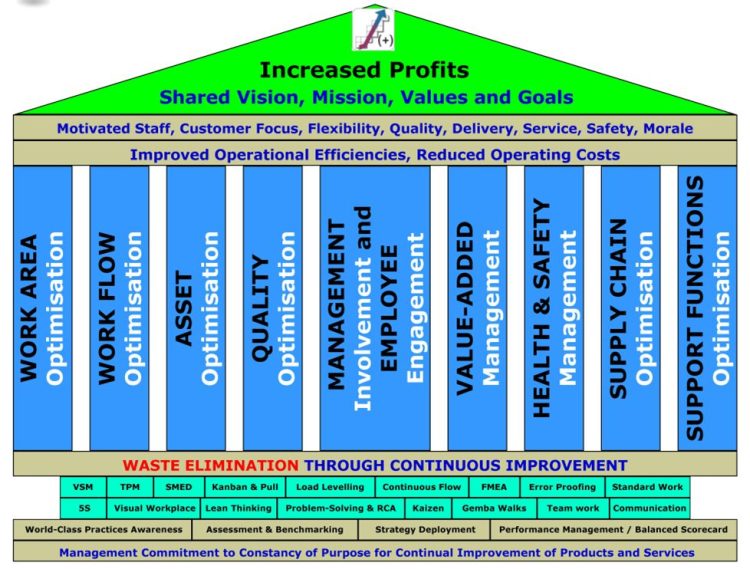
The provided text offers a comprehensive exploration of Lean thinking, originating from the Toyota Production System (TPS) and popularised by figures like James Womack. It details key Lean principles such as Just-in-Time (JIT), which encompasses Takt Time, Flow, and Pull systems, alongside tools like Kanban for material control and SMED (Single Minute Exchange of Dies) for setup reduction. The document also covers Total Quality Management (TQM), including FMEA (Failure Mode and Effects Analysis), Root Cause Analysis (RCA), and Mistake Proofing (Poka-Yoke), and introduces supporting methodologies like Training Within Industry (TWI), Kaizen (continuous improvement), and Gemba Walks. Furthermore, it discusses the application of Lean in broader contexts like supply chain management and office administration, and explores its intersection with Six Sigma and the Theory of Constraints (TOC), all while emphasising the critical role of leadership, employee engagement, and a supportive organisational culture for successful Lean implementation.$ 29$ 39 -

Supply Chain and Logistics KPI Dashboard, Excel Template, Dynamic Reporting Dashboard Sheets, Performance Tracking XLSX
Supply Chain and Logistics KPI Dashboard
A logistics KPI or metric is a performance measurement that is used by logistics managers to track, visualize and optimize all relevant logistic processes in an efficient way.
For more details about the template, check the link below;
Best for:
• Logistics Managers
• Operation Managers
• Shipping Businesses
• Transportation Businesses
• Order management
• Delivery Businesses
This tool will help you analyze your Monthly Kpi Metric data.
After you insert your Monthly Numeric data for the KPI Metrics you determine, you can see a clear monthly and cumulative analysis for the metrics you determine. It is also possible to compare your numeric data with your target data and past year data.
Seeing the level of difference of these metrics will help you identify the problem and how to improve your model more effectively and efficiently.
Content:
• Excel file compatible with Excel 2010 and higher (and with sample data)
• Professional Design
• Works both on Mac and Windows
• No installation needed. Ready to use
• Dashboard with charts
• Supply Chain and Logistics KPI Dashboard
• Easy to use
• 100% editable
• Excel file
• Instant download
• Friendly customer support for all your questions
License: Private Use (not for distribution or resale)
$ 35 -
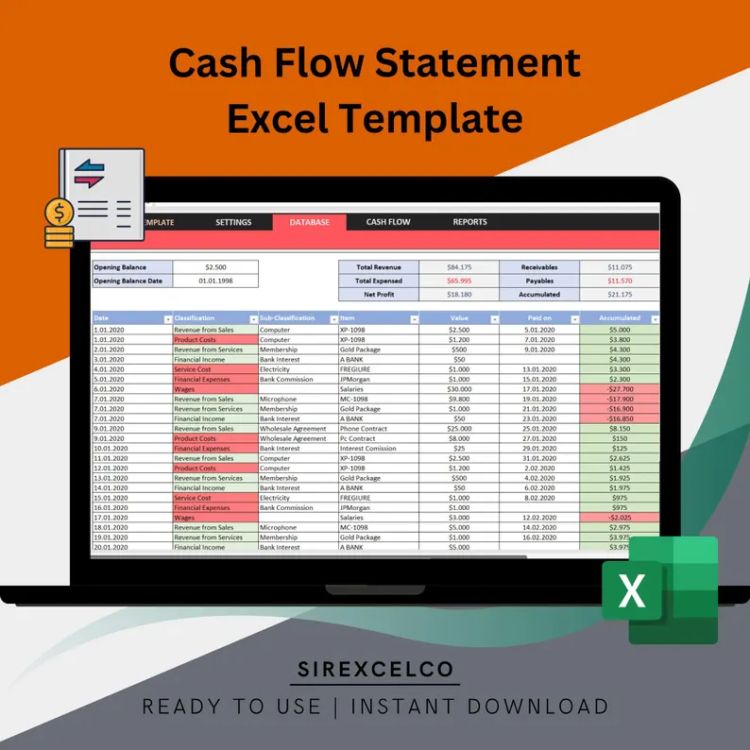
Cash Flow Statement Excel Template | Track Income, Expenses, Financial Balance, Profit and Loss, Balance Sheet, Accounting for business
Stay on top of your finances with this Dynamic Cash Flow Statement Excel Template.
For more details about the template, check the link below;
Designed for users who want to track income, expenses, profit and loss, and overall financial balance, this template provides a comprehensive view of your cash flow situation. With an intuitive database, simply input your financial data and watch as the template generates dynamic charts and summaries for any specific date or overall balance. Ideal for small business owners, freelancers, and individuals looking to keep a close eye on their financial health, this easy-to-use template helps you make informed financial decisions with clarity and efficiency.
Being in control of your finances is essential for success as a business owner. But without the correct tools, it can be challenging to monitor your cash flow. Our template can be used in that situation.
You can easily keep tabs on your cash inflows and outflows by using our Cash Flow Statement Excel Template. It’s simple to enter and update your financial information because of the template’s user-friendliness and intuitiveness.
This template is a crucial resource for efficient financial administration, regardless of your company’s stage of development. It’s the ideal tool to support you in reaching your financial objectives because to its slick appearance and robust functionality.
Best for:
• Financial Statement for all types of companies
• Everyone opening a business
• E-commerce
• Everyone starting with a new project
• Investors
Content:
• Excel file compatible with Excel 2007 and higher (and with sample data)
• Professional Design
• Works both on Mac and Windows
• No installation needed. Ready to use
• Dashboard with charts
• Cash flow statement dashboard template
• Easy to use
• 100% editable
• Excel file
• Instant download
• Friendly customer support for all your questions
License: Private Use (not for distribution or resale)
$ 15 -

Comprehensive Loan Amortization Calculator Excel Template | Detailed Loan Repayment Schedule, Mortgage Principal & Interest Breakdown
Simplify your loan calculations and repayment planning with this Comprehensive Loan Amortization Calculator Excel Template.
For more details about the template, check the link below;
Designed for easy use, this dynamic template provides a detailed breakdown of loan payment schedules, including due dates, principal and interest payments, outstanding balance, and total installment amounts. Perfect for anyone preparing to take out a loan, it offers clear insights into monthly payments and capital outstanding percentages, helping you make informed financial decisions. Ideal for personal or business loan management, this template is your go-to tool for structured loan tracking and financial planning.
Key Features & Benefits:
📨Digital Download: Instant access to the tool after purchase! No waiting, no shipping fees. It couldn’t be more convenient.
📚Comprehensive: This Calculator works as a comprehensive Mortgage Calculator Template, keeping you informed on your loan payments and remaining balance.
💰Debt payoff: The ultimate goal – debt freedom. This tool will become your personal finance assistant, aiding you in paving the way towards a debt-free life.
🔄Automatic Calculations: Just plug in your loan details and the template does all the work! No need for complicated calculations.
✅User Friendly: Perfect for both beginners and experienced finance individuals. It’s simple to use, with visualized data and clear format.
🔄Adaptable: Whether it’s a car loan, a mortgage, or a personal loan, this calculator can handle it! Essential and versatile tool for various loan types.
📈Visualized Data: Foresee your financial future with a clear picture of your amortization schedule.
📄Product Material: This tool is a digital product made from your need to understand ‘Debt Payoff’ in a better light, meticulously crafted into a simplified, user-friendly format.
Your satisfaction is paramount to us. Thank you for choosing us 🙏! Please reach out if you have any queries or require further information.
We are confident you will find value in this tool and invite you to check out my Etsy shop for more excellent financial tools & digital products!
Thank you for your support and happy debt calculating! 🎉
$ 8 -

Comprehensive Risk Assessment Matrix Excel Template | Severity Likelihood Ranking | Risk Management Tool, Risk Register, Excel HIRA Risico
Unleash the power of data analytics with our Project Management KPI Dashboard 📊
For more details about the template, check the link below;
an exceptionally crafted KPI Report Excel Template that will transform your project management process. With features dedicated to dynamic reporting 📈 and performance tracking 🎯, our product is more than just an excel template; it’s your tool to success.
Simplify your risk management process with this Risk Assessment Matrix Excel Template, perfect for analyzing risk severity and likelihood across general operations or specific departments. This user-friendly, dynamic template helps you quickly visualize and rank risks, providing valuable insights for prioritizing high-impact areas. Ideal for safety officers, project managers, and risk assessment professionals, this template’s automated charts update based on your entries, allowing for efficient, data-driven decision-making. Take control of risk with an organized, actionable view that supports proactive risk management and safety strategies.
✅ **Monitor Performance Easily:** Make data-driven decisions as the dynamic KPI dashboard enables you to track your project’s progress effortlessly and instantly spot areas that need improvement.
✅ **Functional and User-Friendly:** It’s an easy-to-use, fully editable excel template, requiring no technical knowledge or expertise 🧑💼, so you can focus on managing instead of maneuvering through complicated software.
✅ **Time-Saving:** Say goodbye to manual inputs and hello to automated calculations. Save loads of your precious time ⏱️ and ensure error-free data every time!
✅ **Visual Appeal:** With its beautiful charts and graphs, get a clear visual representation of your KPIs, making it easier for stakeholders to understand project performance 📉.
✅ **Customizable:** You can easily tailor the excel dashboard template to meet the unique needs of your project, allowing you to track what matters most to your organization.
✅ **Instant Access:** The product is digital, meaning it is available for download immediately after purchase 🚀.
Built with the finest quality excel materials to ensure a seamless user experience 💼. This Project Management KPI Dashboard surely gets your job done! Boost your project performance now and get access to a smarter way of tracking your KPIs. 🌟
🙏Thank you for checking out my shop! Your support means the world to me. I’m excited for you to experience the transformative benefits of this KPI Report Excel Template. Buy now and make the first step towards revolutionizing your project management!
$ 13