Improve mining operations and safety with our specialized templates and tools. Find geological exploration software, mine planning tools, and safety management systems to enhance productivity and ensure compliance.
-
OpEx – SSGB, Six Sigma Green Belt Training PPT
This text provides a comprehensive overview of Operational Excellence and Six Sigma methodologies, detailing their importance in enhancing business profitability, customer satisfaction, and market competitiveness. It introduces key quality management gurus like Deming, Juran, Crosby, Ishikawa, and Taguchi, outlining their foundational philosophies and contributions to quality improvement. The document then thoroughly explores the Six Sigma project lifecycle, from defining and measuring processes to analysing root causes, implementing solutions, and establishing robust control plans. Crucially, it integrates concepts of stakeholder management, financial analysis, and various data collection and analysis tools essential for successful Six Sigma implementatio
$ 249$ 269 -

LNG Regasification Plant (Land Based) – Project Finance Model
Project Finance Model for an LNG Regasification Plant (Land-Based), covering capital costs, operating expenses, capacity utilization, regasification fees, and supply agreements. The model supports financial forecasting, profitability analysis, and strategic planning, with dynamic inputs for LNG pricing, volume throughput, and market demand. It provides a robust framework for assessing financial viability and optimizing operational performance.
$ 149 -

LNG Liquefaction Plant – Project Finance Model
Project Finance Model for an LNG Liquefaction Plant, covering capital expenditures, operating costs, production capacity, pricing, and offtake agreements. The model supports financial forecasting, profitability analysis, and strategic planning, with flexible inputs for feed gas costs, export volumes, and market prices. It provides a robust framework for evaluating project viability, securing financing, and maximizing returns.
$ 149 -

Floating Storage Regasification Unit – Project Finance Model
Project Finance Model for a Floating Storage and Regasification Unit (FSRU), covering capital costs, operating expenses, LNG procurement, regasification revenue, and charter agreements. The model supports financial forecasting, project valuation, and risk analysis, with flexible inputs for utilization rates, contract terms, and fuel price scenarios. It provides a solid financial framework for assessing profitability and guiding strategic decisions.
$ 149 -

Bitcoin Mining Farm – 10 Year Financial Model
Financial Model providing a 10-year financial plan for Bitcoin mining operations projecting revenue, operating costs, and cash flow based on mining capacity (hash rate), Bitcoin price, block rewards, and network difficulty.
$ 139 -
The Power and Magic of Lean by
The Power and Magic of Lean
The provided source offers an extensive overview of Lean principles and continuous improvement methodologies, largely attributed to the Toyota Production System (TPS). It introduces Norman Bodek, a prominent figure in propagating Japanese management techniques in the West, detailing his contributions and the various Lean tools he introduced, such as SMED, Poka-yoke, and Kaizen. The document meticulously outlines the nine wastes (Muda) that Lean aims to eliminate, including overproduction, waiting, and non-utilised talent, and explores concepts like Jidoka and Just-in-Time (JIT). Furthermore, it contrasts the characteristics of leaders and managers within a Lean context, emphasising the importance of respect for people and total employee involvement through practices like Quick and Easy Kaizen to foster a culture of perpetual small-scale improvements.$ 129$ 135The Power and Magic of Lean by
$ 129$ 135 -
OpEx – Lean MBA 2-day workshop PPT
Operational Excellence: A Lean-MBA Framework
The provided document, “OpEx-Lean-MBA 2day.pdf” by Vishnu Rayapeddi, outlines a Lean MBA framework designed to achieve Operational Excellence (BizEx). It introduces Business Excellence as outperforming competitors in key operational dimensions like quality, cost, and delivery, and continuously improving fundamental systems and customer satisfaction. The framework incorporates various best practices, including Total Quality Management (TQM), Six Sigma, Theory of Constraints (TOC), and the Toyota Production System (TPS), aiming to simplify processes, enhance quality, and increase competitiveness. The text details essential Lean tools such as Value Stream Mapping (VSM), 5S methodology, Total Productive Maintenance (TPM), Standardised Work, Kaizen, and Pull Systems, explaining their purpose and implementation for waste elimination and efficiency gains. Ultimately, the document serves as a comprehensive guide for organisations seeking to foster a culture of continuous improvement and achieve world-class operational performance.$ 109$ 119OpEx – Lean MBA 2-day workshop PPT
$ 109$ 119 -
The Essence of Toyota Way (PDF) as explained by Dr. Jeffrey Liker
The Toyota Way to Lean Excellence
This presentation outlines the Toyota Way philosophy, detailing its core principles and historical development. It explains Lean manufacturing as a systematic approach to eliminate waste, improve flow, and foster continuous improvement, highlighting its application beyond traditional manufacturing to sectors like healthcare. The four Ps of the Toyota Way – Philosophy, Process, People and Partners, and Problem Solving – are introduced as foundational elements for sustained excellence. Through case studies, such as the Donnelly Mirrors plant, the material illustrates how these principles lead to significant improvements in quality, cost, and lead time. Finally, the presentation stresses the importance of people development and a long-term commitment from leadership to embed a culture of continuous improvement, preventing entropy and ensuring the enduring success of lean implementation.$ 99$ 109 -
200+ PM Templates | FREE Upgrades and Additions | Agile, Waterfall & Prince2 Project Management Templates
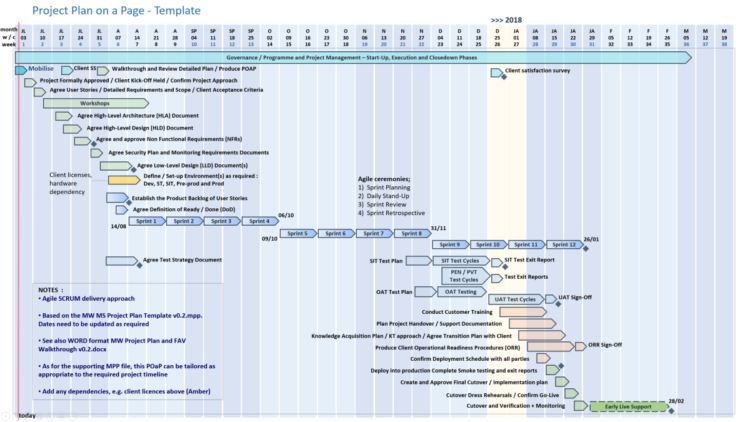
200+ PM Templates | FREE Upgrades and Additions | Agile, Waterfall & Prince2 Project Management Templates | Microsoft Project Excel PowerPoint + RAID Log, POaP, Gantt View with Resource Cost Tracker etc.
FREE template upgrades for life available after purchase. This package contains ALL the PM templates offered by the seller,
The PM templates download link is contained in an ‘officedocdepot’ text file made available immediately after your purchase.
$ 89$ 120 -
OpEx – Process Optimization using Six Sigma Techniques
Optimizing Costs
This presentation, “OpEx – Optimise Cost,” by Vishnu Rayapeddi, outlines strategies for operational excellence focused on cost optimisation. It begins by explaining the importance of understanding customer needs and how they define quality, alongside methods for analysing cost and waste components. The document highlights various types of waste in manufacturing, such as defects, overproduction, and excessive motion, and offers practical exercises for identifying and reducing these costs. Furthermore, it introduces the concept of pull systems in production, contrasting them with traditional push systems to demonstrate their benefits in reducing operational costs and inventory. The presentation concludes by emphasising the importance of measuring results and implementing continuous improvement projects to achieve significant cost reductions and enhance customer satisfaction.$ 69$ 74 -
OpEx – Lean Execution-The Success Mantra
Lean Execution
This comprehensive source, “OpEx – Lean Execution,” authored by Vishnu Rayapeddi, serves as a gateway to operational excellence through the application of Lean principles. It meticulously outlines a roadmap for understanding and implementing Lean methodologies, beginning with a foundational explanation of what Lean is and its core concept of eliminating waste to maximise customer value. The text places significant emphasis on “The Toyota Way” and its 14 principles, presenting them as a blueprint for achieving continuous improvement and fostering a culture of respect for people. Furthermore, the source addresses common reasons why Lean implementations fail, such as lack of vision or management commitment, and offers strategies for managing change effectively within an organisation. It then broadens its scope to include other business excellence philosophies like Six Sigma, Theory of Constraints, and Total Quality Management, highlighting their individual strengths and the potential benefits of a combined approach. Finally, the document details the practical steps involved in executing Lean, including assessment tools, the importance of long-term commitment, documentation, and the crucial role of people development and leadership in sustaining a Lean culture.$ 69$ 74