
Retail Sales Scaling Locations Financial Model




$ 45
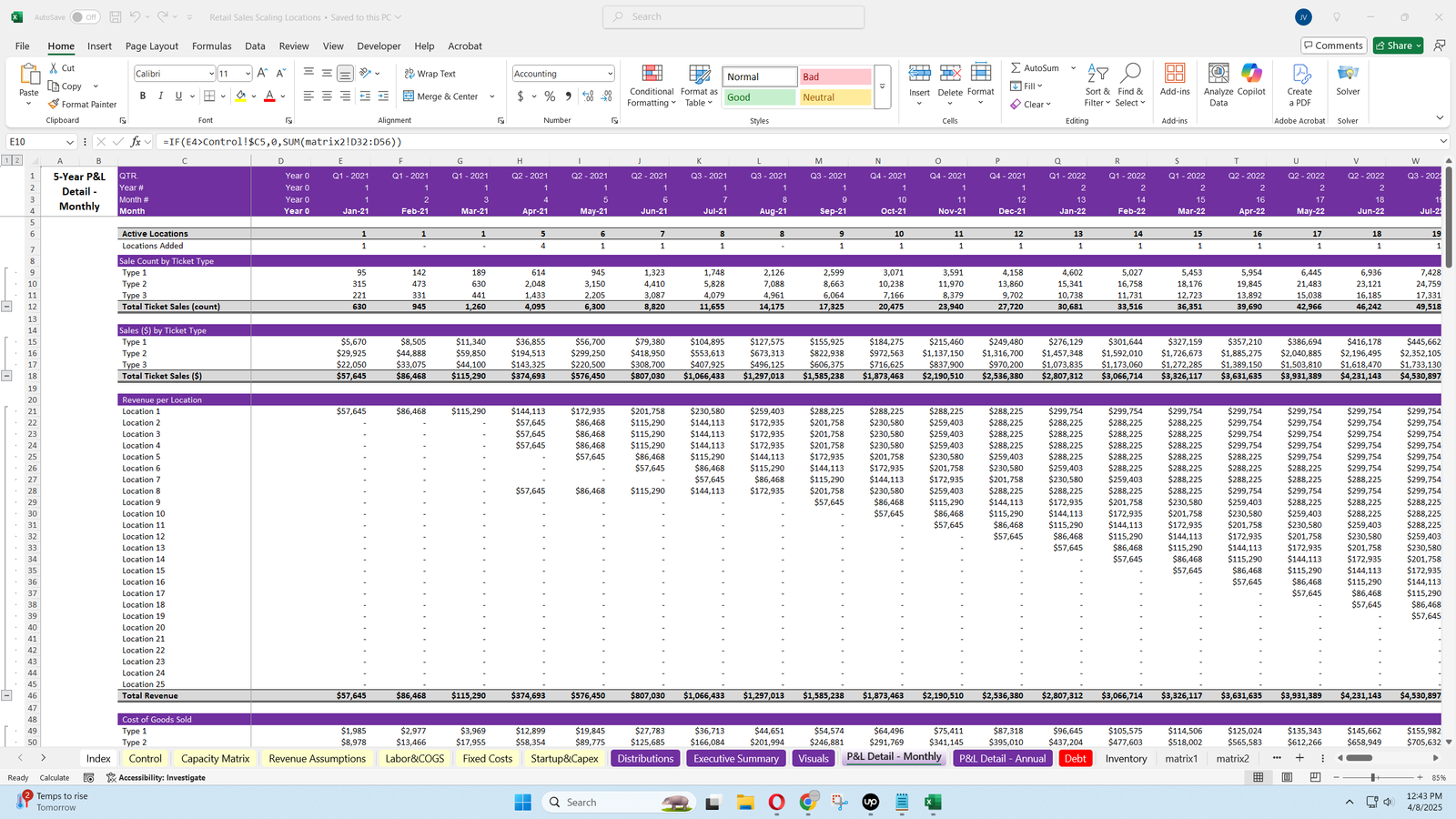
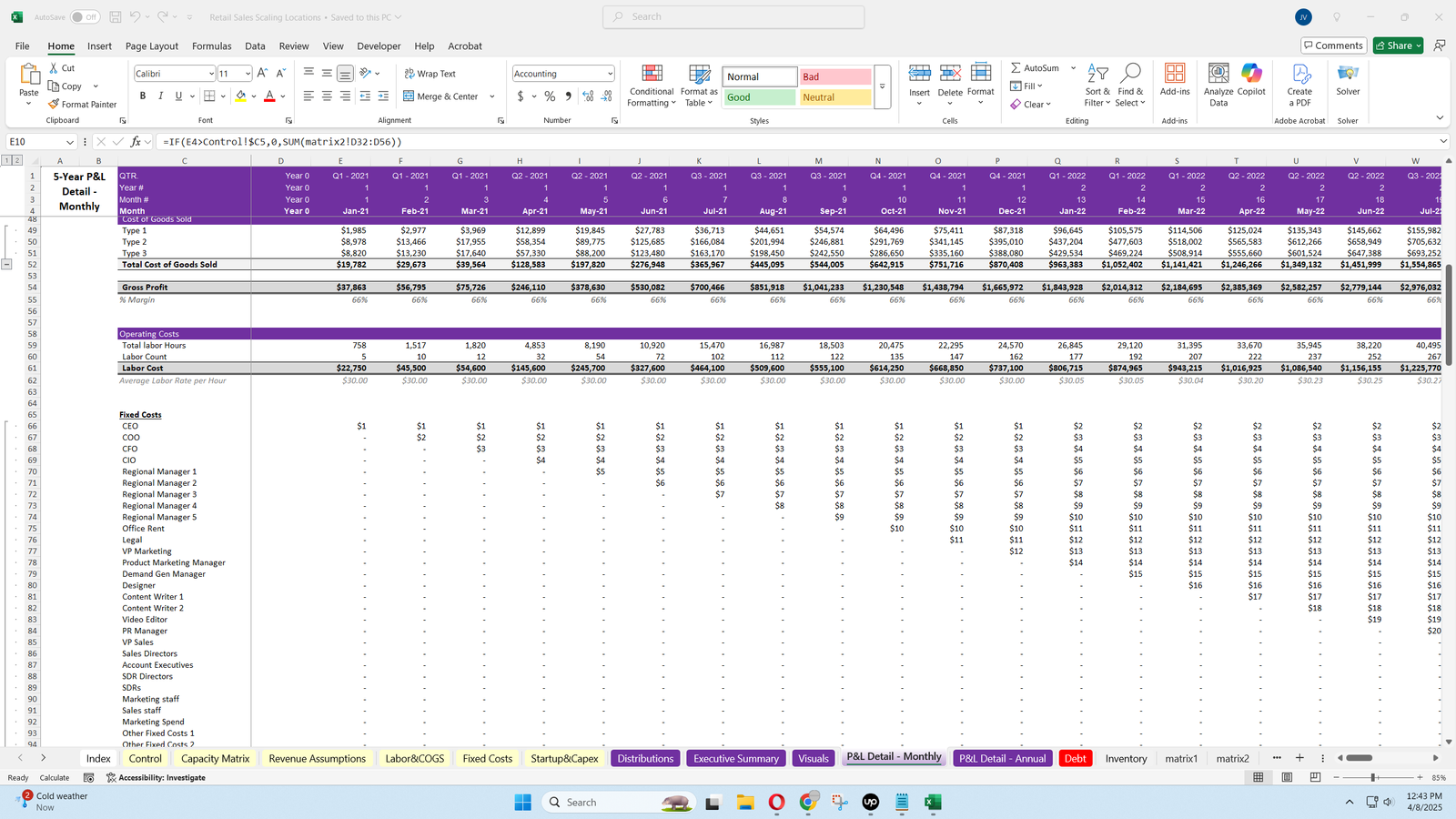
This 5-year financial model is designed for scaling up to 25 retail locations, making it ideal for restaurants, home goods stores, or similar businesses. The template includes dynamic logic for variable start dates, capacity growth, multi-ticket revenue streams, labor, and COGS projections. With built-in IRR, NPV analysis, and breakeven calculations, the model ensures precision in forecasting operational scaling and profitability.
The Retail Sales Scaling Location Financial Model is a robust, 5-year dynamic tool designed to help businesses scale retail operations effectively across multiple locations.
- This model is tailored for a variety of retail types, including restaurants, home goods stores, and similar ventures.
- With advanced logic and dynamic capabilities, it simplifies complex forecasting, making it an essential asset for financial planning and decision-making.
Comprehensive Features of Retail Sales Scaling Locations Financial Model
This model includes everything you need to plan for growth, assess profitability, and ensure sustainable scaling. Below are the key features:
1. Dynamic Scaling Logic
Supports up to 25 Locations: Easily customize the number of retail locations, with scalability for larger operations.
- Flexible Start Months: Plan openings for each location at different times.
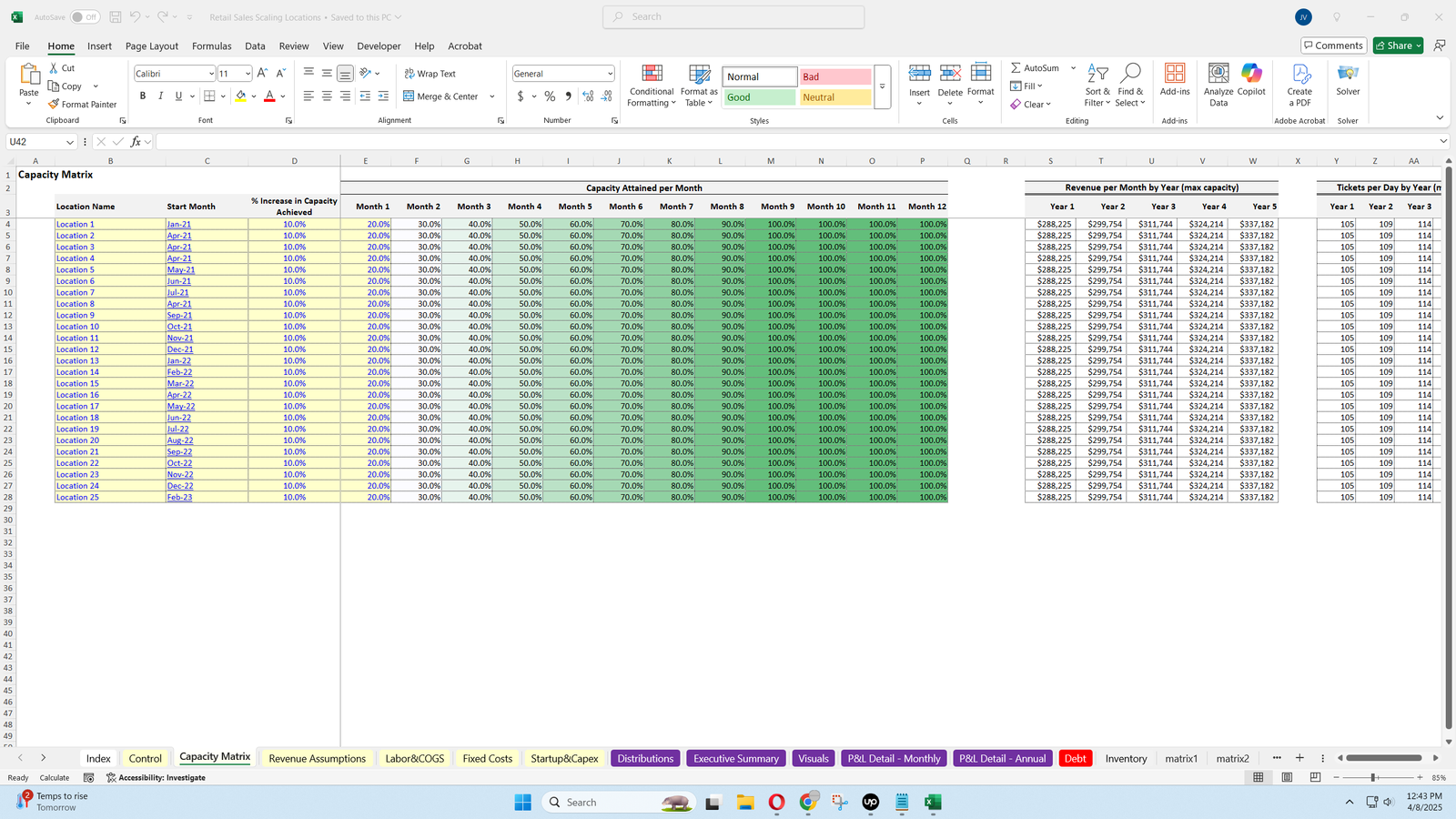
- Capacity Growth: Tracks each location’s growth over the first 12 months, accounting for continued scaling and operational improvements.
2. Revenue Forecasting
- Multi-Ticket Revenue Streams: Incorporates up to three ticket types per location (e.g., dine-in, takeout, or product tiers).
- Customizable Inputs: Define ticket prices, daily capacities, and sales percentages for each ticket type.
- Dynamic Revenue Calculations: Automatically adjusts based on capacity growth and scaling factors.
3. Cost and Expense Modeling
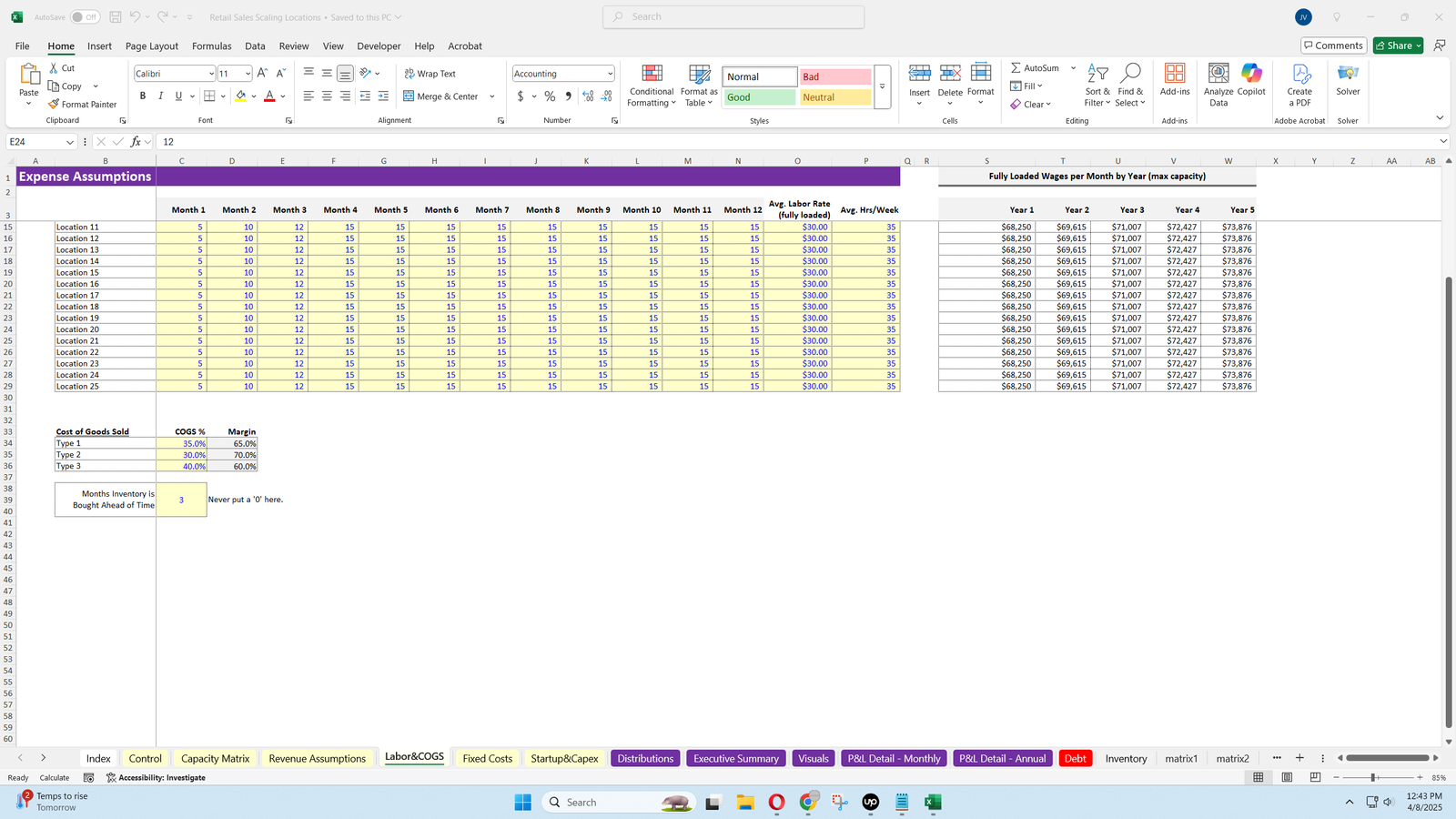
- Labor Costs:
- Scales dynamically with growth over time.
- Inputs for hourly wages, inflation, benefits, and hours worked.
- Cost of Goods Sold (COGS):
- Adjustable percentages for each ticket type.
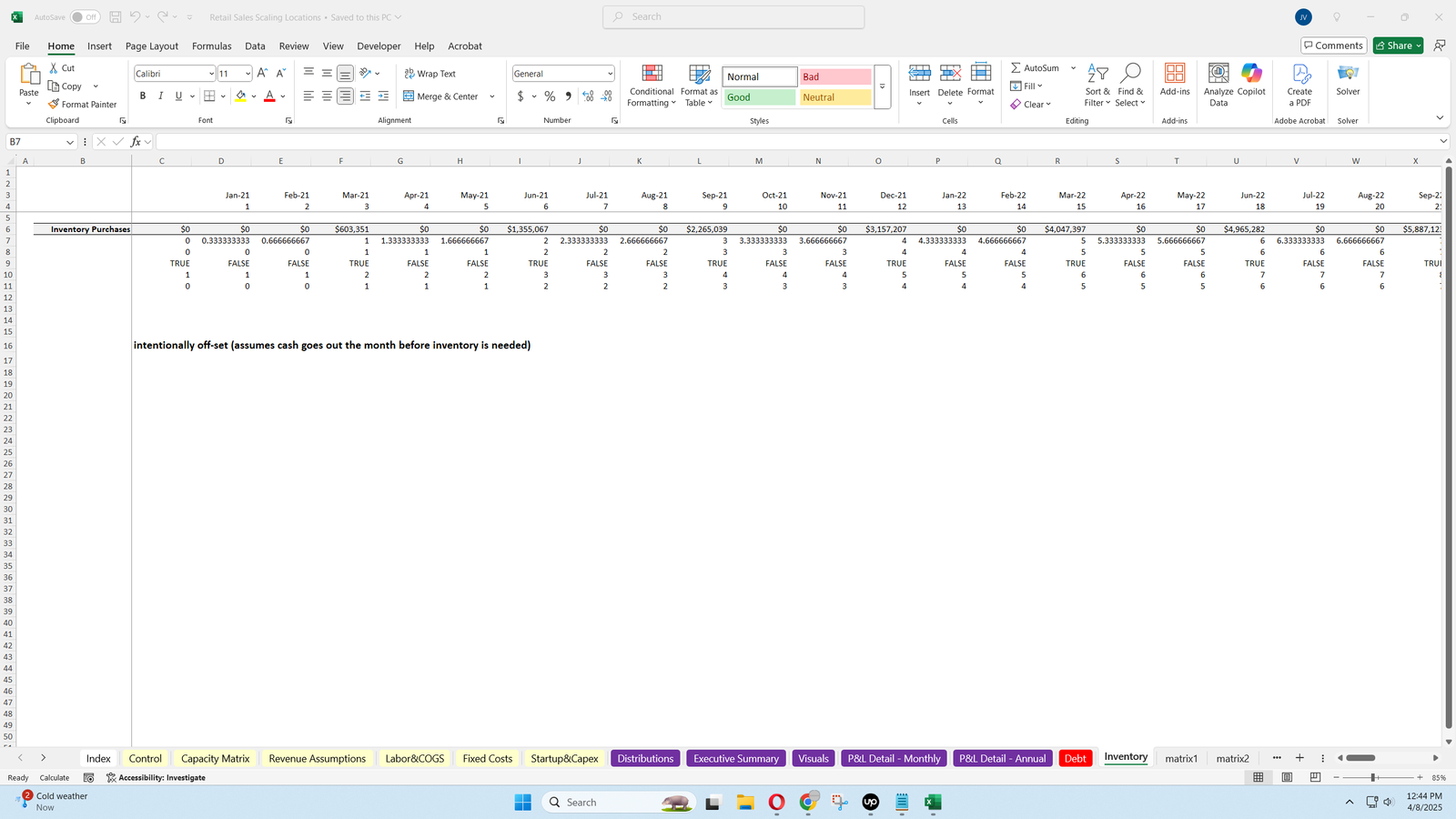
- Startup inventory requirements and subsequent purchase schedules are included.
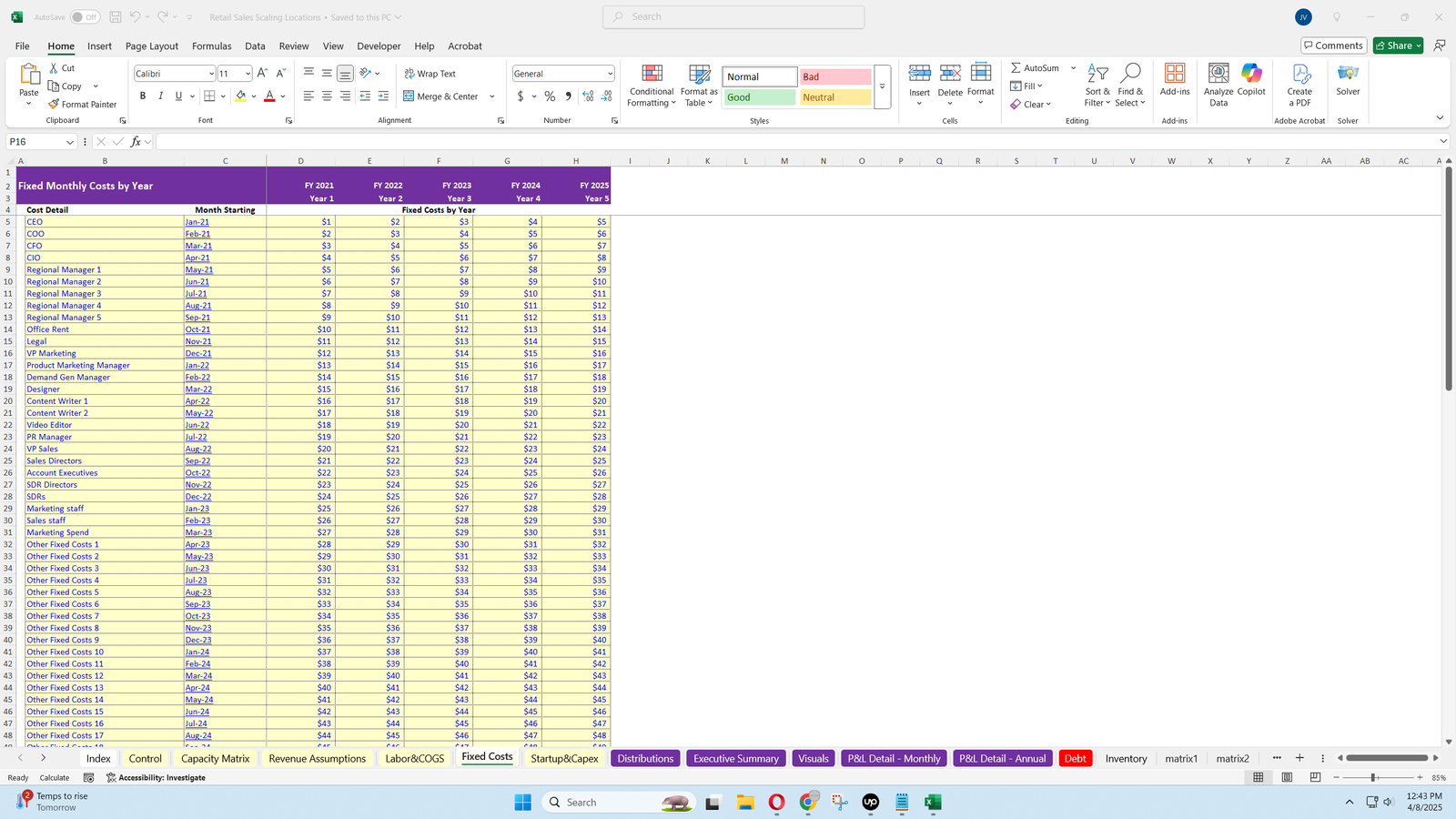
- Fixed Costs:
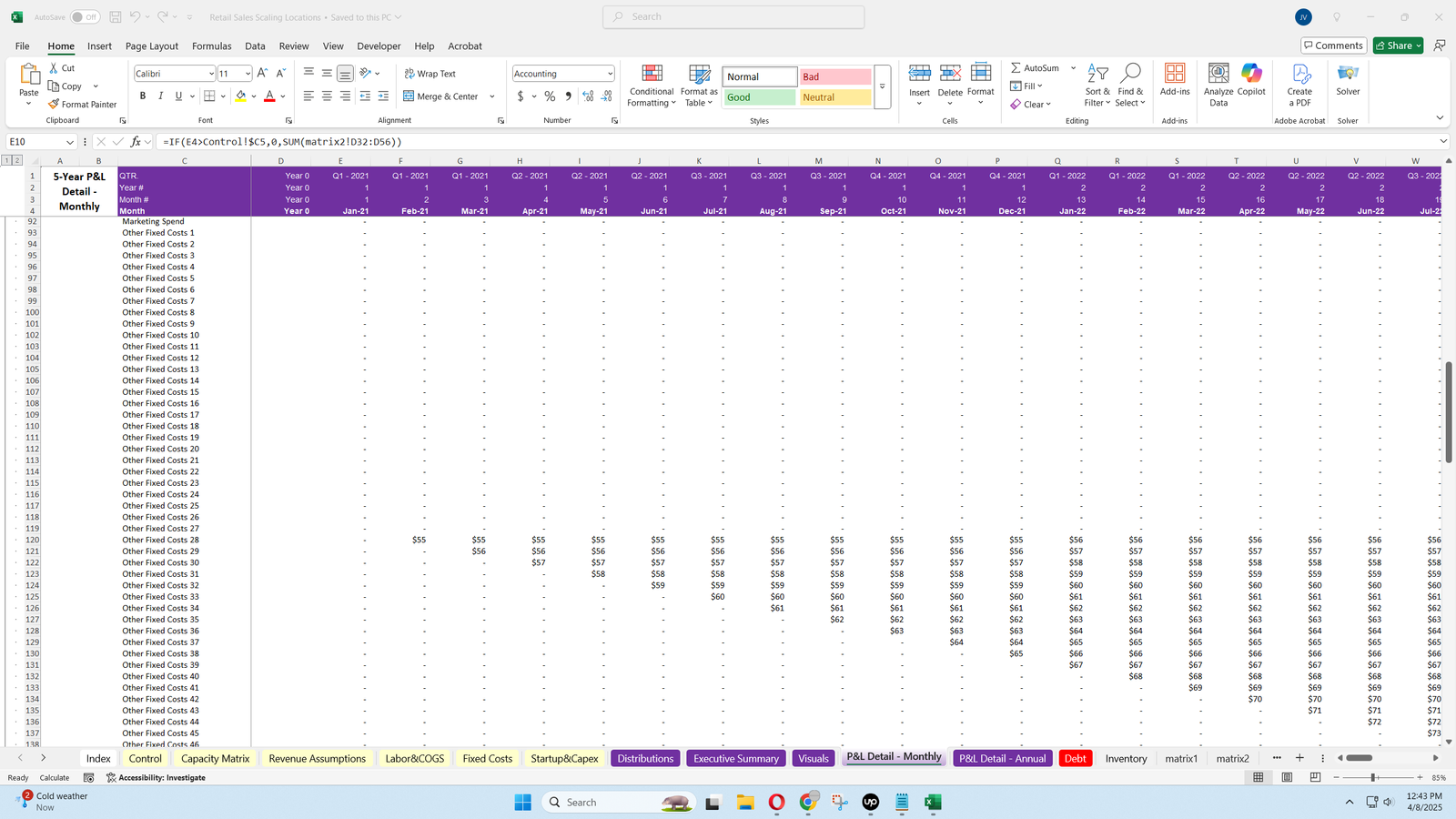
- Editable start months and monthly amounts for operating expenses.
4. Startup and Capital Expenditures
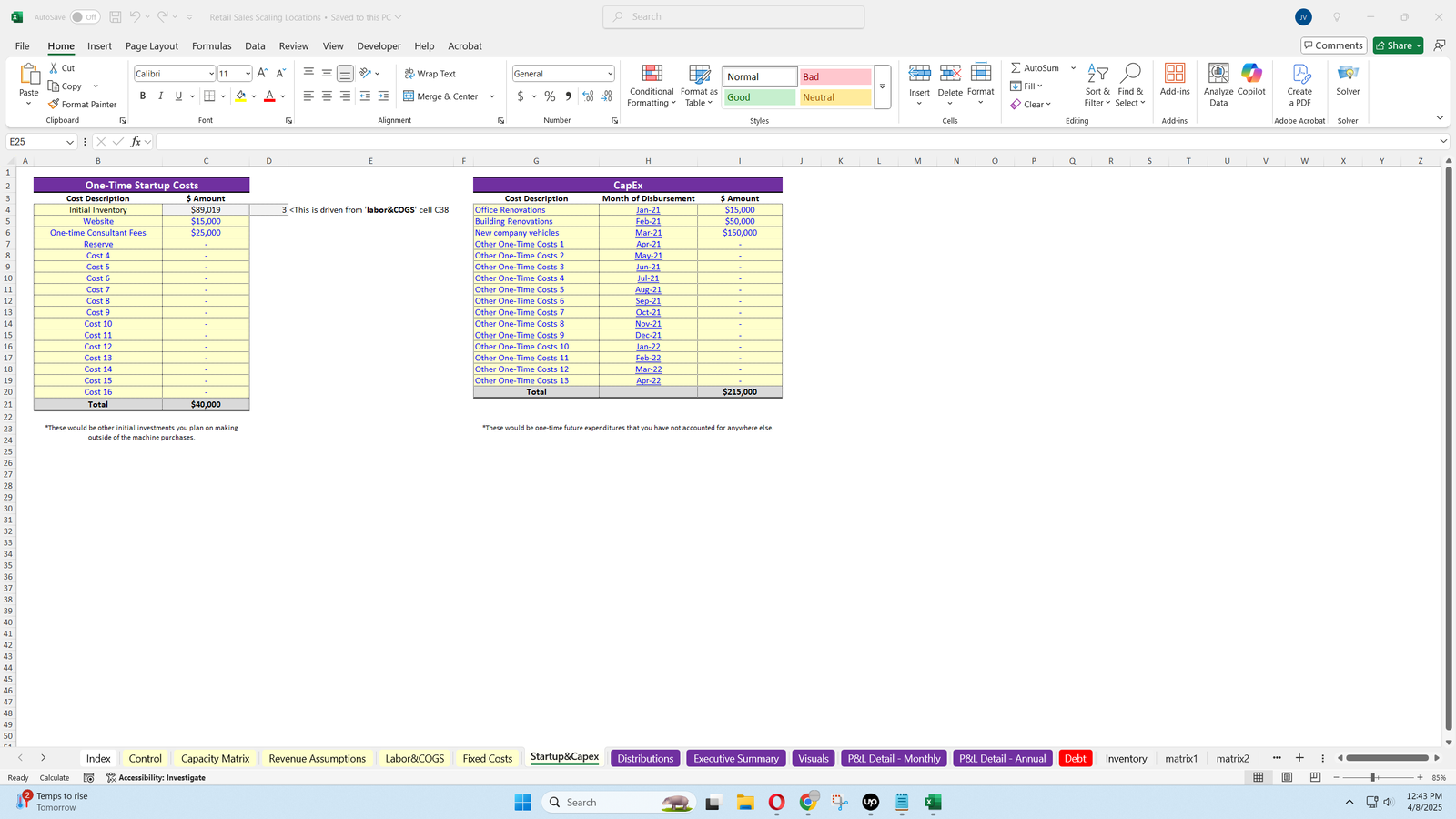
- Startup Costs: Includes inventory, acquisition, or development costs for each location.
- CapEx with Depreciation: Optional tracking of capital expenditures with depreciation schedules.
5. Cash Flow and Investment Analysis
- Comprehensive Cash Flow Management: Tracks negative and positive cash flow months, ensuring alignment with operational needs.
- Investment Metrics:
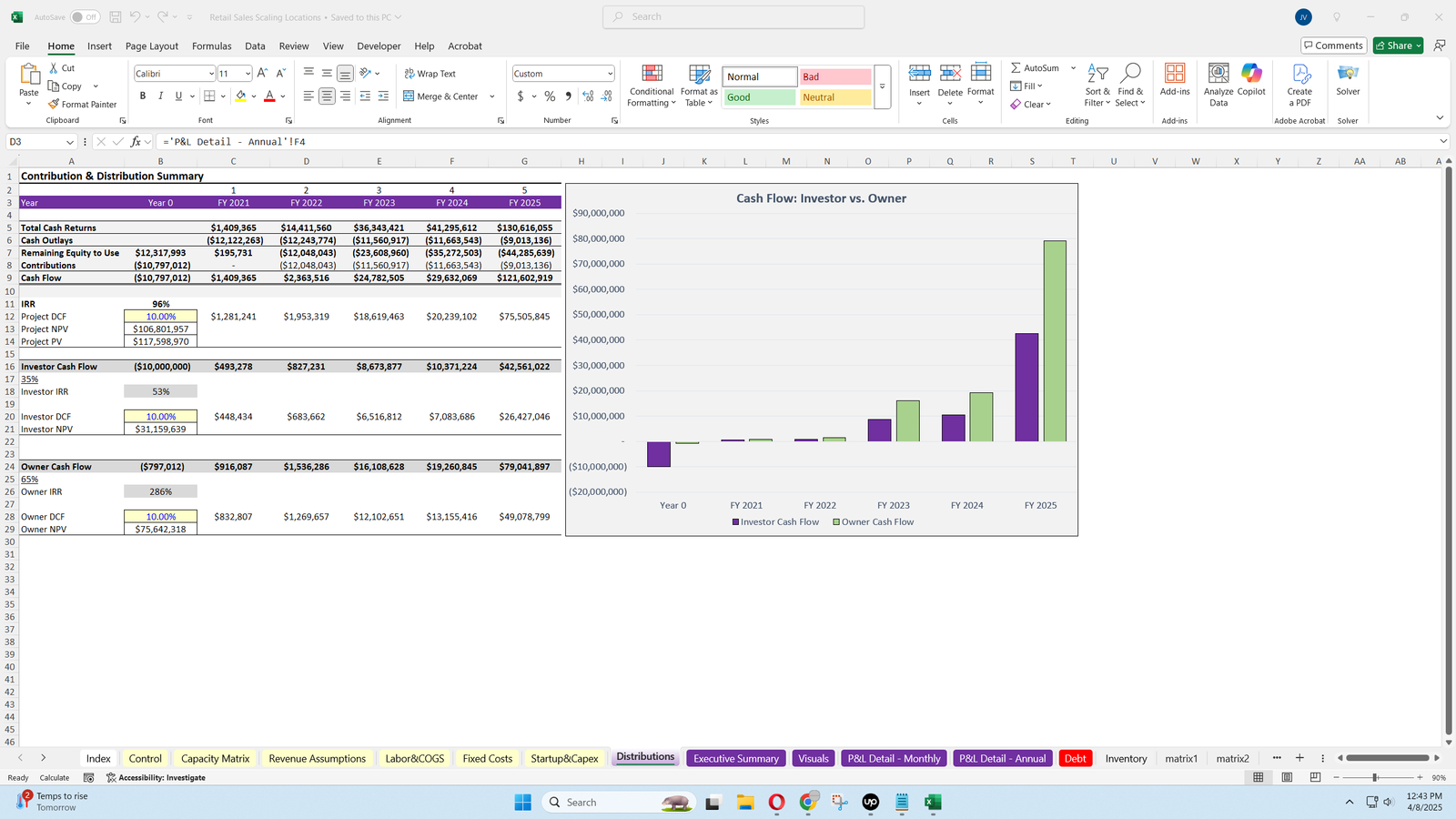
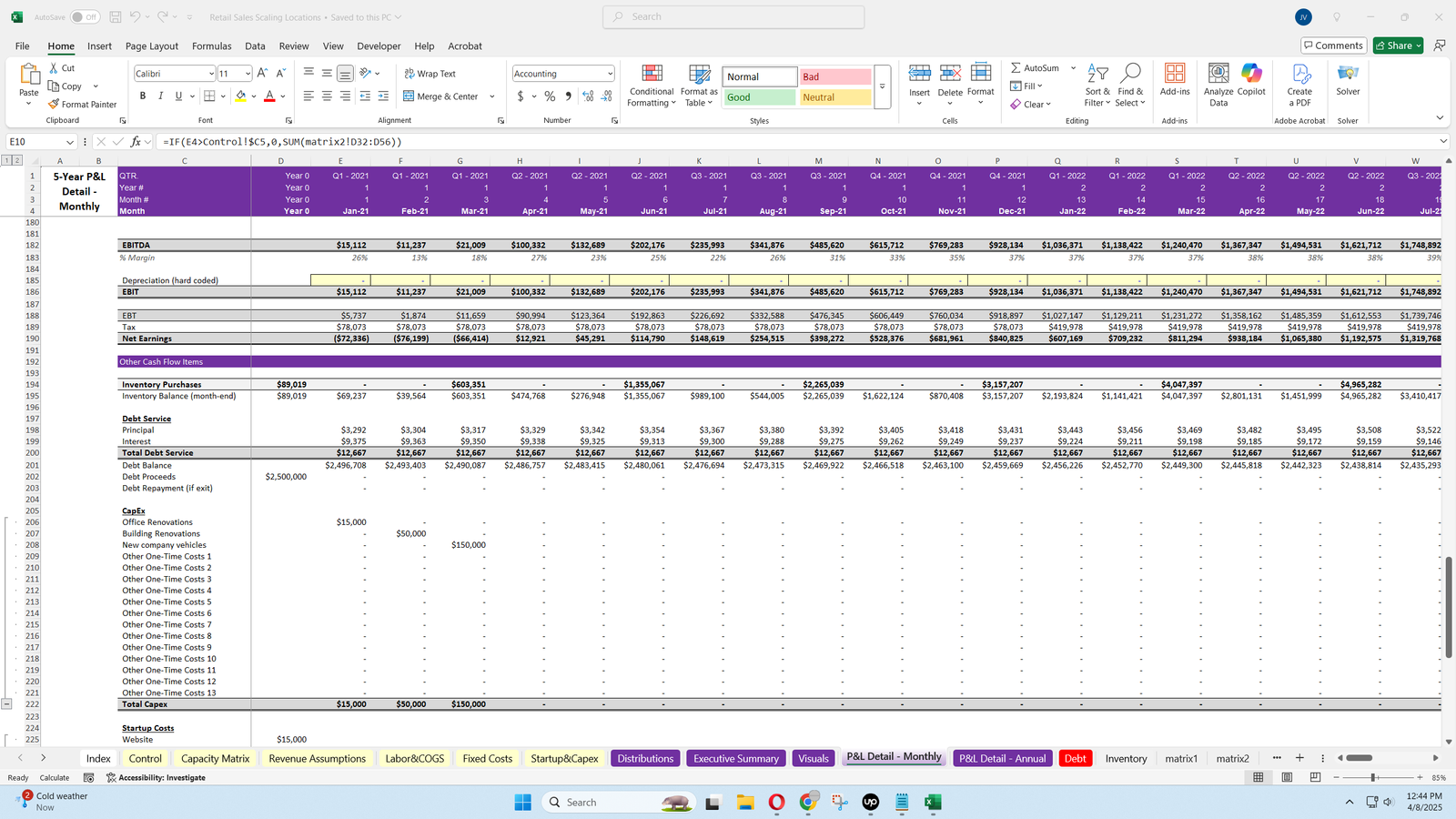
- Calculates Internal Rate of Return (IRR), Present Value (PV), and Net Present Value (NPV).
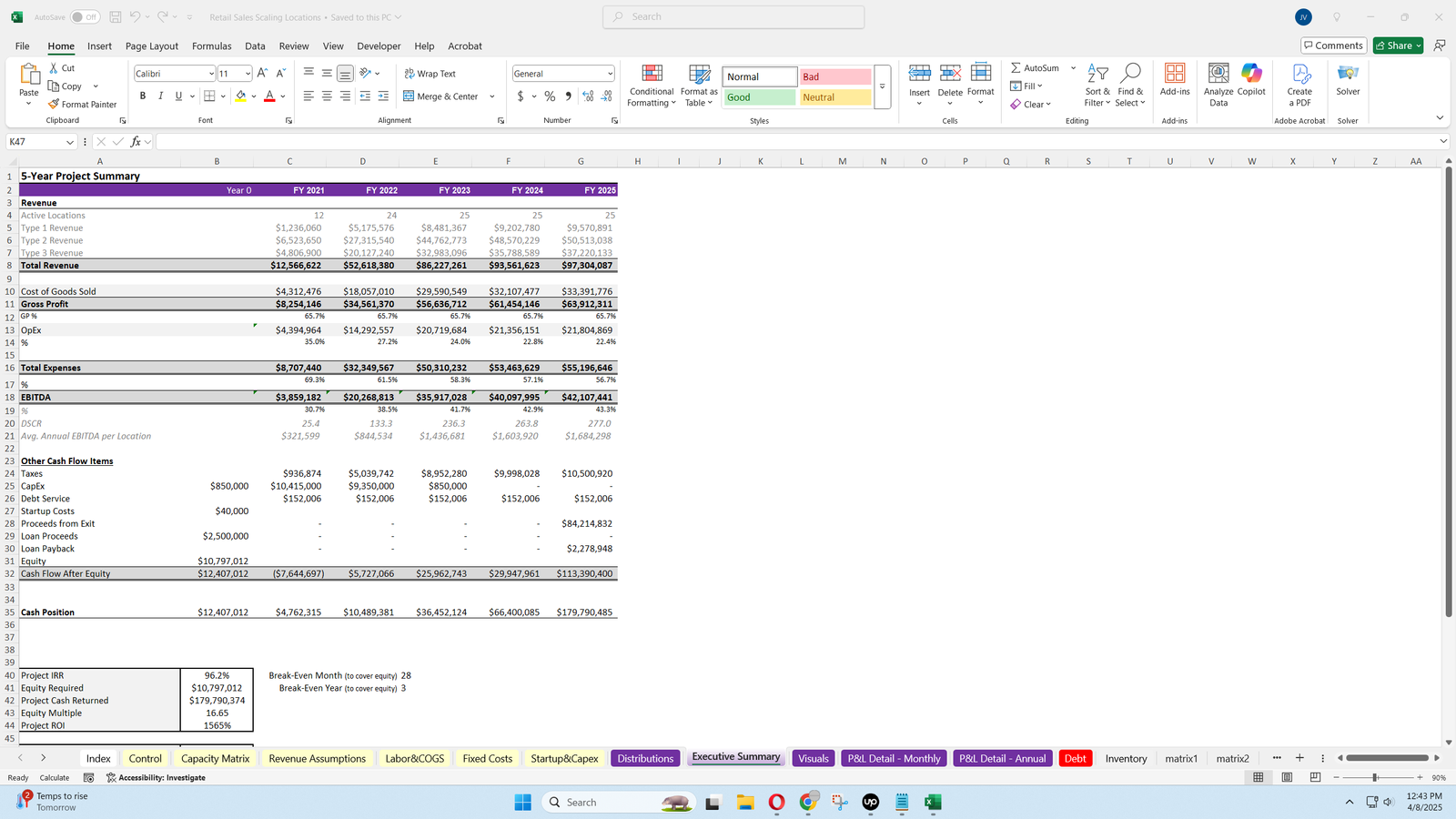
- The breakeven analysis highlights when equity investments are fully recovered.
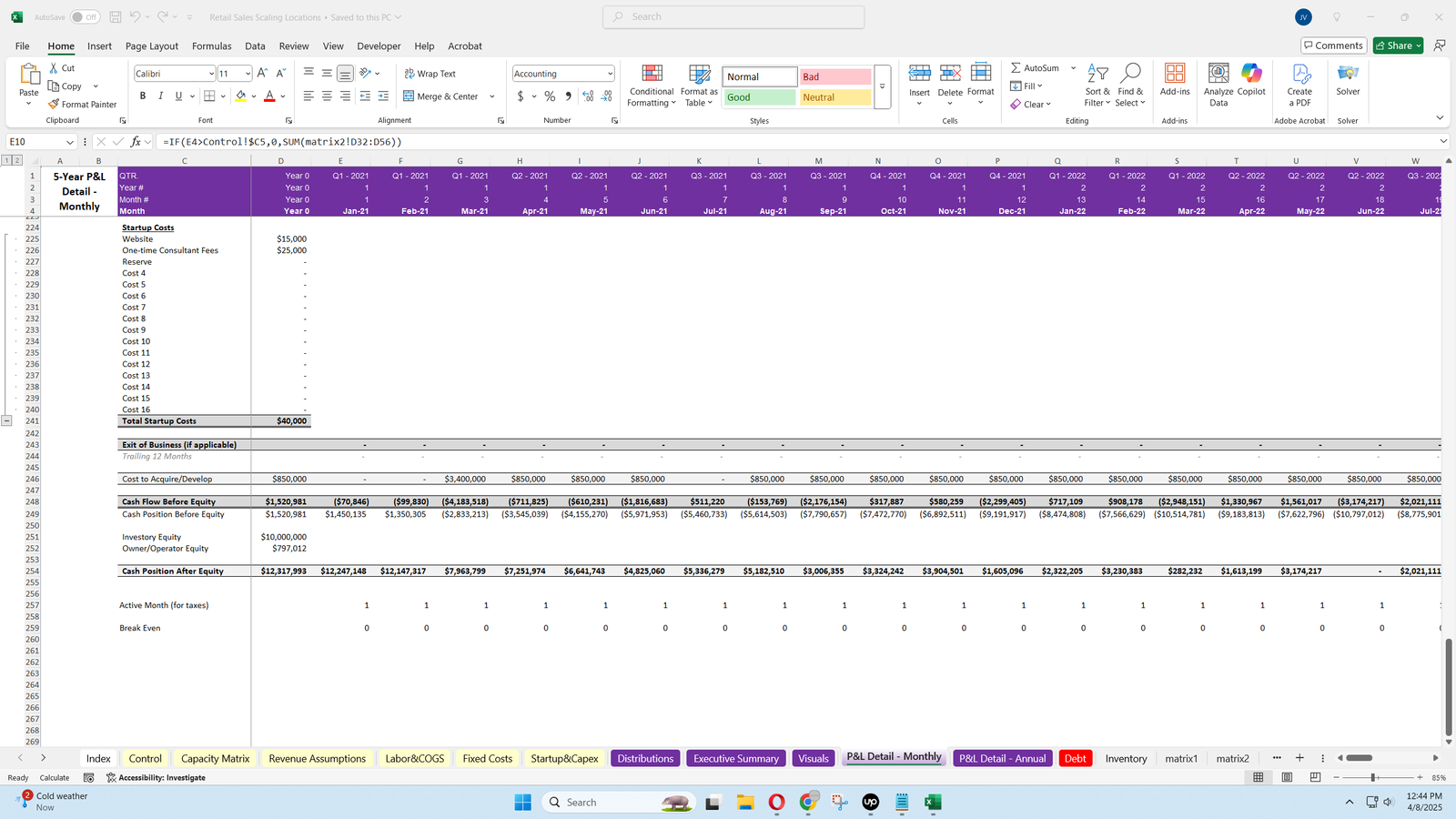
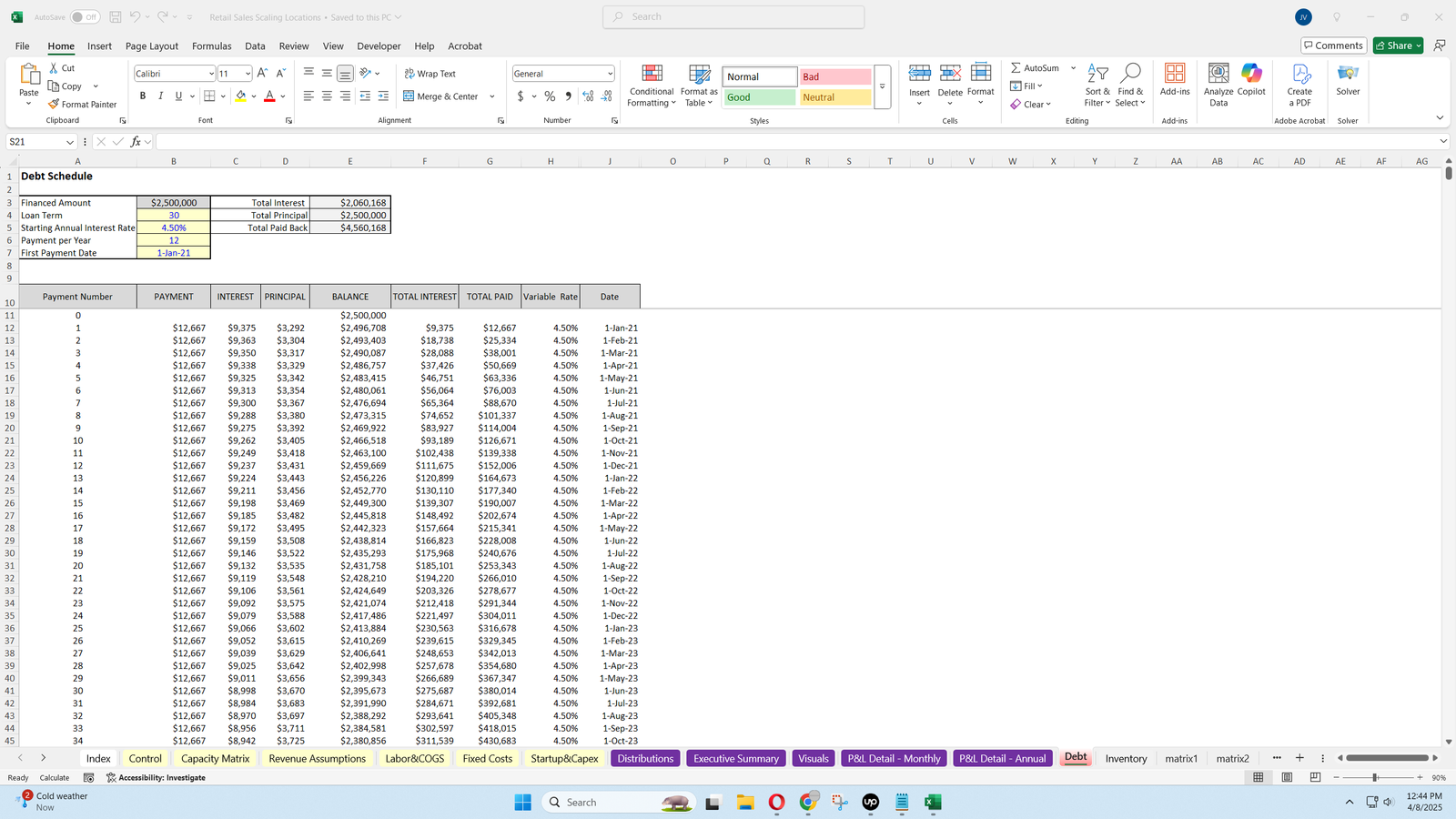
- Debt and Equity Projections: Models financing requirements, including debt proceeds and equity contributions.
6. Executive Summary and Visual Dashboards
- High-Level Overview: Summarizes revenue, gross profit, operating costs, and cash flow.
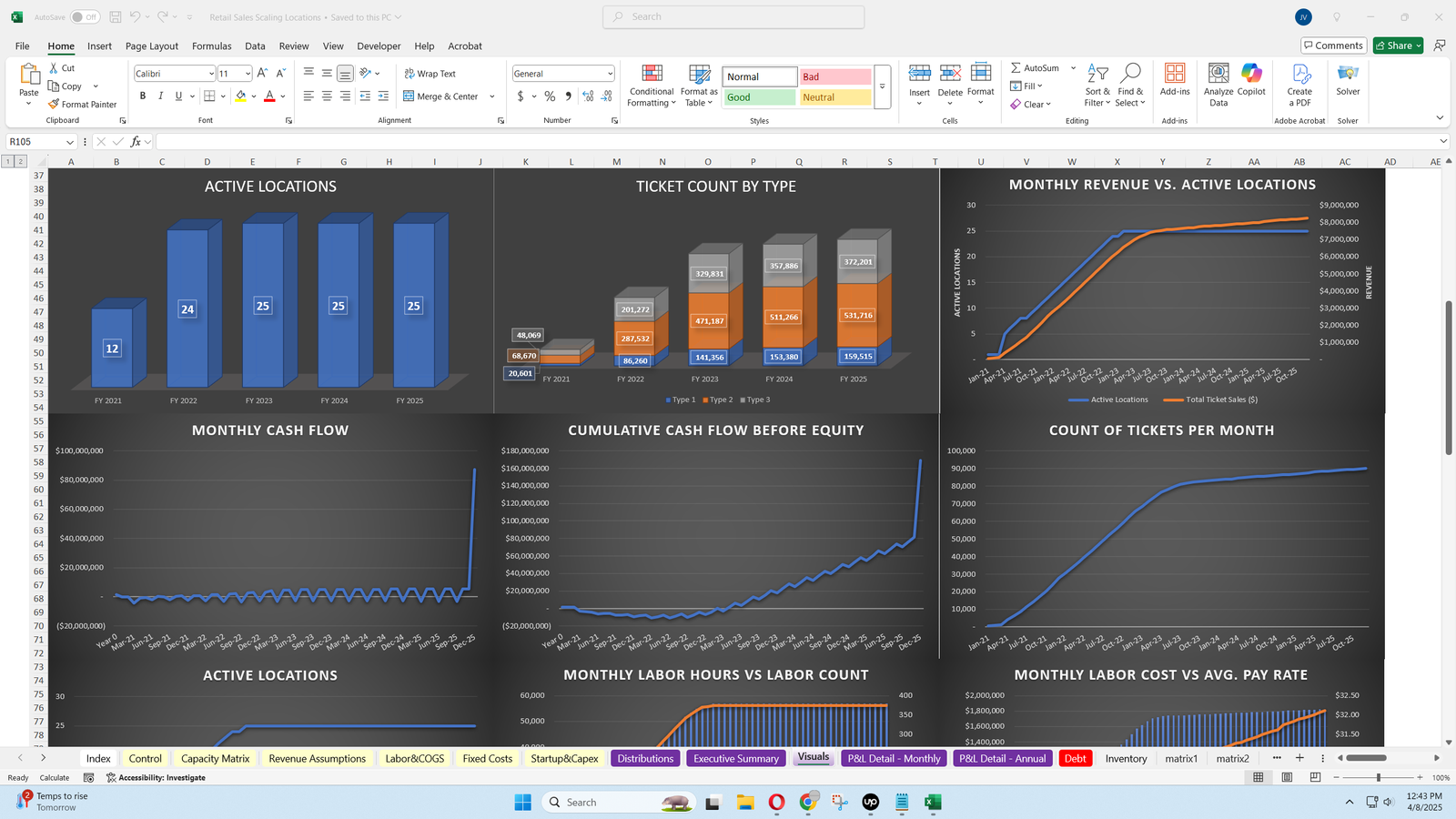
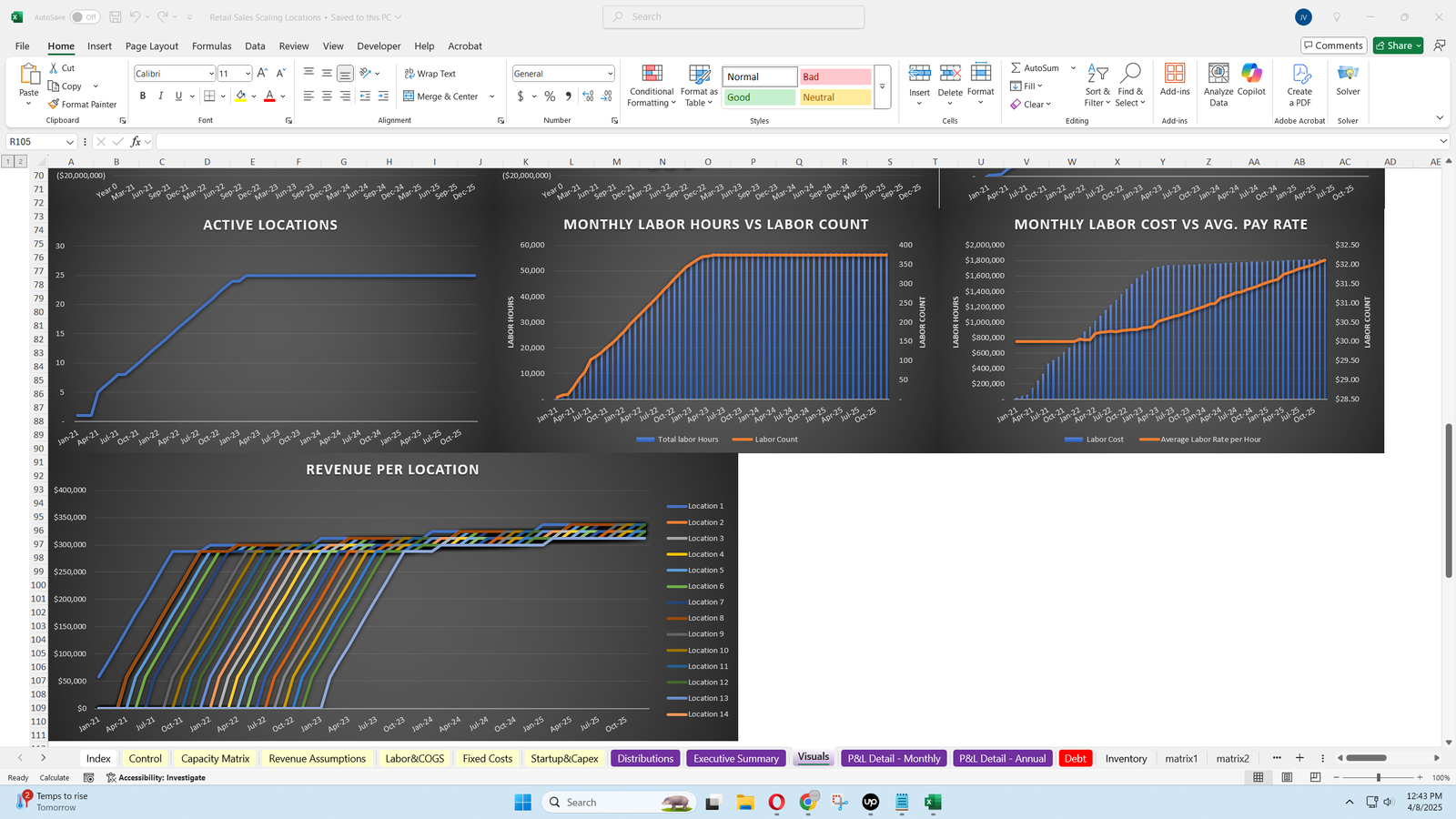
- Visual Insights: Graphs and charts display key metrics such as active locations, revenue by location, and labor costs.
7. Detailed Financial Statements
- Profit & Loss (P&L) Statements: Monthly and annual breakdowns of ticket sales, operational costs, taxes, and net earnings.
- Cash Flow Statements: Tracks equity contributions, debt repayments, and inventory purchases.
- Forecasting Accuracy: Ensures minimum cash requirements are accounted for, with transparent calculations.
How Does It Work?
The Retail Sales Scaling Locations Financial Model is built with advanced logic across multiple tabs:
- Environmental Specs Tab: Define the start and exit months, input exit multiples based on trailing twelve-month (TTM) revenue, and include debt or equity proceeds.
- Capacity Matrix: Customize start months, capacity growth rates, and scaling percentages for each location.
- Revenue and Cost Assumptions: Set variables for ticket types, labor, COGS, and fixed costs.
- Multi-Layered Matrices: Ensure precision in calculations for scaling operations, capacity, and financial metrics.
Who Should Use This Model?
This financial model is ideal for:
- Business Owners: Plan, analyze, and scale operations efficiently.
- Investors: Assess returns and evaluate growth potential.
- Financial Analysts: Conduct detailed forecasting and scenario planning.
Refund Policy
There are no refunds, all sales are final.
Cancellation / Return / Exchange Policy
For intellectual property, there are no returns / exchanges. All the files are downloadable, editable, and unlocked.
General Inquiries
There are no inquiries yet.


Reviews
There are no reviews yet.