
Zoo or Aquarium Financial Model
$ 40
The Zoo or Aquarium Financial Model-5 Year Plan is a dynamic and customizable tool designed to help nonprofits and parks plan their operations, manage funding, and forecast financial outcomes effectively. It accommodates revenue from ticket sales, donations, gift shops, and seasonal events while also addressing costs like staffing, animal care, and exhibit maintenance.
The Zoo or Aquarium Financial Model is a meticulously designed, comprehensive financial planning tool crafted to meet the unique needs of nonprofit organizations such as zoos, aquariums, and similar attractions. This model addresses the intricacies of operating a zoo or aquarium, offering deep insights into revenue generation, operational costs, and funding requirements, all while maintaining user-friendly navigation and adaptability.
Core Features of Zoo or Aquarium Financial Model:
Revenue Planning and Visitor Forecasting:
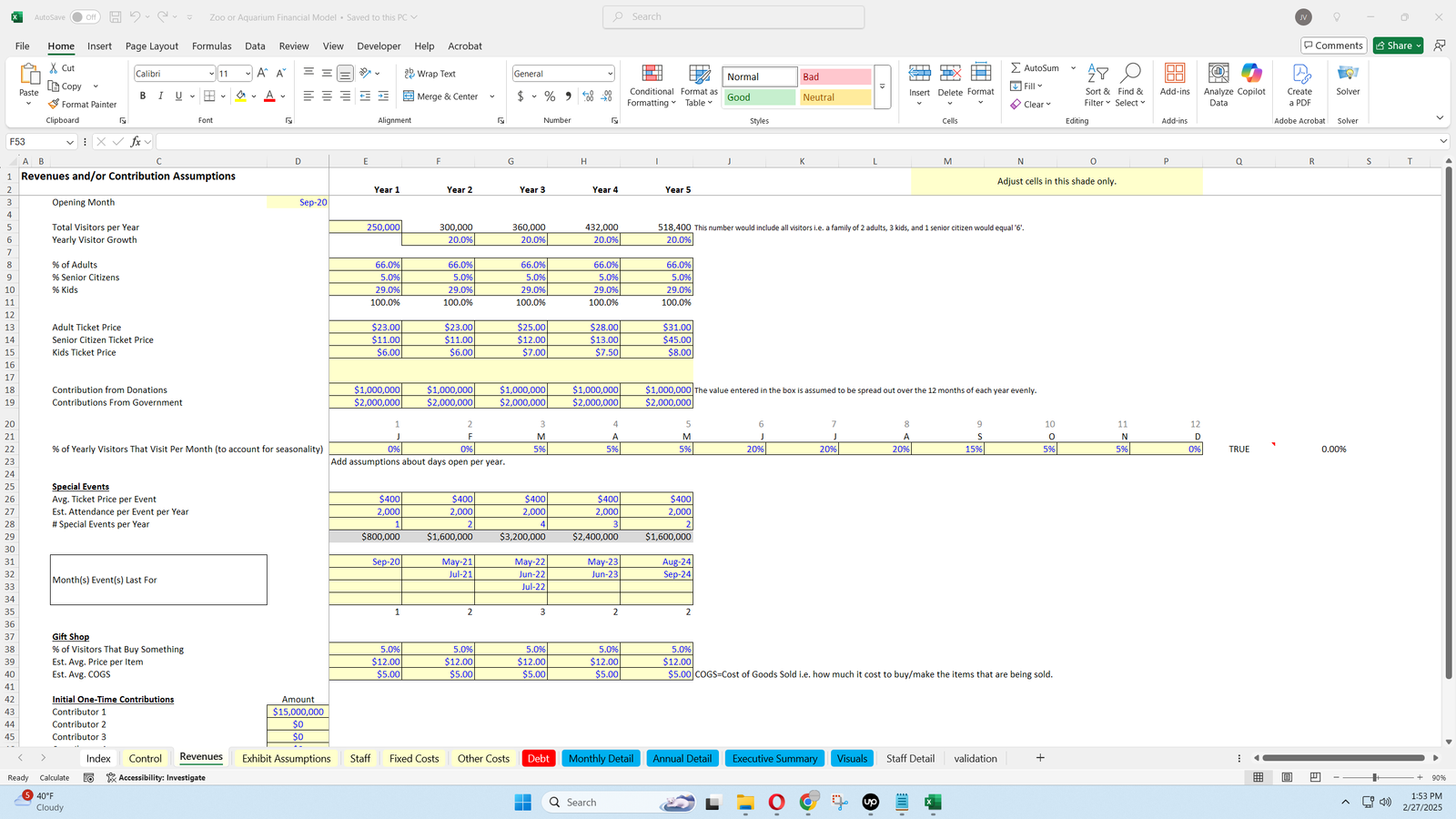
- The model allows you to define your projected opening date, starting year, and expected average annual visitors.
- Annual visitor numbers are dynamically distributed across months based on customizable seasonal percentages, ensuring that regional and climatic factors are accounted for.
- Growth projections can be incorporated, providing insights into how visitor numbers and revenue might evolve over time.
- Ticket prices are tailored to age groups (adults, seniors, children) and can be adjusted annually or kept constant. These customizations ensure realistic and precise financial projections.
Donations and Contributions:
- Nonprofits like zoos often rely heavily on donations and contributions. The model enables you to plan for annual government grants, private donations, or fundraising campaigns.
- These contributions are seamlessly integrated into the monthly cash flow projections, highlighting their impact on overall financial health.
Seasonality and Event-Based Revenue:
- Seasonal trends can significantly impact attendance. For example, northern regions may see a drop in winter attendance, while southern regions may thrive during warmer months.
- The model incorporates these trends, letting users allocate monthly percentages to reflect anticipated visitor fluctuations.
- Special events with premium pricing can also be added, offering another revenue stream and boosting overall income.
Gift Shops and Merchandise Sales:
- By accounting for the percentage of visitors making purchases, average transaction values, and cost of goods sold, the model calculates gross profits from gift shop sales.
- This feature captures an important ancillary revenue stream that is often overlooked in traditional financial models.
Detailed Cost Management:
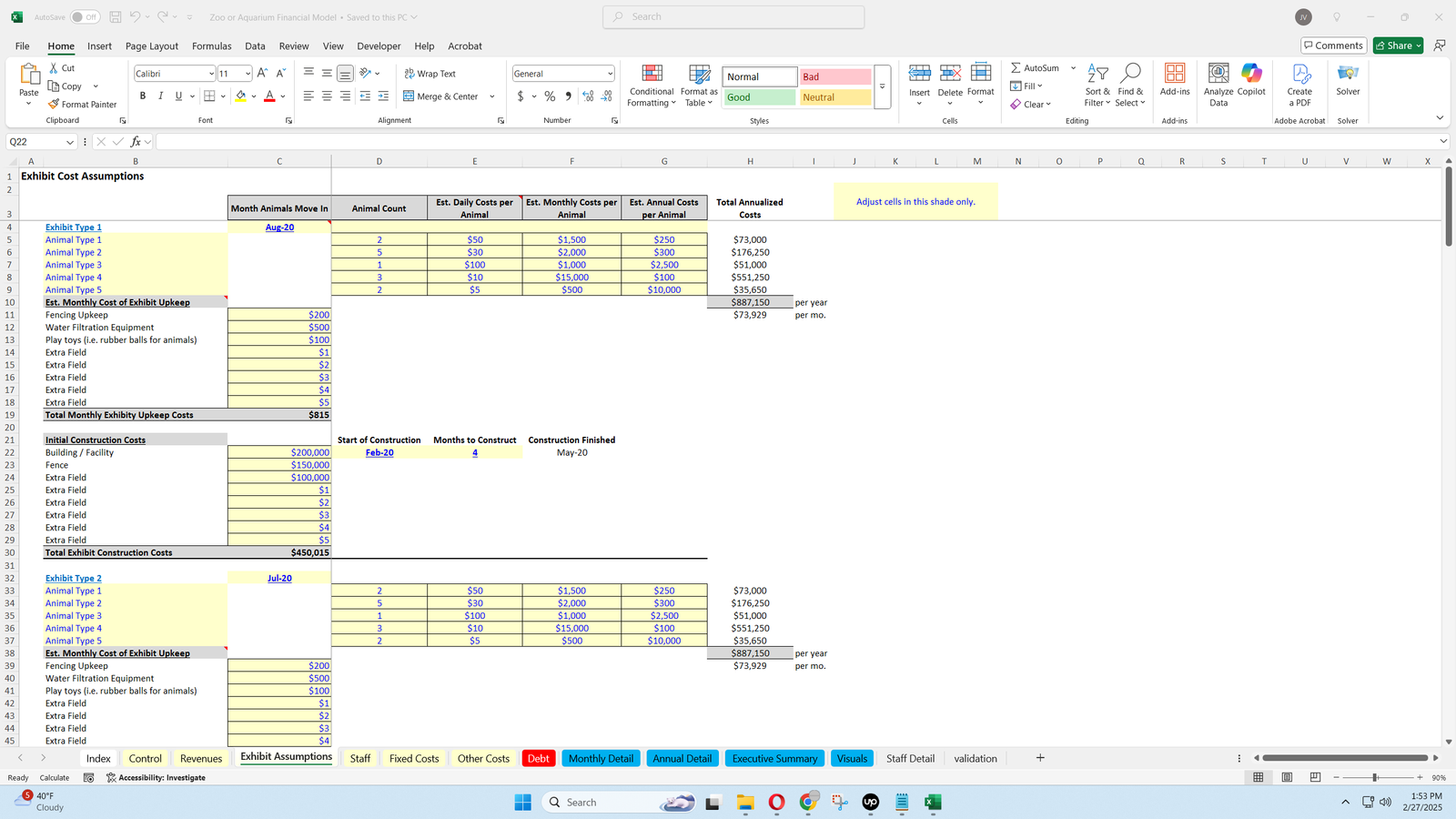
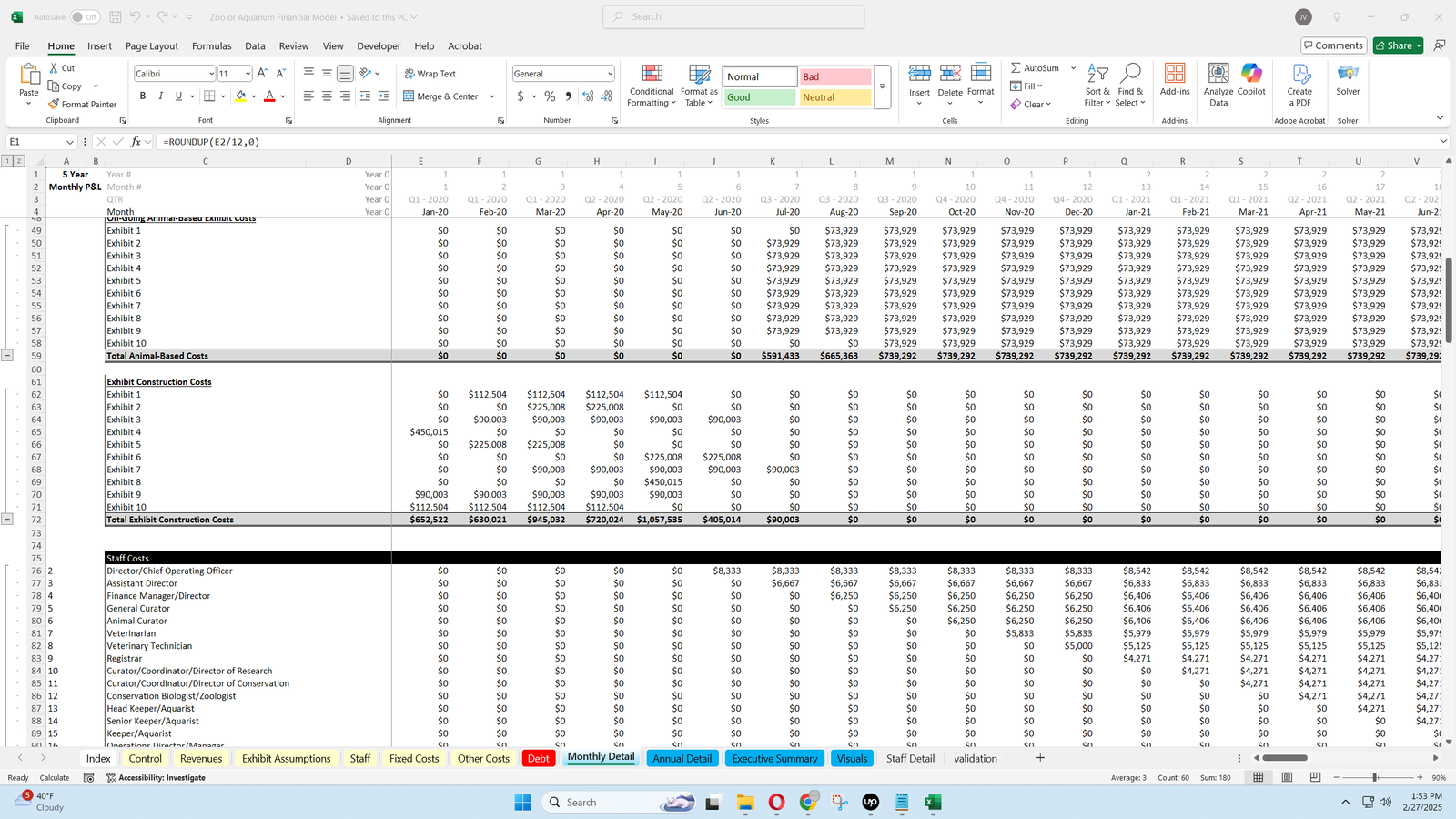
- The model provides tools to define and allocate costs for animal care, exhibit construction, maintenance, and other operational needs.
- You can specify costs on a daily, monthly, or annual basis, linking them directly to operational timelines to ensure accurate financial projections.
Staffing and Fixed Costs:
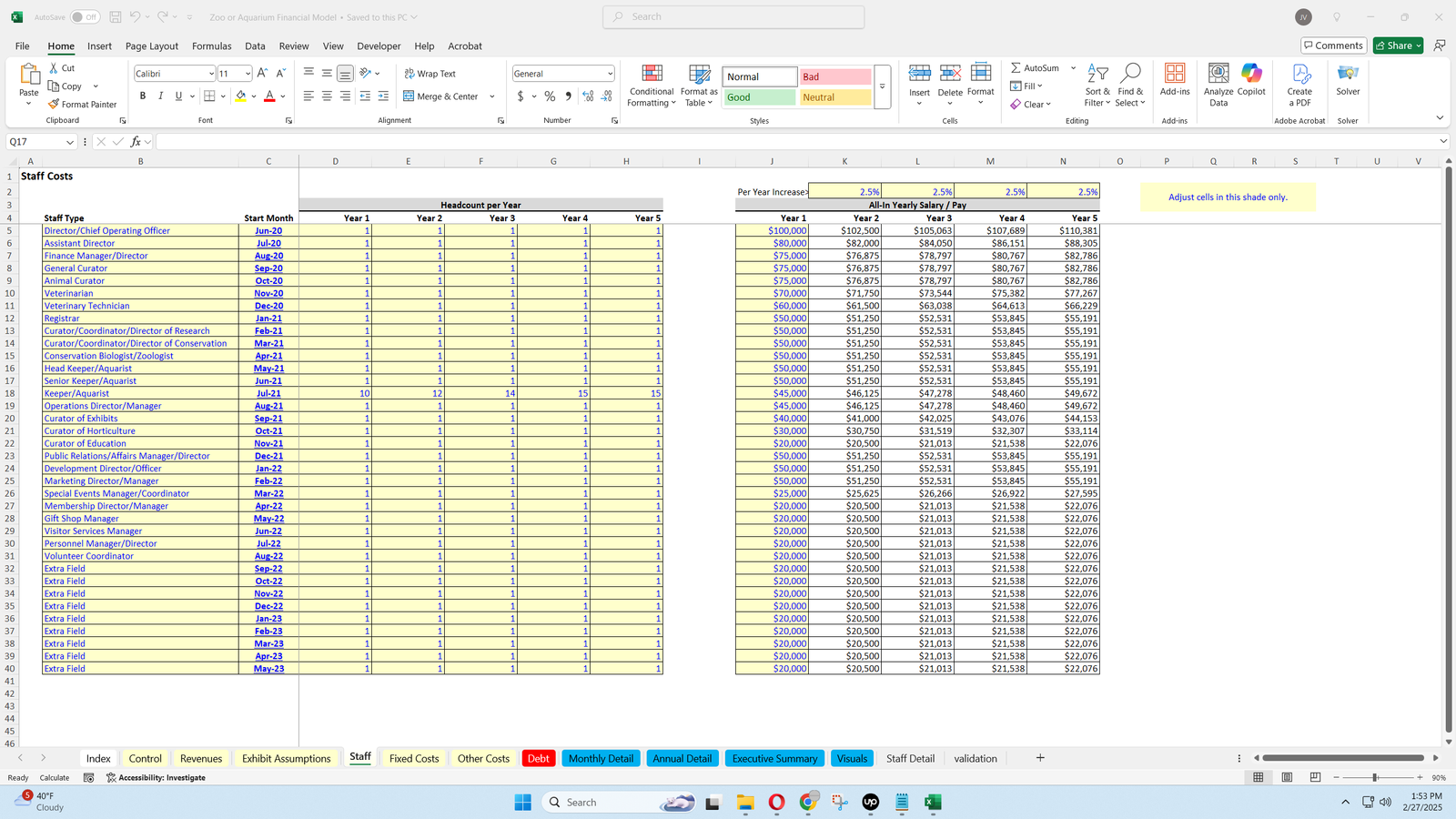
- Personnel planning is made easy by allowing users to define staffing needs by role, start date, and salary.
- Monthly salaries and annual increments are automatically calculated, reflecting the long-term financial impact of staffing decisions.
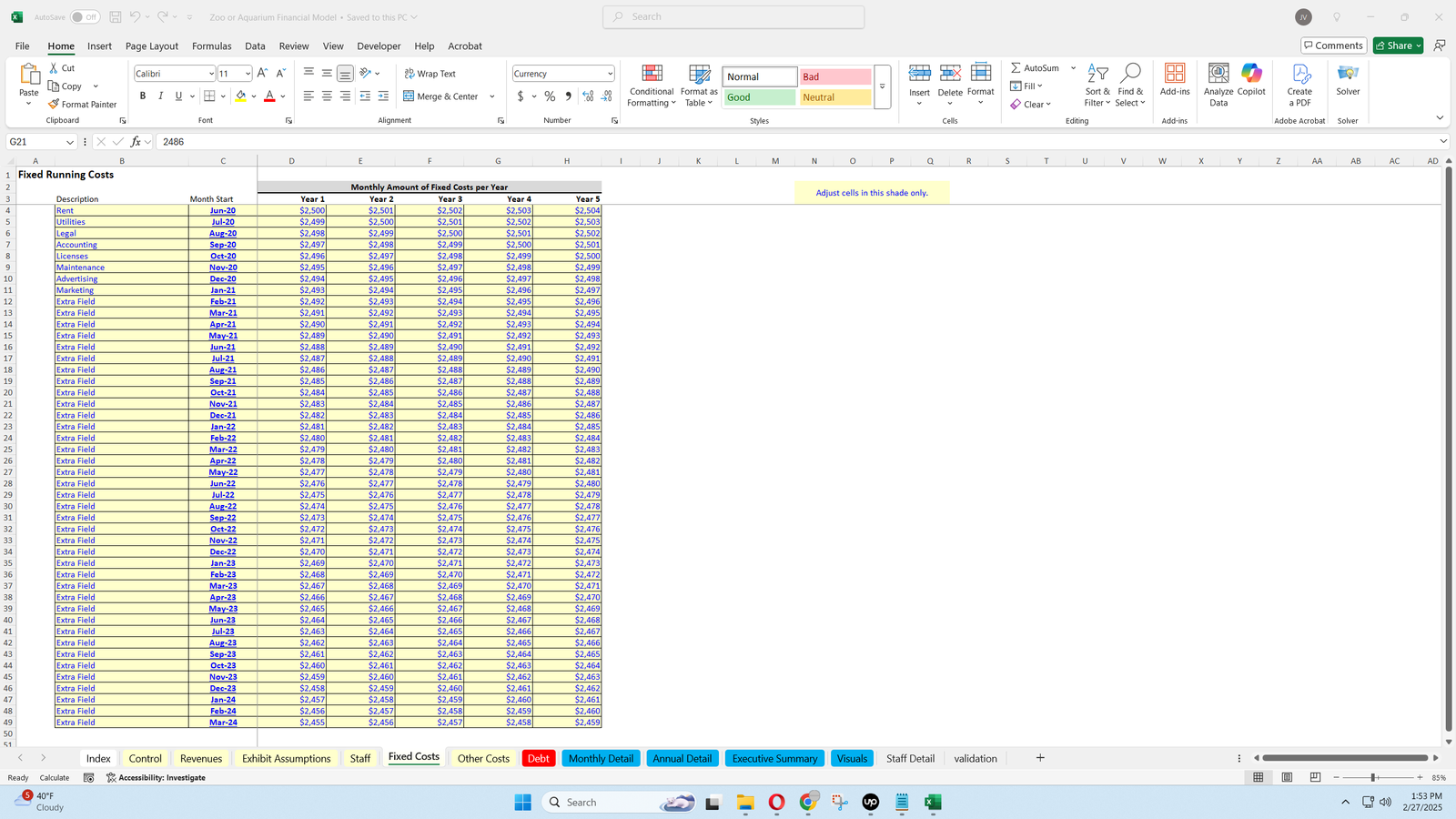
- Fixed operational costs, including utilities, legal fees, and maintenance, are also accounted for, providing a complete picture of ongoing expenses.
Capital Expenditures and Debt Financing:
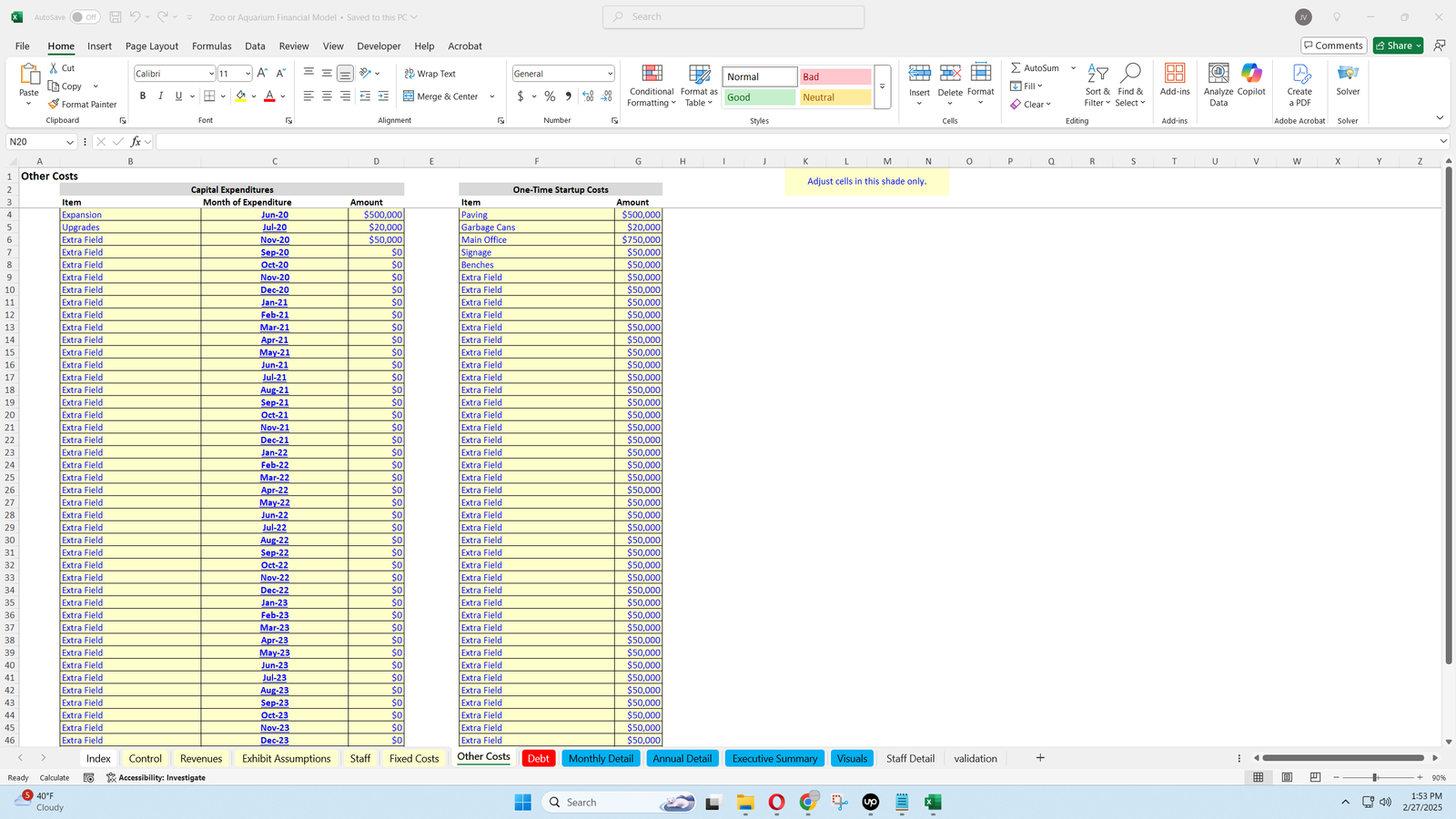
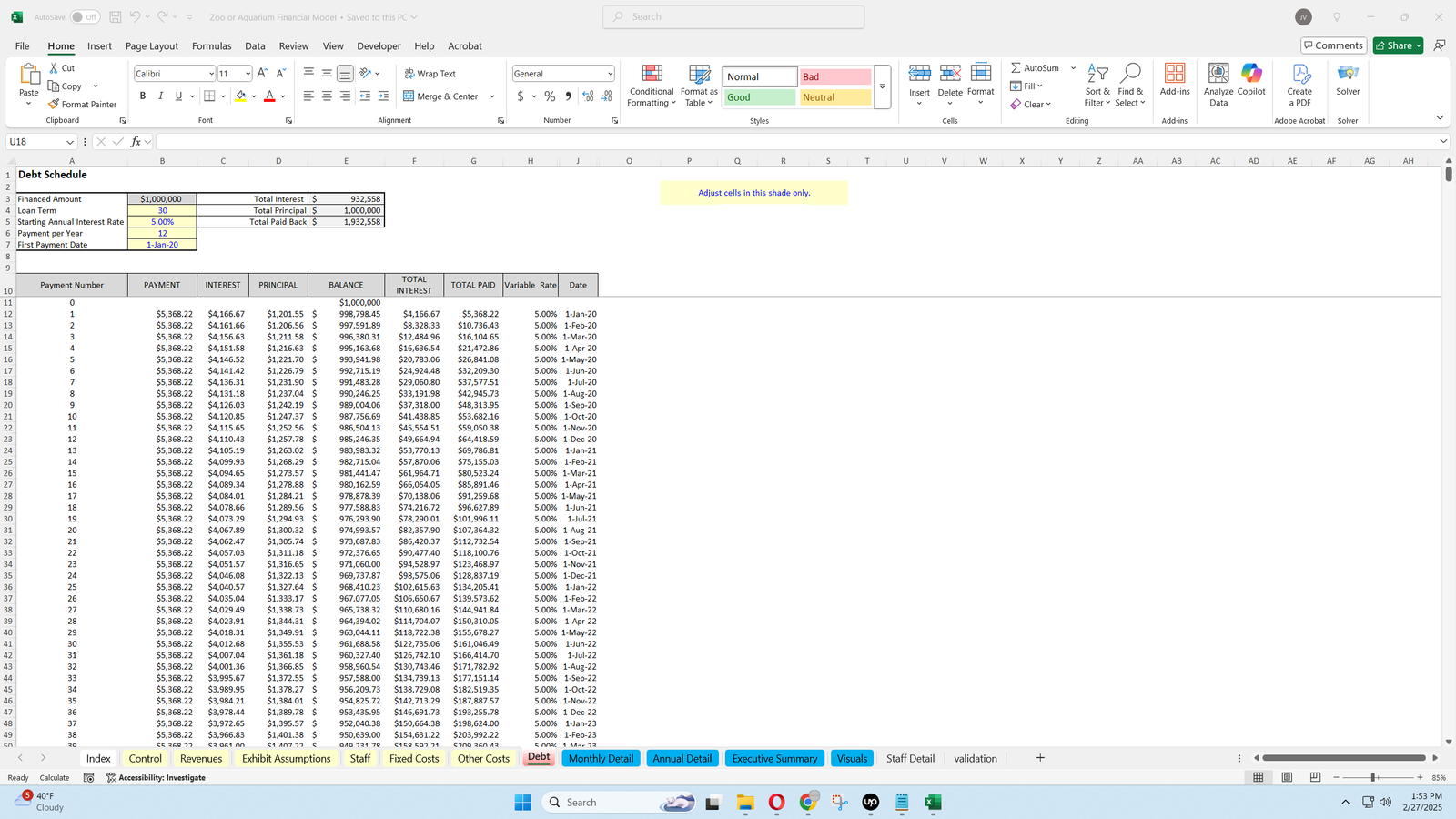
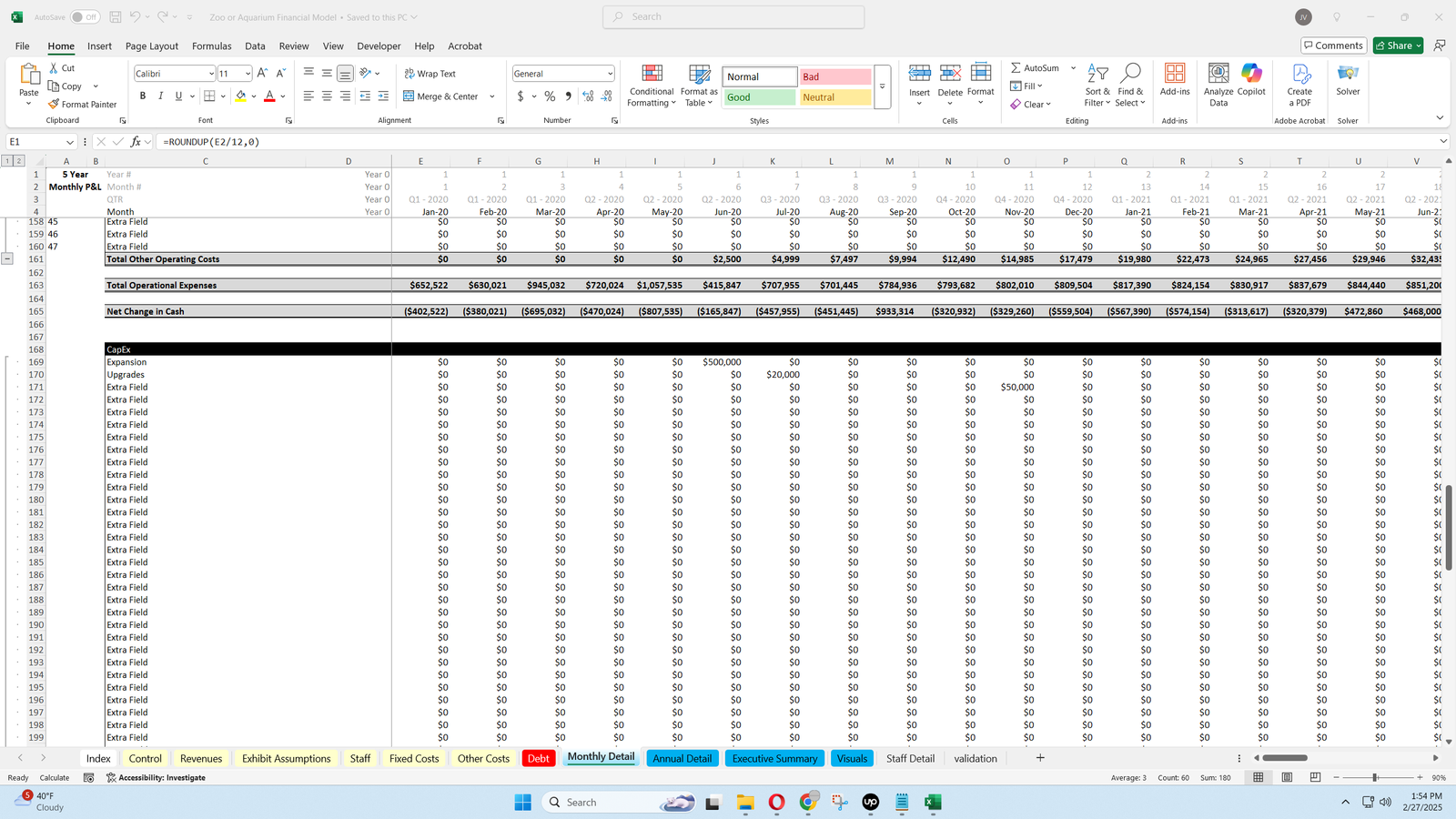
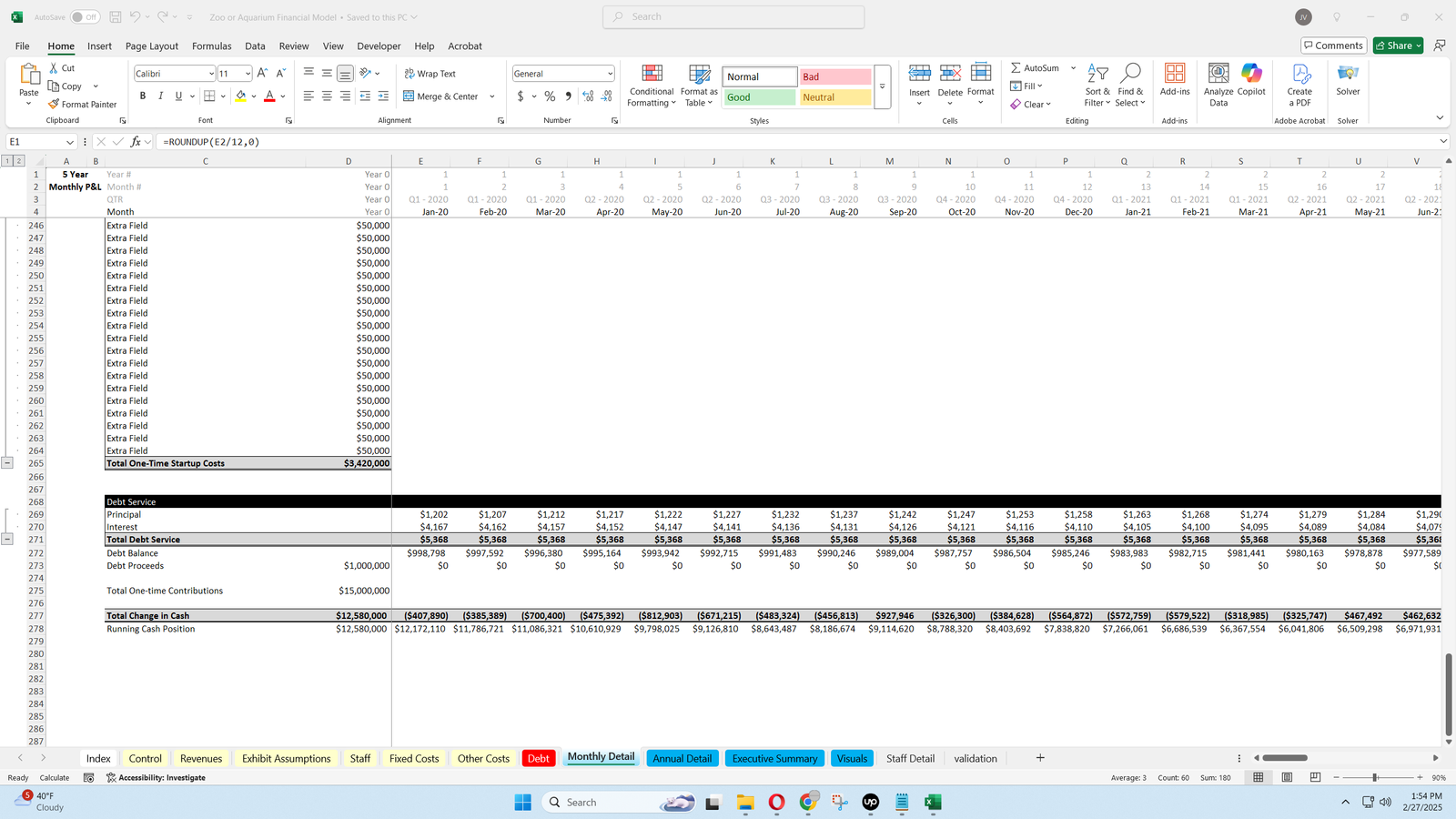
- Startup costs, future capital investments, and debt schedules are seamlessly integrated into cash flow forecasts.
- The model allows for projecting major expenses, such as acquiring new animals, upgrading facilities, or expanding exhibits, and ensures that debt repayment schedules align with revenue projections.
Financial Summaries and Visualization:
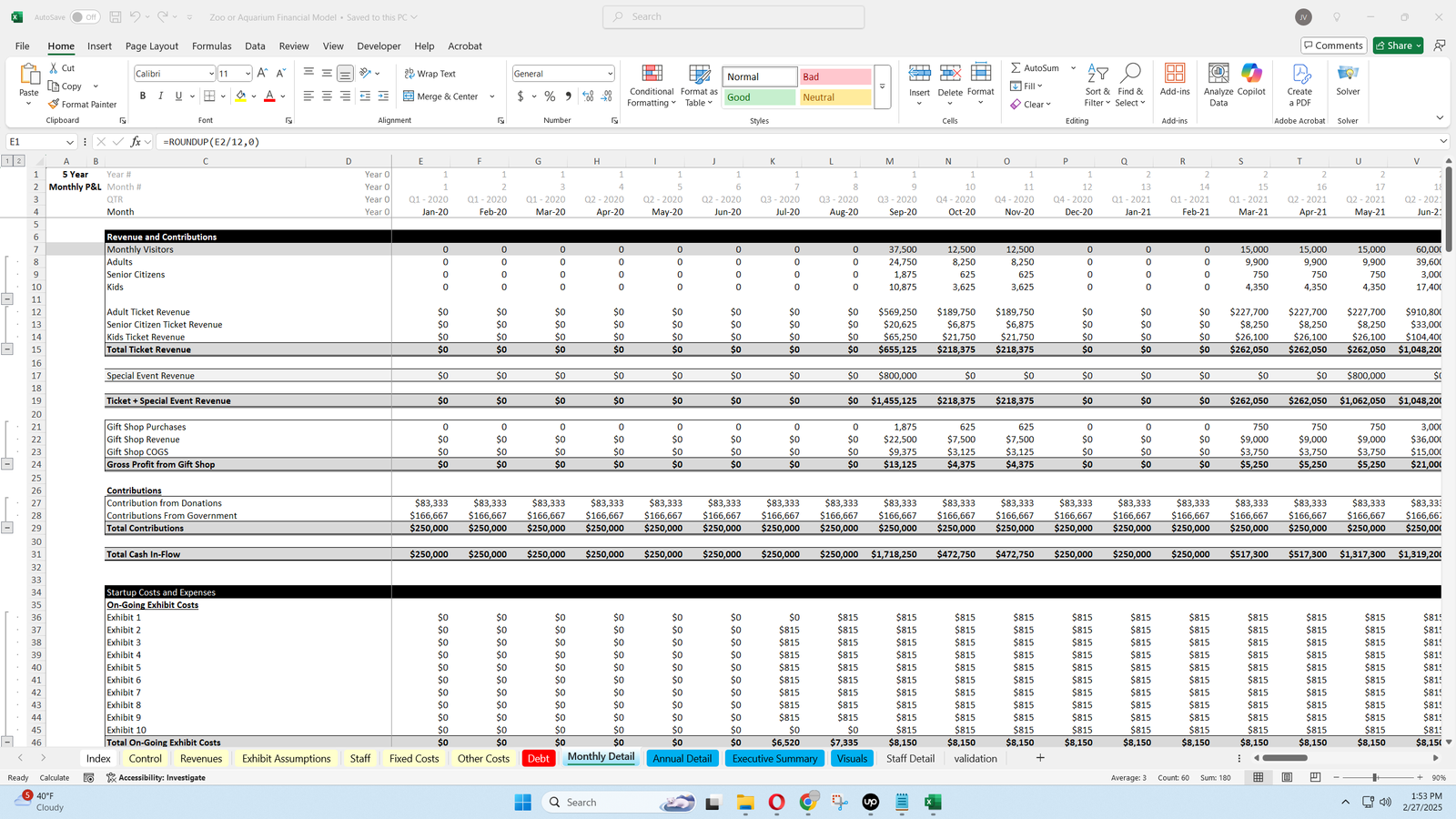
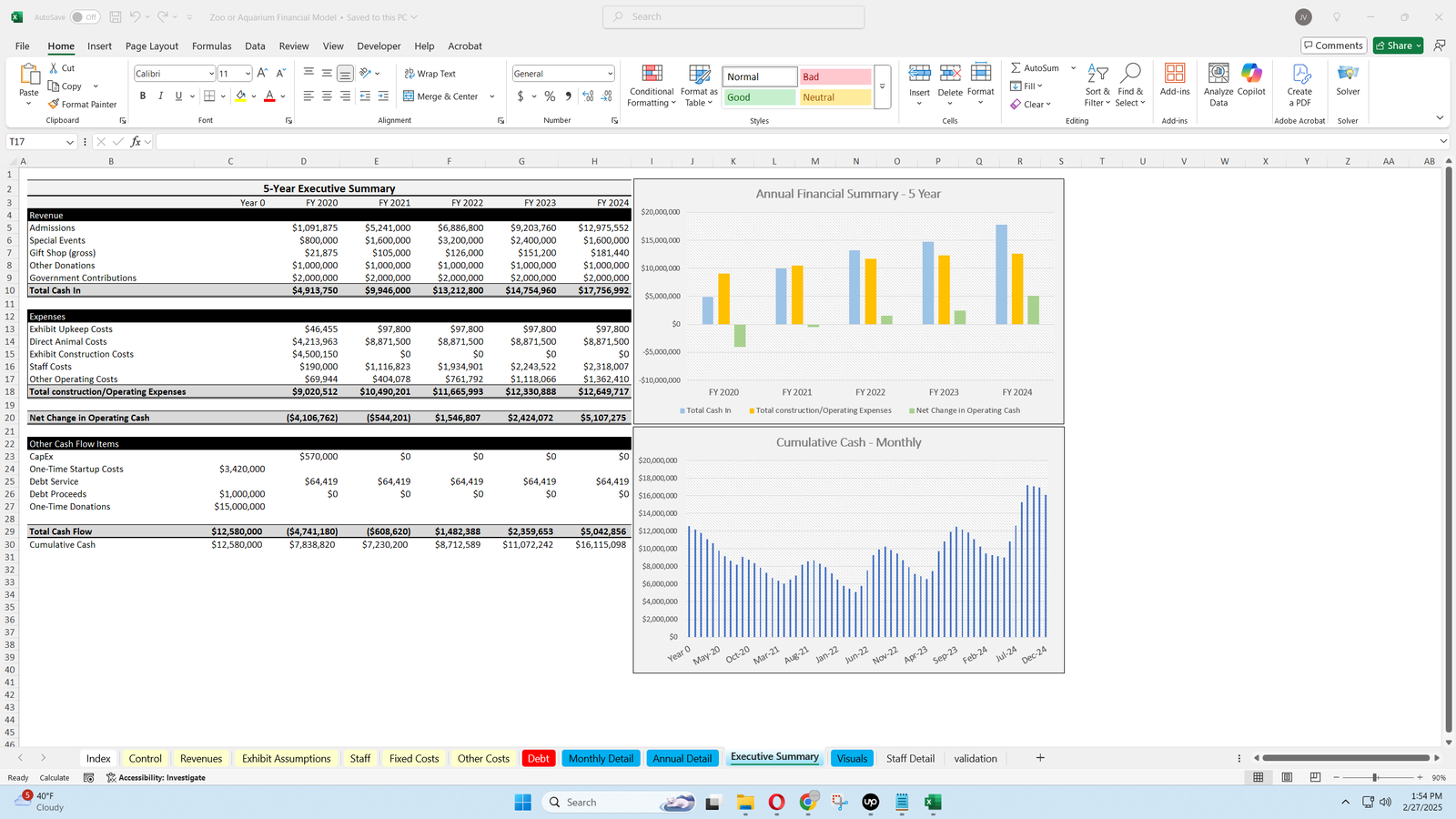
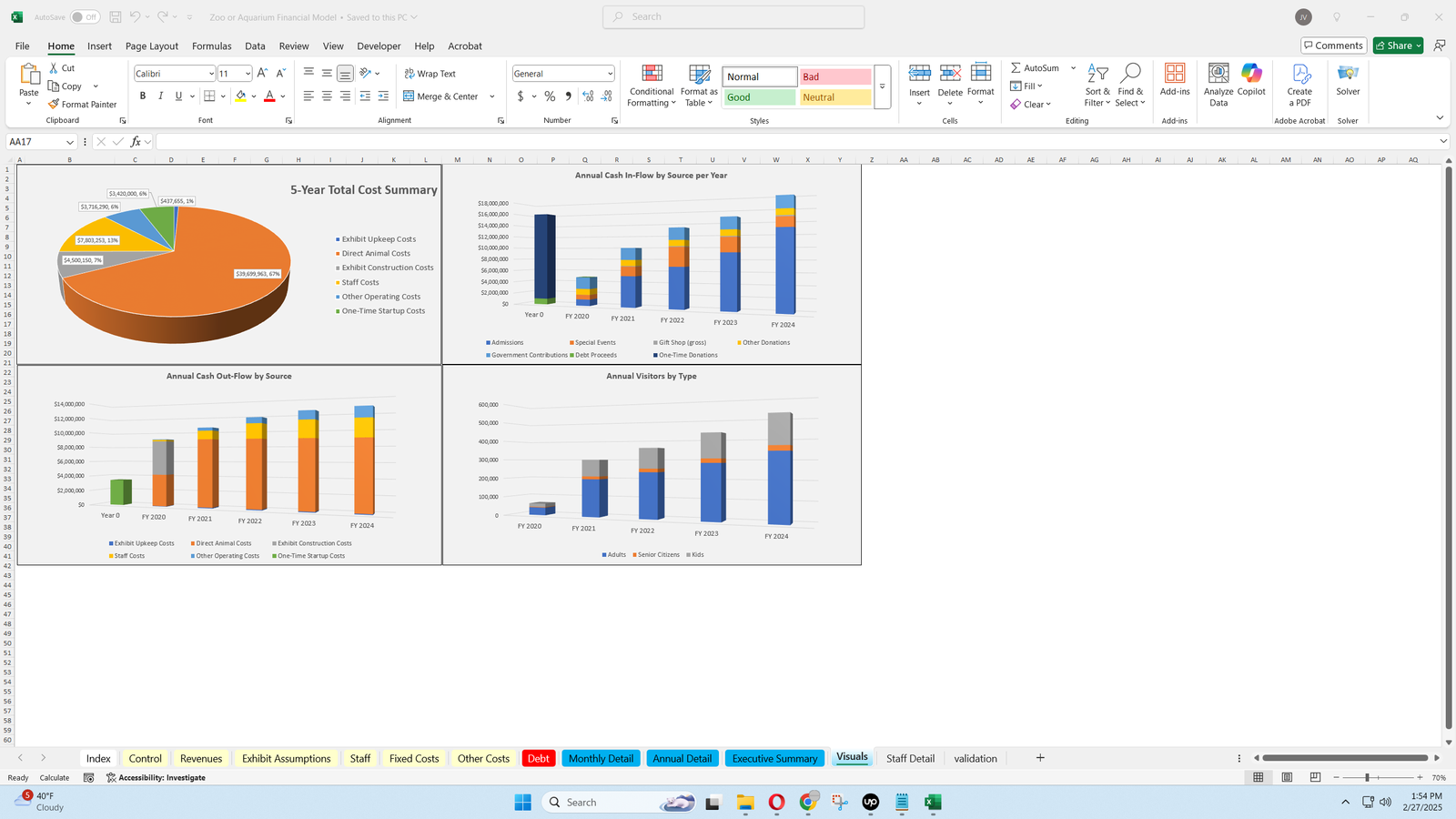
- The model consolidates all data into detailed monthly and annual summaries, breaking down revenues, expenses, and funding needs.
- Interactive charts and graphs provide visual representations of key metrics, such as cumulative cash flow, revenue sources, and seasonal trends, enabling data-driven decision-making.
Why Choose This Financial Model?
This financial model is designed specifically for nonprofits operating in the unique environment of zoos and aquariums. However, it is versatile enough to be adapted for amusement parks, wildlife sanctuaries, or similar businesses. The logic behind this model considers industry-specific factors, such as the inability to sell animals (due to legal regulations) and the reliance on donations and grants.
Customization and Support:
The model is built to be user-friendly, with clear instructions and definitions for each tab. Every assumption is customizable, allowing you to adapt the model to your specific operational needs.
Refund Policy
There are no refunds, all sales are final.
Cancellation / Return / Exchange Policy
For intellectual property, there are no returns / exchanges. All the files are downloadable, editable, and unlocked.
General Inquiries
There are no inquiries yet.


Reviews
There are no reviews yet.