-
OpEx – PFEP, Plan For Every Part
Plan for Every Part
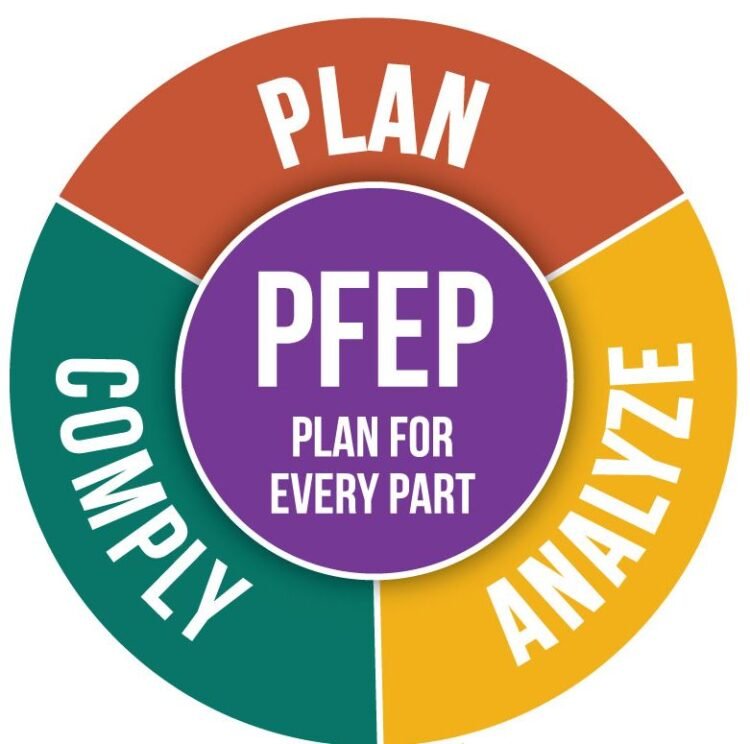
The provided document, “OpEx — PFEP – Plan For Every Part,” by Vishnu Rayapeddi, outlines a comprehensive strategy for optimising material handling and inventory management within an operational environment. It introduces the Plan For Every Part (PFEP) as a centralised database containing detailed information about every component, from purchasing to delivery. The text details a three-step implementation process: creating the initial PFEP database with current state information, developing a “plan” for each part based on this data, and establishing methods for sustaining and maintaining the database’s integrity, including the use of a change request form and a dedicated PFEP manager. The document also highlights the benefits of PFEP, such as enabling a lean material-handling system and providing quick responses to operational queries, while acknowledging that the PFEP itself is an “incidental” but crucial activity that supports value creation.$ 20$ 25OpEx – PFEP, Plan For Every Part
$ 20$ 25 -
OpEx – Balanced Scorecard Self-Assessment
Understand your current situation with respect to measurement to set goals for improvement.
$ 24$ 29 -
OpEx – Lean JIT, Just In Time
Developing a Just in Time System
This resource, “Develop a Just in Time System” by Vishnu Rayapeddi, offers a comprehensive guide to implementing Just-in-Time (JIT) operational strategies. It begins by defining JIT as a system that ensures products are delivered precisely when and where they are needed, highlighting its benefits such as reduced costs and increased customer satisfaction. The material then explores the distinction between push and pull systems for creating product flow, advocating for the latter’s efficiency in lowering inventory. Key performance indicators like Takt Time, inventory turns, and DIFOTIS (Delivered in Full, On Time, In Spec) are introduced as crucial for monitoring success. The document further outlines various Kanban systems—including production, withdrawal, signal, multi-bin, and e-Kanban—as vital tools for managing material flow, along with CONWIP and FIFO systems. Finally, it presents a structured approach to implementing JIT through workplace projects, detailing evidence requirements for designing, implementing, and monitoring the system.$ 29$ 34OpEx – Lean JIT, Just In Time
$ 29$ 34 -
OpEx-Quality, Problem Solving & Root Cause Analysis (RCA)
Problem Solving
The provided document, “OpEx – Quality & Problem Solving” by Vishnu Rayapeddi, offers a comprehensive guide to achieving operational excellence through effective quality management and problem-solving methodologies. It introduces the core concept of Zero Quality Control (ZQC), which aims for zero defects by preventing errors from becoming flaws, highlighting its importance for customer satisfaction and cost control. The text details various inspection approaches, contrasting traditional methods with ZQC’s source inspection, 100% inspection, short feedback loops, and mistake-proofing (Poka-Yoke). Furthermore, the document outlines a 5-step problem-solving method, incorporating tools like PDCA (Plan-Do-Check-Act), Fishbone Diagrams, Pareto Charts, Flow Charts, and Brainstorming techniques to identify root causes and implement continuous improvements.$ 29$ 34 -
OpEx – Business Integration Excellence Assessment
Understand the current state of your business integration to set improvement goals
$ 29$ 34 -
OpEx – Lean Manufacturing Assessment
Know where you are today before embarking on an improvement plan and set goals
$ 29$ 34OpEx – Lean Manufacturing Assessment
$ 29$ 34 -
MS Excel, tracking project month, weekly financials incl. contracted work, forecasts, actuals, variance, expenses, pivot
A comprehensive editable, table MS Excel spreadsheet for tracking project monthly financials including summary view tab, contracted work, forecasts, actuals, variance, expenses, annual leave, suppliers and pivot tab. Purchase also includes other budget tracker examples.
$ 30$ 40 -
Project Programme Team Kick Off PowerPoint Microsoft Editable Template
Ready made Project Programme Kick Off template to be tailored as required for project delivery. Helps to structure your thinking by providing guidance and slides for key kick off focus areas. A useful template aid to drive one of the key tasks of a project that can often be overlooked.
$ 30$ 40 -
Project Programme Team Onboarding Kit Microsoft PowerPoint Editable Template
Editable MS PowerPoint Project & Programme Team Onboarding Kit. Ready-made slides to introduce new team members, project goals, roles & processes.
$ 30$ 40 -
Prince2 & Agile Excel RAID log template, track project Risks, Assumptions, Issues, Dependencies (plus other key logs)
Prince2 & Agile Excel RAID log template to track Risks, Assumptions, Issues, Dependencies & more. Editable, comprehensive & ideal for project managers.
$ 30$ 40 -
Programme, Project Benefits Realization Tracker MS Template for Recording & Tracking project benefits, baseline & status
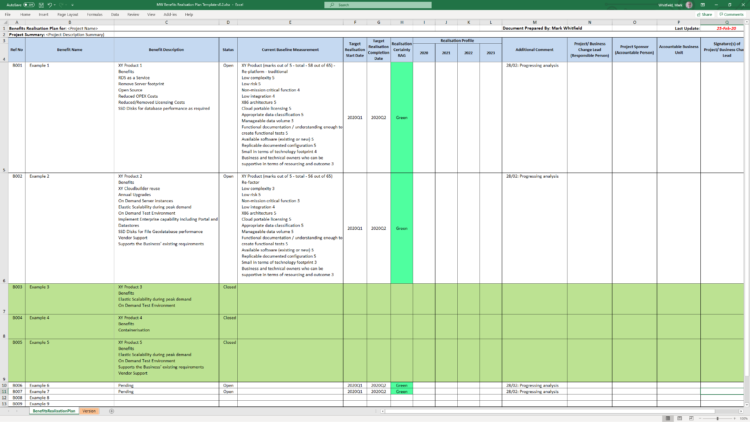
MS Excel template for Programme & Project Benefits Realization tracking. Record benefits, baselines, targets & RAG status to monitor project outcomes.
$ 30$ 40 -
MS Excel Template Agile SCRUM Sprint Burn Down Chart Table & Burn Up Chart where no access to Agile tools like Jira
Editable MS Excel template for Agile Scrum burn down & burn up charts. Perfect for sprint tracking & reporting when Jira or Agile tools aren’t available.
$ 30$ 40