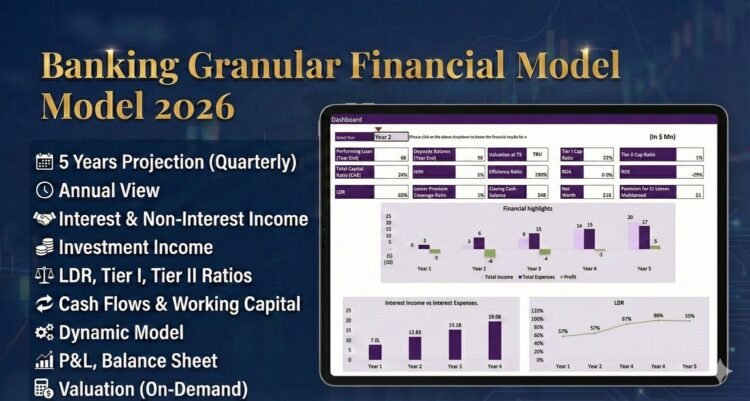
What is Business Strategy?
A business strategy is a roadmap or plan that outlines how a company will achieve its goals, targeting a specific market with a unique approach. It involves analyzing competitive landscapes, market dynamics, and internal capabilities to ensure effective resource allocation for optimal market positioning. This strategy focuses on delivering superior value to customers, distinguishing the business from competitors, and achieving sustainable growth and customer loyalty. It requires continuous evaluation and adaptation to respond to evolving market conditions and business opportunities.
Components of Business Strategy

Creating a successful business strategy is like plotting a journey with a clear destination in mind. It’s not just about setting business goals; it’s about mapping out how you’ll get there, the resources you’ll need, and how to handle bumps along the way. Let’s dive into the key components that make a business strategy not just good but great.
Defining Your Competitive Advantage
Think of your competitive advantage as the secret sauce that sets your business apart. It’s what makes your product or service the go-to choice over your competitors. Maybe it’s your innovative approach, your unbeatable pricing, or your unique customer experience. Whatever it is, knowing and leveraging this advantage is crucial for any effective business strategy.
Strategic Management and Business Goals
Strategic management isn’t just for senior executives in fancy boardrooms—it’s about making decisions that align with your business goals at every level. Start by defining clear, actionable objectives that align with your mission and vision. Are you aiming for increased market share? Greater customer loyalty? Clear business goals guide every decision, from marketing strategy to resource allocation.
Knowing Your Market and Target Customers
Understanding your market dynamics and target markets is like having a compass for your business. Who are your ideal customers? What do they need that they’re not getting elsewhere? By focusing on target customers, you can tailor your marketing approach and business strategies to meet their needs and exceed their expectations, driving customer satisfaction and loyalty.
Resource Allocation: The Key to Efficient Strategy
Having a plan is great, but it means nothing without the right resources. Effective resource allocation involves strategically managing your time, money, and talent to maximize your business’s potential. Whether it’s deciding on your marketing budget or figuring out where to place your best people, how you allocate resources can make or break your strategy.
Embracing Innovation
Innovation strategies are all about keeping your business fresh and competitive. It’s about more than just having the latest technology—it’s about finding creative solutions to your customers’ problems and staying ahead of industry trends. Whether you’re tweaking a product, rethinking your business model, or entering a new market, innovation keeps you relevant and can provide that competitive edge.
Adapting to Market Dynamics
The business environment is always changing, with new competitors, shifting market share, and evolving customer needs. Your strategy should be flexible enough to adapt to these market dynamics. Regularly review your business strategy to ensure it aligns with the current competitive landscape and make adjustments as needed.
Measuring Success with Key Performance Indicators
You can’t manage what you don’t measure. Key performance indicators (KPIs) are like the mile markers on your road to success. They show you how far you’ve come and how much farther you have to go. Whether it’s tracking sales growth, customer retention rates, or market position, KPIs help you keep your strategy on track.
At the end of the day, even the best strategy is just a piece of paper if it’s not put into action. Develop detailed action plans that outline who’s doing what, by when, and how. This includes aligning your team, setting timelines, and continuously monitoring progress. Execution is where the rubber meets the road—it’s all about turning your strategic vision into reality.
Challenges in Business Strategy

Navigating the challenges of business strategy can be complex, and it often involves juggling multiple components that can impact an organization’s success. Here are some key challenges:
Aligning Strategy with Business Goals
It’s crucial for companies to ensure that their strategic initiatives align well with their overarching business goals. Misalignment can lead to resources being squandered on activities that don’t drive the business forward.
Resource Allocation
Effectively distributing resources—whether it’s time, personnel, or capital—is a perennial challenge. Companies must prioritize investments in projects that bolster competitive advantage, which requires insightful strategic thinking and careful planning.
Market Dynamics and Positioning
Understanding and adapting to market dynamics are vital. Companies need to continuously analyze their market position and adjust their strategies to maintain relevance, especially in rapidly changing industries.
Adapting to Consumer Needs
As target customers evolve, so do business strategies. This involves not only recognizing changes in customer preferences but also maintaining strong customer relationships and striving for customer delight through innovative marketing plans and customer-centric approaches.
Managing Change
Implementing a new business strategy often requires changes at various levels of an organization. Managing this change, from the strategic plan down to individual activities, and getting buy-in from all stakeholders, especially senior executives and business leaders, can be a formidable task.
Ensuring Long-term Sustainability
Strategies must not only be effective in achieving short-term goals but also in paving the way for long-term sustainability. This might involve embracing practices like clean energy solutions or developing a corporate strategy that supports ambitious climate goals.
Each of these challenges requires a thoughtful approach to strategic management, continual learning (potentially through platforms like Harvard Business School or advanced business strategy courses), and a readiness to adapt strategies as necessary to meet both the current and future needs of the business.
How Can OfficeDocDepot Elevate Your Business Strategy?
At OfficeDocDepot, we understand that effective business strategy hinges on having access to the best tools and insights. Business professionals, from entrepreneurs to seasoned executives, require a blend of strategic acumen and practical tools to navigate complex market dynamics and outperform competitors.
OfficeDocDepot serves as a critical connector between innovators of strategic business tools and the practitioners who apply them. Our platform is dedicated to promoting the exchange of knowledge and methodologies, enabling business professionals to build upon proven strategies rather than reinventing them. This collaborative approach not only saves time but also drives innovation across industries.
On our site, you’ll find a diverse range of resources, including comprehensive business strategy frameworks, market analysis templates, and competitive assessment tools, all created by leading business minds. These resources are designed to be immediately applicable, helping you to refine your strategies and achieve tangible results.
Visit OfficeDocDepot today to discover how you can sharpen your competitive edge and transform your strategic approach by tapping into the expertise of top business strategists globally.
Frequently Asked Questions
What is the purpose of a business strategy?
A business strategy outlines the actions and decisions a company plans to take to reach its business goals. It acts as a roadmap to guide the organization from where it currently stands to where it aspires to be, considering factors like market dynamics, competition, and internal resources.
How often should a business strategy be reviewed?
Business strategies should be reviewed regularly, typically on an annual cycle, to ensure they remain aligned with the changing business environment, market conditions, and company goals. This review helps in tweaking strategies to respond to new opportunities or challenges.
What role do senior executives play in business strategy?
Senior executives are crucial in shaping and approving the business strategy. They ensure that the strategy aligns with the company’s long-term vision and is implementable across different levels of the organization. Their leadership in driving the strategy forward is key to its successful implementation and effectiveness.
Conclusion
In sum, business strategy acts as the backbone for guiding a company toward its goals, blending careful analysis of market dynamics with strategic resource allocation to outpace competition and foster customer loyalty. For businesses to remain relevant and thrive, they must continually assess and adapt their strategies in response to the evolving market landscape and internal goals. This ongoing process, driven by insightful leadership and innovative practices, ensures sustained growth and success, positioning businesses to not only respond to immediate challenges but also to capitalize on future opportunities.
-
E-Commerce Financial Projection Model
The model is designed to provide e-commerce founders, operators, and finance teams with a comprehensive financial projection framework spanning five years. It enables you to forecast revenue across multiple sales channels, evaluate profitability under different growth scenarios, and present investor-ready financials with institutional-grade structure.
The template is organized into six integrated worksheets: an Instructions tab, an Assumptions and Inputs tab, a Revenue Model tab, a Profit and Loss Statement, a Cash Flow Statement, and a Dashboard.
Whether you are preparing projections for a fundraise, building an annual operating plan, or stress-testing your business under different market conditions, this model gives you the tools to make informed decisions with confidence.
$ 60 -
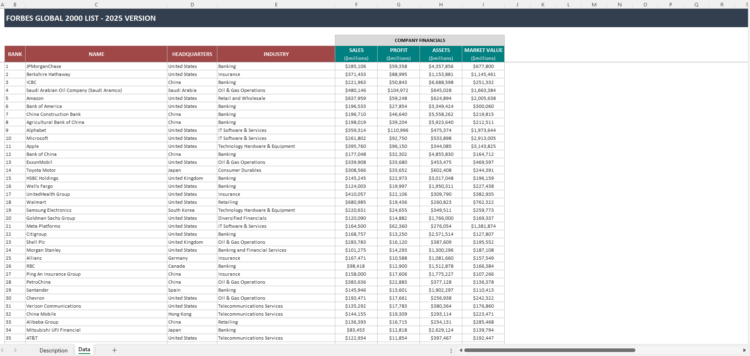
Forbes Global 2000 Excel List – 2025
Forbes Global 2000 official rankings. Top global companies list. Sales, profits, assets & market value info.
$ 20 -

Ecommerce CAC & LTV Calculator
The E-Commerce Unit Economics & CAC/LTV Calculator is designed to give e-commerce founders, operators, and investors a clear, data-driven view of customer acquisition efficiency and long-term customer value. Whether you are running a DTC brand, a Shopify store, an Amazon storefront, or a multi-channel retail operation, this model helps you answer the fundamental questions that drive sustainable growth:
• How much does it truly cost to acquire a customer across each marketing channel?
• What is the lifetime value of your customers, and how does it compare to acquisition cost?
• Which channels deliver the best return on ad spend and the healthiest unit economics?
• At what point does your business achieve CAC payback, and how does that change under different scenarios?
• How do changes in retention, average order value, and purchase frequency impact long-term profitability?
The model is built to be straightforward enough for founders evaluating their first marketing budget, yet robust enough for CFOs and investors conducting due diligence on customer economics. It bridges the gap between high-level KPI dashboards and detailed financial projections by providing a comprehensive, assumption-driven framework.
$ 60 -
Inventory & Cash Flow Operating Model (Ready to use)
The Inventory & Cash Flow Planning Model is designed to give e-commerce business owners, operators, and finance teams a comprehensive view of how inventory decisions impact cash flow and working capital over a 24-month horizon. It brings together demand forecasting, purchase planning, cash management, and cash conversion cycle analysis into a single, integrated workbook.
Whether you’re managing seasonal inventory swings, optimizing supplier payment terms, or forecasting your cash runway for investor conversations, this model provides the analytical framework to make informed, data-driven decisions.
The template supports three built-in scenarios (Base, Optimistic, and Conservative) that can be toggled instantly, so you can stress-test your inventory and cash strategy under different growth and margin assumptions.
$ 60 -
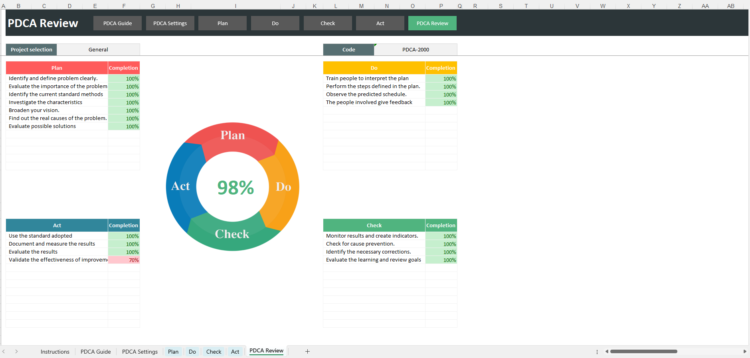
PDCA (Plan–Do–Check–Act) Excel Template
*]:pointer-events-auto scroll-mt-[calc(var(–header-height)+min(200px,max(70px,20svh)))]” tabindex=”-1″ dir=”auto” data-turn-id=”request-WEB:528532bb-fbd0-48c4-84bd-be7f5905ca43-3″ data-testid=”conversation-turn-8″ data-scroll-anchor=”true” data-turn=”assistant”> $ 29 -
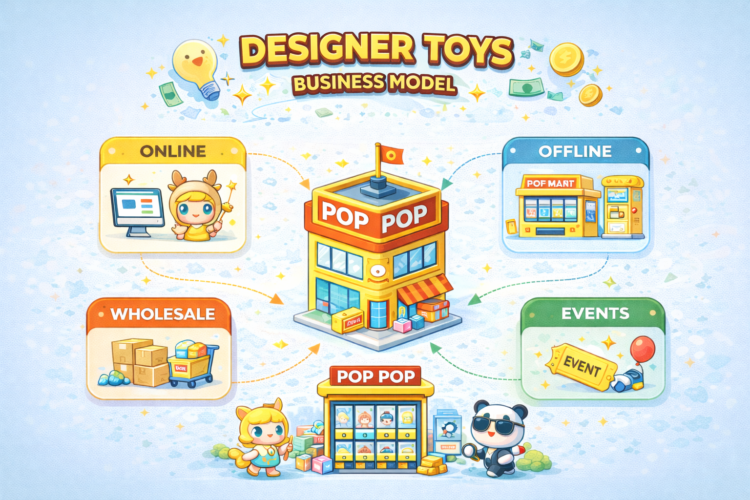
Designer Toy Business Forecast Model-IP-Driven Revenue & Cash Flow Analysis
This Designer Toy Business Forecast Model is a professional Excel model built to forecast revenue, profitability, and cash flow for an IP-driven collectible toy platform.
Unlike generic consumer models, this model explicitly incorporates key industry-specific growth drivers, including Hit IP Factor, Fan Stickiness, and global omnichannel expansion, directly into the revenue forecasting logic.
By linking IP success, repeat-purchase behavior, and channel expansion to financial outcomes, the model allows users to evaluate not only how fast the business grows, but why it grows and whether that growth is sustainable.
Ideal for investors, analysts, founders, and strategists seeking a realistic and defensible forecast framework for the designer toy and IP-based consumer sector.$ 89 -
Project POAP – MS PowerPoint template – Both editable & easy to use
Microsoft PowerPoint template both editable & easy to use, offers a quick way to construct a PPT Project Plan On a Page ( POaP ) for stakeholders
$ 30$ 40 -
Waterfall Project Planner, Project Plan Gantt Chart & Resource Cost / Budget / Revenue Tracker – MS Microsoft Excel (x2)
Waterfall Project Planner with Plan Gantt View and Project Resource Cost Tracker – MS Microsoft Excel Template (2 comprehensive templates for the price of one)
$ 30$ 40 -
PRINCE2 7th Edition Planner MS Templates Download – Both Microsoft Project MPP msp & ms Excel and Word Formats – Prince2
PRINCE2 7th Edition MS Templates Download – Microsoft Project MPP msp ms Excel and Word Formats – Prince2 Template Toolkit
$ 40$ 50 -
Project Management Template, Editable Excel Planner, Gantt Chart for Status Reports, Costing Delivery, Bids
Prince2 & Agile Project Management Templates | Editable Excel Planner, Gantt Chart for Status Reports, Costing Delivery, Bids
$ 30$ 40 -
Microsoft Excel Editable Weekly Status Report (internal external reporting) including Plan on a Page and RAIDs log etc.
Excel Weekly Status Report template with POaP, RAID log, burndown chart. For Agile or PRINCE2 projects. Editable for internal/external reporting.
$ 30$ 40