What is Leadership?
Leadership is all about guiding a group of people toward a common goal. Whether you’re leading a small team or an entire organization, it’s more than just giving orders—it’s about inspiring, motivating, and making the right decisions at the right time.
Understanding Different Types of Leadership

Leadership comes in all shapes and sizes. Think of it like cooking—different chefs use different techniques, but they all aim to create a great meal. In the same way, leaders use various styles to get their team to a common goal. Let’s dig into some of the most common types of leadership and how they work.
Democratic Leadership: The Team Player Approach
Democratic leadership is like having a coach who listens to their players. This leader involves their team in the decision-making process. Everyone gets a say, and the leader ensures everyone feels heard. Imagine running a startup and holding regular brainstorming sessions with your team. This style builds a strong sense of collaboration, which often leads to higher employee morale. It’s perfect when you need fresh ideas or a strong sense of unity.
Autocratic Leadership: Taking Charge When It’s Needed
On the flip side, autocratic leadership is the “I call the shots” approach. Think of a military commander in the middle of a battle—there’s no time for debate. This style works best when decisions need to be made quickly, like during a business crisis. The leader takes full responsibility for the outcome, which can be both a blessing and a curse. While it’s effective for fast decision-making, it might not sit well with everyone in the long run.
Coaching Leadership: Mentorship in Action
A coaching leadership style is like being a mentor. This leader focuses on individual growth, guiding each team member to become better at their role. It’s kind of like how a personal trainer works—they don’t just want you to hit your fitness goal; they want to make sure you’re learning how to do it sustainably. In business, this style is all about developing employees’ strengths, so they can shine brighter and contribute more effectively.
Servant Leadership: Putting Others First
Servant leadership is all about flipping the traditional leader model. Instead of the leader being at the top of the pyramid, they put themselves at the bottom, supporting their team from the ground up. It’s like a restaurant manager who jumps in to help the staff during a rush—washing dishes, serving tables, whatever it takes to make sure the team succeeds. This approach builds trust and loyalty, but it can be tough to maintain if the leader isn’t careful about managing their own workload.
Authentic Leadership: Keeping It Real
In a world full of noise, authentic leaders stand out by being true to who they are. They don’t wear a “leader mask”; they stay genuine and transparent, which helps them build strong, lasting relationships with their team. Imagine a CEO who openly admits when they don’t know something and asks their team for help—that’s authentic leadership. It’s not about having all the answers but about leading with honesty and integrity.
Charismatic Leadership: The People Magnet
Charismatic leaders have a way of lighting up a room. They can inspire people just by showing up. Picture someone like Steve Jobs—people hung onto every word because he had this natural ability to draw others in. Charismatic leaders are great at rallying the team behind a vision, but the challenge here is that it’s often based on personality, not process. If that leader leaves, the whole thing might fall apart.
Laissez-Faire Leadership: Hands-Off, Let It Flow
With laissez-faire leadership, the leader takes a backseat and lets their team run the show. It’s like being the captain of a ship but letting your crew handle the navigation. This style works best when the team is highly experienced and doesn’t need much supervision. It can be a great way to promote innovation and independence, but if your team lacks direction, things can go off course quickly.
Blending Leadership Styles for Success
Here’s the thing—successful leaders know how to mix and match these styles. They don’t stick to just one way of doing things. An entrepreneur might use democratic leadership when brainstorming new product ideas but switch to autocratic leadership during a critical product launch. It’s all about knowing when to step up, when to listen, and when to let your team take the reins.
In the end, It is like a toolbox. You’ve got to pick the right tool for the job, and the best leaders know how to do just that. Whether you’re leading a team of five or fifty, knowing the different types can help you steer the ship toward success.
Characteristics of Leadership

When we talk about leadership, it’s not just about holding a position of authority—it’s about inspiring others toward a common goal. Successful leaders come in all shapes and sizes, but they tend to share a few key characteristics that make them effective in their roles. Let’s dive into some of the most important traits that define great leadership.
Emotional Intelligence: The Foundation of Leadership
One of the strongest characteristics of an effective leader is emotional intelligence. A leader needs to understand not only their own emotions but also those of their team members. Picture a leader who can read the room, adjust their approach based on how their team is feeling, and keep everyone motivated. Emotional intelligence helps in maintaining a positive environment, which boosts employee morale and fosters individual growth.
Decisiveness: The Power of Quick Decision-Making
In any leadership role, being decisive is crucial. Leaders often face situations where a quick decision is necessary. Whether it’s navigating through a business crisis or determining a new strategy, leaders with strong decision-making skills are the ones who steer their teams in the right direction. Decisiveness doesn’t mean acting without thought—it’s about making informed decisions when the clock is ticking.
Clear Vision and Common Goals
Leaders are like navigators. They must have a clear vision and align the entire organization or team toward achieving a common goal. This characteristic is particularly evident in successful leaders who not only articulate their vision but also ensure that every member of the team understands their role in achieving it.
Strong Communication Skills: Keeping Everyone in the Loop
Another key trait is strong communication skills. Great leaders know how to communicate clearly, whether it’s through direct reports, team meetings, or one-on-one conversations. They ensure the entire organization is aligned, and no one is left guessing about what needs to be done. Coaching leadership styles, for instance, thrive on regular feedback and communication, helping team members grow.
Adaptability: Adjusting to Changing Environments
An effective leader must also be adaptable. Businesses are dynamic, and so are the people within them. Leaders who can pivot their approach depending on the circumstances—whether it’s adopting a democratic leadership style in collaborative environments or switching to autocratic style during high-pressure situations—are the ones who can keep their teams moving forward.
Integrity and Authenticity: Leading with Trust
Leaders who lead with integrity and authenticity earn the trust and loyalty of their teams. Authentic leadership is about being true to your values and showing genuine care for your team. A leader who walks the talk builds a foundation of trust that strengthens the entire organization. This is closely tied to servant leadership, where the leader prioritizes the needs of the team above their own.
Visionary Thinking: Planning for the Future
Successful leaders are visionaries. They don’t just focus on the here and now; they think ahead. They see the bigger picture and make strategic plans that steer their team toward long-term success. This trait is common in charismatic leaders who can inspire others to believe in their vision and work toward it with passion and enthusiasm.
Resilience: Standing Strong in the Face of Challenges
Lastly, resilience is a must-have trait for leaders. Challenges are inevitable in any business, and the ability to bounce back and keep pushing forward is what separates great leaders from the rest. Resilient leaders instill confidence in their teams, knowing that no matter what, they will find a way to navigate through tough times.
How to Be a Good Leader?:

Developing Essential Skills
Being a good leader goes beyond just having the title—it’s about constantly improving yourself, cultivating the right leadership skills, and supporting your team. The journey to becoming a great leader requires commitment to professional development, understanding organizational leadership, and adopting various leadership styles depending on the situation. Here’s how you can start developing the qualities that make for excellent leadership.
Focus on Professional Development
A good leader always seeks opportunities for professional development. Whether it’s through formal education, mentorship, or learning from real-world experiences, continuous growth is key. As leadership evolves, so must the leader. By investing in leadership development, leaders equip themselves with the tools needed to navigate modern business challenges and inspire their teams. Attending seminars, reading insights from resources like Harvard Business Review, or participating in peer leadership groups like the Leadership Alliance can enhance a leader’s ability to manage teams effectively.
Master a Variety of Leadership Styles: Flexibility is Key
Good leaders understand that no single leadership style works in every situation. Depending on the dynamics of the team and the task at hand, a leader must be adaptable. For example, in a creative environment, a laissez-faire leadership style—which gives employees a high degree of freedom—might be the best choice. This style encourages innovation and autonomy, allowing teams to excel. On the other hand, during a crisis, a more authoritarian approach might be necessary to provide clear direction and quick decisive action.
It’s crucial to develop a wide range of styles, including transformational leadership, where you inspire major changes in the organization, and compassionate leadership, where concern for the well-being of your employees is at the forefront. Leaders who can shift between styles—whether it’s being a coaching leader that focuses on personal development or using transactional leadership to set clear goals and reward achievement—are the most effective.
Develop Strong Leadership Skills: Communication, Decision-Making, and Critical Thinking
A good leader needs strong leadership skills in key areas such as communication, decision-making, and critical thinking. Strong communication ensures that every member of the individual team understands their role and feels engaged. Leaders who can articulate their vision clearly inspire their team to rally behind a common goal.
Moreover, leaders with excellent analytical skills are able to assess situations accurately, make informed decisions, and drive the organization forward. Critical thinking allows leaders to foresee challenges and solve problems creatively. Whether you’re leading an informal organization or a structured corporate team, the ability to think critically and act swiftly is a hallmark of strong leadership skills.
Show Concern for Employees: Building Trust and Loyalty
Being a good leader means more than just delivering results—it also involves caring about the people who make those results happen. Great leaders genuinely show concern for employees by supporting their personal and professional growth. Through a coaching style, leaders can provide regular feedback, helping team members grow and improve. Leaders who practice compassionate leadership ensure that employee well-being is a priority, which leads to higher engagement and productivity.
Leaders who show genuine care and concern build trust with their team. This not only enhances employee morale but also fosters a collaborative work environment. As a result, employees are more motivated to work toward the common goal.
Foster Growth Through Collaboration: Creating a Supportive Team Environment
A good leader understands the importance of fostering growth by creating opportunities for collaboration and learning. Business leadership isn’t just about managing tasks—it’s about ensuring that every member of the team has the chance to grow. Leaders who focus on leadership development within their team encourage individuals to take on new responsibilities and challenges.
Promoting collaborative environments where feedback is encouraged helps leaders build a cohesive team. When leaders offer constructive feedback and openly receive feedback from colleagues, it creates a cycle of improvement and trust within the organization. By supporting individual growth through learning and collaboration, leaders help the entire organization thrive.
Leverage Transformational and Servant Leadership: Inspiring and Supporting Your Team
Transformational leadership is essential for any leader who wants to inspire significant positive change in their team or organization. This style focuses on motivating employees by creating a strong sense of purpose. Leaders who adopt this approach often see their team members rise to new challenges with enthusiasm.
On the other side, the servant style emphasizes putting the needs of the team first. By doing so, the leader supports the team’s success, ensuring that employees have everything they need to perform their roles effectively. This type of leadership cultivates a culture of mutual respect and empowerment, which often leads to higher productivity and stronger relationships within the team.
Use Strong Decision-Making and Analytical Skills: Leading with Confidence
A good leader is someone who can make decisive actions confidently, even under pressure. This requires a balance of quick thinking and careful analysis. Leaders who have strong analytical skills can evaluate risks, foresee challenges, and choose the best course of action. Whether it’s guiding a team through a merger or developing a new product, being able to think critically and make sound decisions is essential for organizational leadership.
In addition to making decisions, leaders must also guide their team through the decision-making process, ensuring that everyone is on the same page. This requires clear communication, careful planning, and sometimes, taking on a coercive leadership style when immediate decisions are necessary.
Elevate Your Leadership Capabilities with OfficeDocDepot
OfficeDocDepot is committed to enhancing the essential skills needed for effective guidance and team management in today’s dynamic environment. Whether you’re aiming to refine your own abilities or empower your team, our platform provides a robust selection of resources tailored to expand your command skills. With access to proven strategies and top-tier tools, OfficeDocDepot ensures your growth efforts meet contemporary best practices.
Our offerings include sophisticated tools for strategy development, materials to enhance communication, and methods to inspire and manage teams effectively. We also provide insights on maintaining work-life balance and developing a proactive mindset.
Explore OfficeDocDepot today and discover resources that will confidently advance your journey in guiding others, all curated with expert precision.
Frequently Asked Questions
What is effective leadership?
Effective leadership is about inspiring and guiding a team toward a common goal using different leadership styles like autocratic, democratic, and servant leadership. It involves communication, emotional intelligence, and decisive action.
What is autocratic leadership?
Autocratic leadership involves a leader making decisions without team input. It’s useful in urgent situations but should be balanced with other styles to maintain morale.
What are the common leadership styles?
Common styles include autocratic, transformational, affiliative, and servant leadership. Good leaders adapt their style to the situation.
What are key leadership characteristics?
Key traits include emotional intelligence, decisiveness, vision, and integrity. These help leaders build trust and guide their teams.
What is the essence of leadership?
The essence of leadership is inspiring others to achieve their best while working toward shared objectives, balancing team needs with organizational goals.
Conclusion
Leadership is about guiding and inspiring teams using a range of styles. Experienced leaders with excellent leadership skills create clear chains of command and adapt their approach to leadership based on the situation. Whether through servant leadership or authoritative leadership, great leaders foster environments focused on achieving goals and growing their teams. The essence of leadership lies in empowering others and driving long-term success.
-
Online Recruitment Agency Business Plan
Our Online Recruitment Agency Business Plan is your guide from start to long-term success. Tailored for digital recruitment, it addresses key challenges, aligns with your vision, and serves as a crucial reference for operational success. Customize it seamlessly for a personalized approach, ensuring your agency thrives in a competitive market.
$ 250$ 280Online Recruitment Agency Business Plan
$ 250$ 280 -
OpEx – SSGB, Six Sigma Green Belt Training PPT
This text provides a comprehensive overview of Operational Excellence and Six Sigma methodologies, detailing their importance in enhancing business profitability, customer satisfaction, and market competitiveness. It introduces key quality management gurus like Deming, Juran, Crosby, Ishikawa, and Taguchi, outlining their foundational philosophies and contributions to quality improvement. The document then thoroughly explores the Six Sigma project lifecycle, from defining and measuring processes to analysing root causes, implementing solutions, and establishing robust control plans. Crucially, it integrates concepts of stakeholder management, financial analysis, and various data collection and analysis tools essential for successful Six Sigma implementatio
$ 249$ 269 -
The Power and Magic of Lean by
The Power and Magic of Lean
The provided source offers an extensive overview of Lean principles and continuous improvement methodologies, largely attributed to the Toyota Production System (TPS). It introduces Norman Bodek, a prominent figure in propagating Japanese management techniques in the West, detailing his contributions and the various Lean tools he introduced, such as SMED, Poka-yoke, and Kaizen. The document meticulously outlines the nine wastes (Muda) that Lean aims to eliminate, including overproduction, waiting, and non-utilised talent, and explores concepts like Jidoka and Just-in-Time (JIT). Furthermore, it contrasts the characteristics of leaders and managers within a Lean context, emphasising the importance of respect for people and total employee involvement through practices like Quick and Easy Kaizen to foster a culture of perpetual small-scale improvements.$ 129$ 135The Power and Magic of Lean by
$ 129$ 135 -

Digital Hiring (Talent) Marketplace – 5 Year Financial Model
Financial Model providing an advanced 5-year financial plan for an online, two-sided hiring platform, connecting candidates with employers.
$ 119 -
OpEx – Lean MBA 2-day workshop PPT
Operational Excellence: A Lean-MBA Framework
The provided document, “OpEx-Lean-MBA 2day.pdf” by Vishnu Rayapeddi, outlines a Lean MBA framework designed to achieve Operational Excellence (BizEx). It introduces Business Excellence as outperforming competitors in key operational dimensions like quality, cost, and delivery, and continuously improving fundamental systems and customer satisfaction. The framework incorporates various best practices, including Total Quality Management (TQM), Six Sigma, Theory of Constraints (TOC), and the Toyota Production System (TPS), aiming to simplify processes, enhance quality, and increase competitiveness. The text details essential Lean tools such as Value Stream Mapping (VSM), 5S methodology, Total Productive Maintenance (TPM), Standardised Work, Kaizen, and Pull Systems, explaining their purpose and implementation for waste elimination and efficiency gains. Ultimately, the document serves as a comprehensive guide for organisations seeking to foster a culture of continuous improvement and achieve world-class operational performance.$ 109$ 119OpEx – Lean MBA 2-day workshop PPT
$ 109$ 119 -
The Essence of Toyota Way (PDF) as explained by Dr. Jeffrey Liker
The Toyota Way to Lean Excellence
This presentation outlines the Toyota Way philosophy, detailing its core principles and historical development. It explains Lean manufacturing as a systematic approach to eliminate waste, improve flow, and foster continuous improvement, highlighting its application beyond traditional manufacturing to sectors like healthcare. The four Ps of the Toyota Way – Philosophy, Process, People and Partners, and Problem Solving – are introduced as foundational elements for sustained excellence. Through case studies, such as the Donnelly Mirrors plant, the material illustrates how these principles lead to significant improvements in quality, cost, and lead time. Finally, the presentation stresses the importance of people development and a long-term commitment from leadership to embed a culture of continuous improvement, preventing entropy and ensuring the enduring success of lean implementation.$ 99$ 109 -
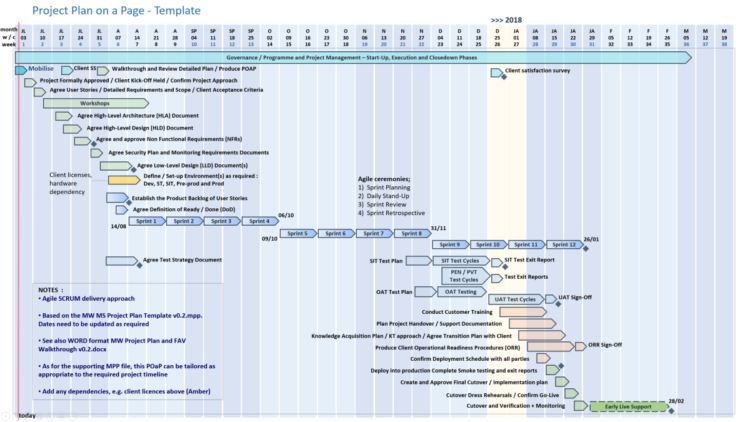
200+ PM Templates | FREE Upgrades and Additions | Agile, Waterfall & Prince2 Project Management Templates
200+ PM Templates | FREE Upgrades and Additions | Agile, Waterfall & Prince2 Project Management Templates | Microsoft Project Excel PowerPoint + RAID Log, POaP, Gantt View with Resource Cost Tracker etc.
FREE template upgrades for life available after purchase. This package contains ALL the PM templates offered by the seller,
The PM templates download link is contained in an ‘officedocdepot’ text file made available immediately after your purchase.
$ 89$ 120 -

Data Center (Co-Location) Development Model Pro-forma
This detailed and user-friendly Excel spreadsheet template provides a comprehensive and dynamic real estate financial model for the development of data centers whose primary revenue streams revolve around the lease of racks. The model is designed to evaluate the investment viability of data center properties based on cash flow projections, from the ground up, ramp period, and eventual property sale.
$ 80 -
OpEx – Process Optimization using Six Sigma Techniques
Optimizing Costs
This presentation, “OpEx – Optimise Cost,” by Vishnu Rayapeddi, outlines strategies for operational excellence focused on cost optimisation. It begins by explaining the importance of understanding customer needs and how they define quality, alongside methods for analysing cost and waste components. The document highlights various types of waste in manufacturing, such as defects, overproduction, and excessive motion, and offers practical exercises for identifying and reducing these costs. Furthermore, it introduces the concept of pull systems in production, contrasting them with traditional push systems to demonstrate their benefits in reducing operational costs and inventory. The presentation concludes by emphasising the importance of measuring results and implementing continuous improvement projects to achieve significant cost reductions and enhance customer satisfaction.$ 69$ 74 -
OpEx – Lean Execution-The Success Mantra
Lean Execution
This comprehensive source, “OpEx – Lean Execution,” authored by Vishnu Rayapeddi, serves as a gateway to operational excellence through the application of Lean principles. It meticulously outlines a roadmap for understanding and implementing Lean methodologies, beginning with a foundational explanation of what Lean is and its core concept of eliminating waste to maximise customer value. The text places significant emphasis on “The Toyota Way” and its 14 principles, presenting them as a blueprint for achieving continuous improvement and fostering a culture of respect for people. Furthermore, the source addresses common reasons why Lean implementations fail, such as lack of vision or management commitment, and offers strategies for managing change effectively within an organisation. It then broadens its scope to include other business excellence philosophies like Six Sigma, Theory of Constraints, and Total Quality Management, highlighting their individual strengths and the potential benefits of a combined approach. Finally, the document details the practical steps involved in executing Lean, including assessment tools, the importance of long-term commitment, documentation, and the crucial role of people development and leadership in sustaining a Lean culture.$ 69$ 74 -
OpEx – The Lean Office
Lean Thinking for Office and Admin Areas
This document, “OpEx_Lean_Office.pdf,” is a presentation by Vishnu Rayapeddi from Productivity Solutions (PSL) on Lean Thinking for Office & Admin Areas, copyrighted in 2011. It serves as a gateway to operational excellence, detailing various best-class practices such as Lean, Six Sigma, Total Quality Management (TQM), and the Theory of Constraints (TOC). The presentation’s core focuses on defining operational excellence and the elimination of waste through structured approaches like the Toyota Production System (TPS). It outlines a three-part methodology to “Lean your Business”: stabilise processes, standardise processes, and simplify processes, with practical tools and activities for each stage. The document ultimately aims to foster a continuous improvement culture within organisations to enhance productivity and reduce costs.$ 69$ 74OpEx – The Lean Office
$ 69$ 74 -
OpEx – Apply Six Sigma to Process Control and Improvement
Six Sigma for Process Control and Improvement
This document outlines a comprehensive Six Sigma training programme, focusing on process control and improvement using the DMAIC (Define, Measure, Analyse, Improve, Control) methodology. The material introduces Six Sigma as a framework for reducing variation and improving customer satisfaction through data-driven problem-solving, aiming for a performance level of 3.4 defects per million opportunities. It details each phase of DMAIC, providing specific tools and techniques, such as project charters, data collection plans, cause and effect diagrams, and control charts. The training incorporates practical simulations, like the “X Pult” exercise, to demonstrate the application of these methods in identifying problems, measuring performance, analysing root causes, implementing solutions, and sustaining improvements within an organisational context.$ 59$ 64