-
OpEx – Process Optimization using Six Sigma Techniques
Optimizing Costs
This presentation, “OpEx – Optimise Cost,” by Vishnu Rayapeddi, outlines strategies for operational excellence focused on cost optimisation. It begins by explaining the importance of understanding customer needs and how they define quality, alongside methods for analysing cost and waste components. The document highlights various types of waste in manufacturing, such as defects, overproduction, and excessive motion, and offers practical exercises for identifying and reducing these costs. Furthermore, it introduces the concept of pull systems in production, contrasting them with traditional push systems to demonstrate their benefits in reducing operational costs and inventory. The presentation concludes by emphasising the importance of measuring results and implementing continuous improvement projects to achieve significant cost reductions and enhance customer satisfaction.$ 69$ 74 -
OpEx – SCM Fundamentals – Demand Forecasting
This source, titled “OpEx- SCM Funda2 Forecasting.pdf” by Vishnu Rayapeddi, provides an extensive overview of demand forecasting within supply chain management. It begins by defining forecasting as educated guessing and a crucial process for business decisions across various time horizons, from short-range (under one year) to long-range (over three years). The document details different types of forecasts, including economic, technological, and demand, and outlines seven key steps in the forecasting process, from determining its use to validating results. Furthermore, the text distinguishes between qualitative forecasting methods (like the Delphi method and sales force composite) and quantitative methods (such as moving averages, exponential smoothing, and linear regression), explaining their applications and calculations, including metrics like Mean Absolute Deviation (MAD) and tracking signals for monitoring forecast accuracy.
$ 34$ 39 -
OpEx – Site Review Check-List (XLS)
Understand the current state of your organisation to move forward with any improvement activities
$ 29$ 34OpEx – Site Review Check-List (XLS)
$ 29$ 34 -
OpEx – Six Sigma – Design of Experiments
Design of Experiments
This collection of materials introduces the concept of Design of Experiments (DOE) as a methodology for operational excellence. The content outlines a structured approach to experimentation, moving from problem identification and basic experimentation methods like Trial and Error and One-Variable-At-a-Time (OVAT) to more sophisticated techniques. It then progresses to Full Factorial DOE, which systematically examines all factor combinations, and subsequently to Fractional Factorial DOE, a more efficient method that sacrifices some interaction information for reduced testing. The X Pult simulation is consistently used as a practical, hands-on exercise throughout the sessions to illustrate these experimental design principles and their application in achieving consistent and accurate results. The sessions also cover essential terminology like replicates, randomisation, and blocking, along with tools and templates for data collection and analysis.$ 29$ 34 -
OpEx – SSGB, Six Sigma Green Belt Training PPT
This text provides a comprehensive overview of Operational Excellence and Six Sigma methodologies, detailing their importance in enhancing business profitability, customer satisfaction, and market competitiveness. It introduces key quality management gurus like Deming, Juran, Crosby, Ishikawa, and Taguchi, outlining their foundational philosophies and contributions to quality improvement. The document then thoroughly explores the Six Sigma project lifecycle, from defining and measuring processes to analysing root causes, implementing solutions, and establishing robust control plans. Crucially, it integrates concepts of stakeholder management, financial analysis, and various data collection and analysis tools essential for successful Six Sigma implementatio
$ 249$ 269 -
OpEx – Standardised Work
OpEx: Standard Work
The source, titled “OpEx – Standard Work” by Vishnu Rayapeddi, introduces Standard Work as a foundational element for achieving operational excellence in organisations. It explains that Standard Work, originating from the Toyota Production System, involves establishing agreed-upon, reliable procedures for tasks, leading to improved safety, quality, and efficiency while reducing waste and cost. The document outlines four steps to implementing Standard Work, including creating various charts, and stresses the importance of clear communication, user-friendly manuals, and regular revisions. Furthermore, it discusses the application of Standard Work in mistake-proofing and standardised training through the Training Within Industry (TWI) method, which encompasses Job Instruction (JI), Job Methods (JM), and Job Relations (JR). Finally, the source highlights the concept of Leader Standard Work, advocating for a process-dependent management system to ensure consistent leadership practices.$ 39$ 44OpEx – Standardised Work
$ 39$ 44 -
OpEx – The Lean Office
Lean Thinking for Office and Admin Areas
This document, “OpEx_Lean_Office.pdf,” is a presentation by Vishnu Rayapeddi from Productivity Solutions (PSL) on Lean Thinking for Office & Admin Areas, copyrighted in 2011. It serves as a gateway to operational excellence, detailing various best-class practices such as Lean, Six Sigma, Total Quality Management (TQM), and the Theory of Constraints (TOC). The presentation’s core focuses on defining operational excellence and the elimination of waste through structured approaches like the Toyota Production System (TPS). It outlines a three-part methodology to “Lean your Business”: stabilise processes, standardise processes, and simplify processes, with practical tools and activities for each stage. The document ultimately aims to foster a continuous improvement culture within organisations to enhance productivity and reduce costs.$ 69$ 74OpEx – The Lean Office
$ 69$ 74 -
-
OpEx – VSM, Value Stream Mapping
Value Stream Mapping
The provided source, “OpEx – VSM.pdf” by Vishnu Rayapeddi, serves as a comprehensive guide to Value Stream Mapping (VSM), a critical component of Operational Excellence. It outlines an eight-step roadmap for implementing VSM, beginning with a commitment to lean principles and culminating in continuous improvement. The document explains how VSM helps visualise entire value streams, identify and eliminate non-value-adding activities (waste), and ultimately improve efficiency and customer satisfaction within manufacturing, administrative, and service sectors. Key concepts such as Takt Time, flow, pull systems, and levelling production are explored, providing practical methods for optimising processes and achieving significant cost reductions and$ 59$ 69OpEx – VSM, Value Stream Mapping
$ 59$ 69 -
OpEx- – Sales & Operations Planning
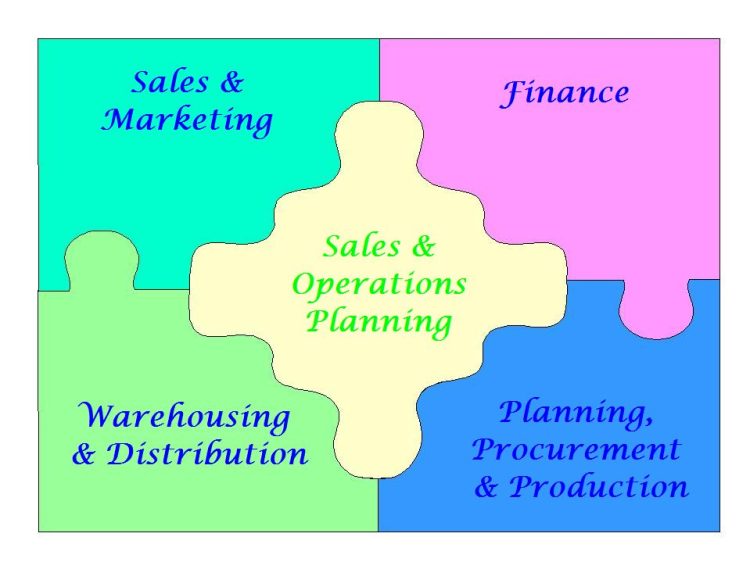
The source, “OpEx – SCM Funda1 S&OP.pdf” by Vishnu Rayapeddi, provides a comprehensive overview of Sales & Operations Planning (S&OP). It outlines the objectives, processes, and foundational elements necessary for successful S&OP implementation, highlighting its role in integrating various business functions to achieve competitive advantage. The document also addresses common industry challenges that S&OP aims to resolve, such as stock-outs and excessive inventory, and details the benefits derived from its adoption, including improved operational efficiency and enhanced communication. Furthermore, the text explores the practical application of S&OP through a case study of Kiwi Meats and introduces Integrated Business Planning (IBP) as an evolution of S&OP, emphasising its capacity for more profit-driven and executive-engaged planning across the entire enterprise.
$ 39$ 44OpEx- – Sales & Operations Planning
$ 39$ 44 -
OpEx-Competitive Manufacturing
Competitive Manufacturing: Your Gateway to Operational Excellence
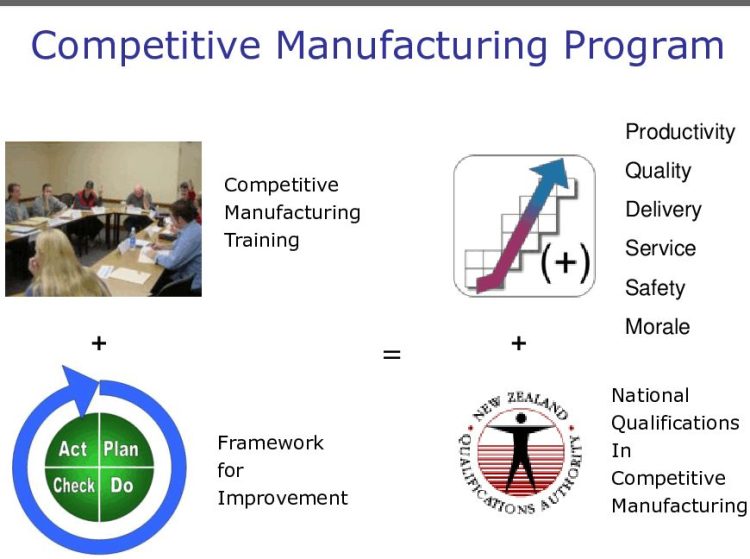
This training material, titled “Competitive Manufacturing” by Vishnu Rayapeddi, introduces the concept of Operational Excellence. It outlines a comprehensive programme designed to equip participants with the knowledge, tools, and methods to significantly improve workplaces, leading to nationally recognised certification. The core focus is on identifying and eliminating operational waste—such as defects, overproduction, and unnecessary motion—to achieve “World Class” business performance through increased cost-effectiveness, higher quality, and faster, more consistent production. The material details a structured change management model, emphasising the importance of defining changes, establishing Key Performance Indicators (KPIs), engaging stakeholders, and meticulously planning and monitoring implementation through various tools like Gantt Charts and Visual Management Systems. Ultimately, it aims to transform businesses by fostering a culture of continuous improvement and value creation for the customer.$ 59$ 69OpEx-Competitive Manufacturing
$ 59$ 69 -
OpEx-Introduction to Six Sigma
This Six Sigma presentation is an White Belt level and meant for senior management to get a comprehensive understanding of the concept of Six Sigma and how it can help organisations improve their functioning of operations, improve quality and reduce cost.
$ 44$ 49OpEx-Introduction to Six Sigma
$ 44$ 49