-
OpEx – Lean JIT Kanban Systems
Kanban System Implementation
This source, titled “OpEx-KanbanSystems.pdf” by Vishnu Rayapeddi, provides a comprehensive overview of Kanban implementation within operational excellence frameworks. It explores the historical origins of Kanban from its roots in Toyota’s production system to its purpose in modern manufacturing. The document details the mechanics of Kanban, including visual systems, planning and scheduling integration, and various types such as withdrawal, production, and signal Kanbans. Furthermore, it highlights the significant benefits of adopting a Kanban system, such as inventory reduction and improved flow, and offers a seven-step guide to successful implementation, concluding with a practical case study for calculating Kanban numbers.$ 39$ 44OpEx – Lean JIT Kanban Systems
$ 39$ 44 -
OpEx – The Lean Office
Lean Thinking for Office and Admin Areas
This document, “OpEx_Lean_Office.pdf,” is a presentation by Vishnu Rayapeddi from Productivity Solutions (PSL) on Lean Thinking for Office & Admin Areas, copyrighted in 2011. It serves as a gateway to operational excellence, detailing various best-class practices such as Lean, Six Sigma, Total Quality Management (TQM), and the Theory of Constraints (TOC). The presentation’s core focuses on defining operational excellence and the elimination of waste through structured approaches like the Toyota Production System (TPS). It outlines a three-part methodology to “Lean your Business”: stabilise processes, standardise processes, and simplify processes, with practical tools and activities for each stage. The document ultimately aims to foster a continuous improvement culture within organisations to enhance productivity and reduce costs.$ 69$ 74OpEx – The Lean Office
$ 69$ 74 -
OpRx – Developing a Lean Culture
Develop a Lean Culture
The source, “OpEx – Develop a Lean Culture” by Vishnu Rayapeddi, argues that organisational culture is the most crucial element for business success, not just people. It highlights the high failure rate of Lean implementations, attributing these failures not to the Lean tools themselves, but to an unwillingness to change the underlying culture. The document defines culture, behaviour, and philosophy, and explains that a culture of continuous improvement, led by passionate and accountable leaders, is essential. It further asserts that employee engagement, fostered through meaningful work, development opportunities, and organisational alignment, is the primary driver for successful cultural transformation and achieving desired business outcomes, with Lean tools serving as mere enablers rather than the solution itself.$ 39$ 44OpRx – Developing a Lean Culture
$ 39$ 44 -
OpEx – Standardised Work
OpEx: Standard Work
The source, titled “OpEx – Standard Work” by Vishnu Rayapeddi, introduces Standard Work as a foundational element for achieving operational excellence in organisations. It explains that Standard Work, originating from the Toyota Production System, involves establishing agreed-upon, reliable procedures for tasks, leading to improved safety, quality, and efficiency while reducing waste and cost. The document outlines four steps to implementing Standard Work, including creating various charts, and stresses the importance of clear communication, user-friendly manuals, and regular revisions. Furthermore, it discusses the application of Standard Work in mistake-proofing and standardised training through the Training Within Industry (TWI) method, which encompasses Job Instruction (JI), Job Methods (JM), and Job Relations (JR). Finally, the source highlights the concept of Leader Standard Work, advocating for a process-dependent management system to ensure consistent leadership practices.$ 39$ 44OpEx – Standardised Work
$ 39$ 44 -
OpEx – Six Sigma – Design of Experiments
Design of Experiments
This collection of materials introduces the concept of Design of Experiments (DOE) as a methodology for operational excellence. The content outlines a structured approach to experimentation, moving from problem identification and basic experimentation methods like Trial and Error and One-Variable-At-a-Time (OVAT) to more sophisticated techniques. It then progresses to Full Factorial DOE, which systematically examines all factor combinations, and subsequently to Fractional Factorial DOE, a more efficient method that sacrifices some interaction information for reduced testing. The X Pult simulation is consistently used as a practical, hands-on exercise throughout the sessions to illustrate these experimental design principles and their application in achieving consistent and accurate results. The sessions also cover essential terminology like replicates, randomisation, and blocking, along with tools and templates for data collection and analysis.$ 29$ 34 -
OpEx – Lean Execution-The Success Mantra
Lean Execution
This comprehensive source, “OpEx – Lean Execution,” authored by Vishnu Rayapeddi, serves as a gateway to operational excellence through the application of Lean principles. It meticulously outlines a roadmap for understanding and implementing Lean methodologies, beginning with a foundational explanation of what Lean is and its core concept of eliminating waste to maximise customer value. The text places significant emphasis on “The Toyota Way” and its 14 principles, presenting them as a blueprint for achieving continuous improvement and fostering a culture of respect for people. Furthermore, the source addresses common reasons why Lean implementations fail, such as lack of vision or management commitment, and offers strategies for managing change effectively within an organisation. It then broadens its scope to include other business excellence philosophies like Six Sigma, Theory of Constraints, and Total Quality Management, highlighting their individual strengths and the potential benefits of a combined approach. Finally, the document details the practical steps involved in executing Lean, including assessment tools, the importance of long-term commitment, documentation, and the crucial role of people development and leadership in sustaining a Lean culture.$ 69$ 74 -
OpEx – Lean Culture Surveynt
Understand the current culture of your organisation to set improvement goals
$ 19$ 24OpEx – Lean Culture Surveynt
$ 19$ 24 -
OpEx – Balanced Scorecard Self-Assessment
Understand your current situation with respect to measurement to set goals for improvement.
$ 24$ 29 -
OpEx – Lean Manufacturing Assessment
Know where you are today before embarking on an improvement plan and set goals
$ 29$ 34OpEx – Lean Manufacturing Assessment
$ 29$ 34 -
OpEx – Site Review Check-List (XLS)
Understand the current state of your organisation to move forward with any improvement activities
$ 29$ 34OpEx – Site Review Check-List (XLS)
$ 29$ 34 -
OpEx-5SVC-5S and Visual Controls
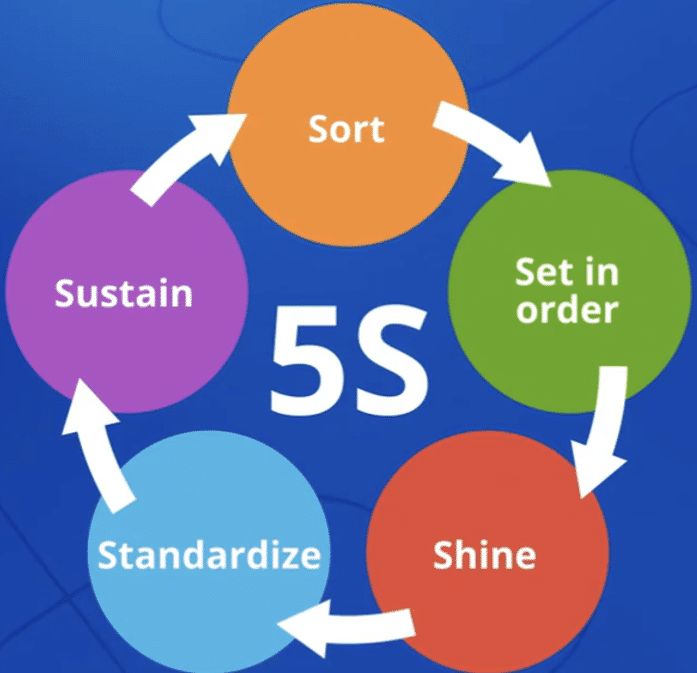
The source, titled “5S & Visual Controls for High Performance Workplace” by Vishnu Rayapeddi, outlines a comprehensive workshop focused on implementing the 5S methodology within an operational setting. This approach, originating from lean manufacturing principles, aims to create a safe, clean, and organised workplace to improve efficiency and quality. The document details each of the five “S” steps: Sort, Set-in-Order, Shine, Standardise, and Sustain, providing practical guidance, self-assessment tools, and examples for implementation. Ultimately, the objective is to achieve “World-Class Manufacturing” through disciplined workplace organisation and the effective use of visual controls and displays to communicate information and manage processes.
$ 54$ 64OpEx-5SVC-5S and Visual Controls
$ 54$ 64